

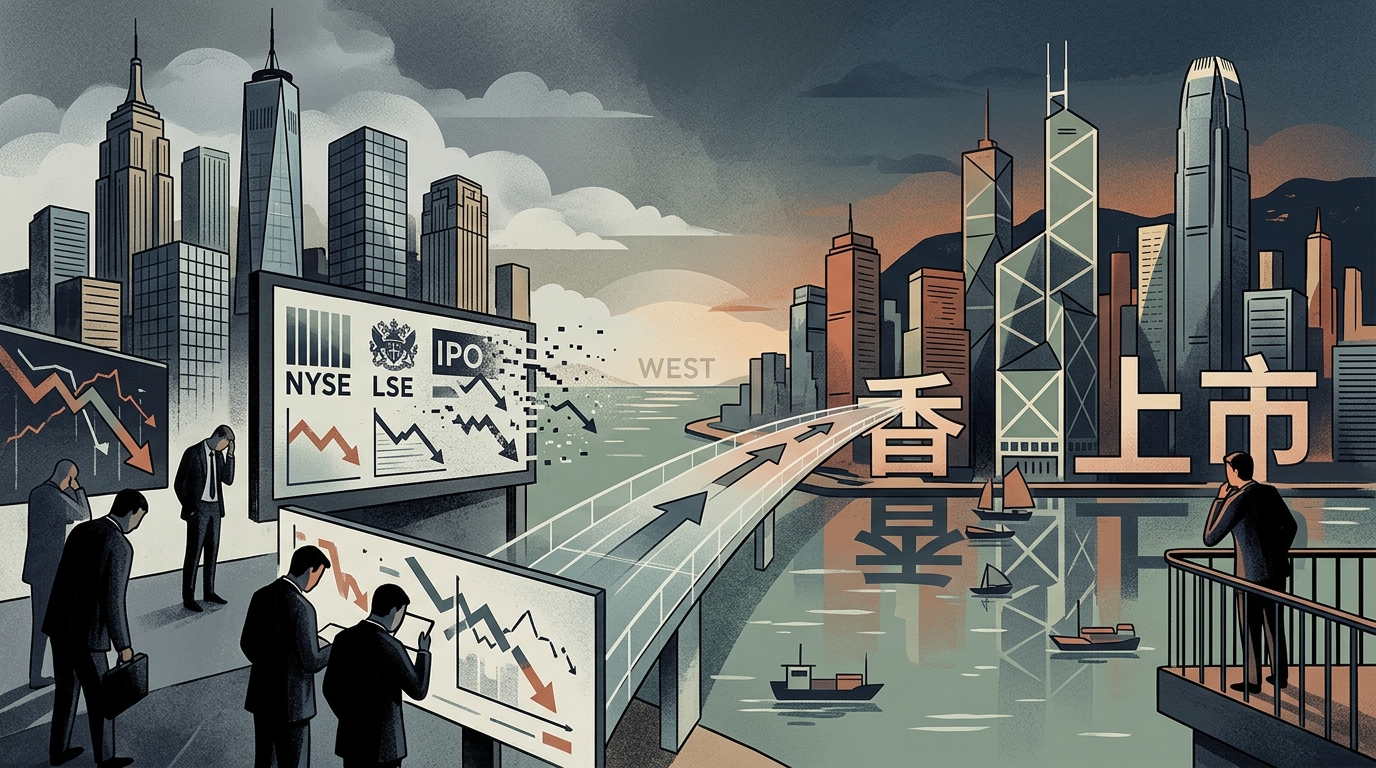
The journey of Shein toward public markets increasingly resembles a geopolitical odyssey. The Chinese-founded ultra-fast fashion behemoth, which radically altered global consumption patterns, is now knocking on the doors of the Hong Kong Stock Exchange (HKEX). This move is not merely a strategic choice but a forced retreat following the collapse of its attempts to list in New York and, more recently, London.
The Western Wall and ESG Concerns
For Shein, a listing on the New York Stock Exchange was the ultimate prize. A successful US IPO would have validated its dominance and provided access to the world’s deepest pool of capital. However, the company found itself at the center of a fierce political crossfire. US regulators, pressured by Congress, placed the company’s supply chain under intense scrutiny, raising serious questions about the use of forced labor in the Xinjiang region and its massive environmental footprint.
Despite Shein’s efforts to distance itself from its Chinese roots by moving its headquarters to Singapore, Washington remained unmoved. The baton then passed to London, where for a while it seemed the LSE would welcome the Chinese giant with open arms, seeking a major post-Brexit win. Yet, there too, opposition from human rights organizations and ESG-focused institutional investors made the prospect of a listing toxic.
"Shein is not just facing financial hurdles, but an identity crisis in a world that is becoming increasingly protectionist and ethically sensitive," market analysts noted.
Hong Kong as a Refuge and the Valuation Challenge
The pivot to Hong Kong is now seen as the only realistic way forward. The Hong Kong market, though battered by China's economic slowdown and geopolitical tensions, remains a natural home for companies with Chinese DNA. Shein hopes that regulatory scrutiny there will be less hostile and investors more familiar with its business model.
However, this transition comes at a price. The company’s valuation, which once peaked at $100 billion, has significantly retreated in secondary markets, now hovering between $60 billion and $70 billion. In Hong Kong, Shein may not achieve the "premium" that Wall Street would have offered. Furthermore, the company will have to balance Beijing’s demands regarding data security with international investors' expectations for transparency.
The Ultra-Fast Fashion Model Under Scrutiny
Beyond the stock market drama, Shein faces a shift in consumer sentiment. The European Union is pushing for stricter textile legislation, aiming to reduce waste and boost recycling. Shein’s model, based on producing thousands of new designs daily at rock-bottom prices, is in direct conflict with Western green ambitions.
- Shein utilizes AI algorithms to predict demand in real-time.
- 90% of its suppliers are still based in China, despite the Singapore HQ move.
- The company has launched resale programs (Shein Exchange) to bolster its sustainability image.
In conclusion, the Hong Kong IPO will be a test of endurance. If Shein manages to raise the billions it seeks, it will prove that its model remains resilient. But if the reception is cold, it could signal the beginning of the end for the era of unchecked ultra-fast fashion dominance in global markets.





