

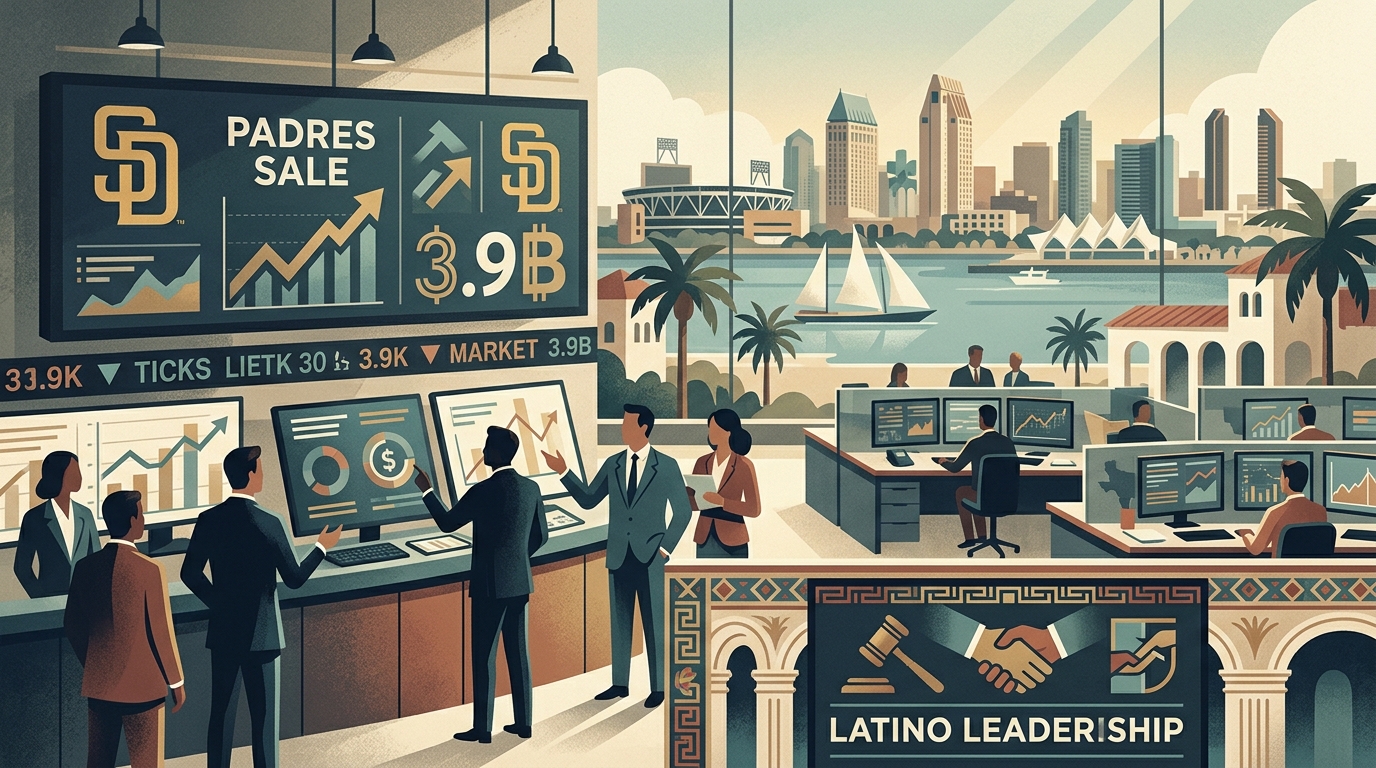
The news of the San Diego Padres' sale for a record-breaking $3.9 billion is more than just a sports transaction; it is the culmination of a structural shift in how we perceive the ownership of major athletic organizations. The deal, which places private equity billionaire José E. Feliciano and his wife, Kwanza Jones, at the helm, highlights the growing influence of financial titans in Major League Baseball (MLB) while simultaneously breaking traditional barriers of representation.
The Strategic Significance of the $3.9 Billion Valuation
The $3.9 billion figure sets a new benchmark for MLB, surpassing previous team sales in markets far larger than San Diego. To understand the scale, one must consider that the Padres are traditionally viewed as a "mid-market" team. However, under the previous leadership of the late Peter Seidler, the team pursued an aggressive spending strategy, attracting global superstars and building a loyal, passionate fanbase that fills Petco Park for nearly every game.
Feliciano’s investment is no coincidence. As a co-founder of Clearlake Capital, Feliciano possesses deep experience in managing high-value assets. This move reflects the trend of sports teams being treated as "scarcity assets" that offer not only prestige but also consistent capital appreciation in an environment where broadcasting rights and stadium-adjacent real estate are gold mines.
The Social Dimension: Representation and Identity
Perhaps the most significant element of this acquisition is the identity of the new owners. José E. Feliciano becomes only the second Latino owner in MLB history (following Arte Moreno of the Angels). In a city like San Diego, which borders Mexico and possesses a massive population with Latino roots, this development carries profound symbolism. The Padres have systematically invested in the Mexican market, hosting games in Mexico City and promoting their brand as the team of the "Bi-National region."
"Owning a team isn't just about balance sheets; it's about representing the communities that sustain it," said a source close to the organization.
Kwanza Jones, for her part, brings a distinct perspective. As an artist, investor, and philanthropist, Jones has focused on minority empowerment and social justice. Her presence in the ownership group suggests that the Padres will continue to be an organization with a strong social footprint, extending far beyond the lines of the baseball diamond.
Challenges and the Future of MLB
Despite the optimism, the new ownership faces significant hurdles. The crisis in Regional Sports Networks (RSN) and the bankruptcy of Diamond Sports Group have disrupted the traditional revenue model for television rights. The Padres were among the first teams forced to move their game production directly to MLB. Feliciano will need to leverage his financial acumen to find new revenue streams, potentially through digital technology and global expansion.
Furthermore, there is the question of on-field consistency. San Diego fans have grown accustomed to massive contracts and competitive rosters. Will the new group maintain Seidler’s "all-in" philosophy, or will they pivot to a more conservative, data-driven model often preferred by private equity investors? The answer to this question will determine not only the team's future but also the dynamics of the entire National League West.
Conclusion
The sale of the San Diego Padres is a milestone reflecting America in 2026: a country where private equity wealth meets the necessity for social inclusion. With $3.9 billion on the table, the stakes are enormous. If Feliciano and Jones can successfully blend business efficiency with respect for the team's legacy, the Padres may become the blueprint for how sports organizations are managed in the 21st century.





