

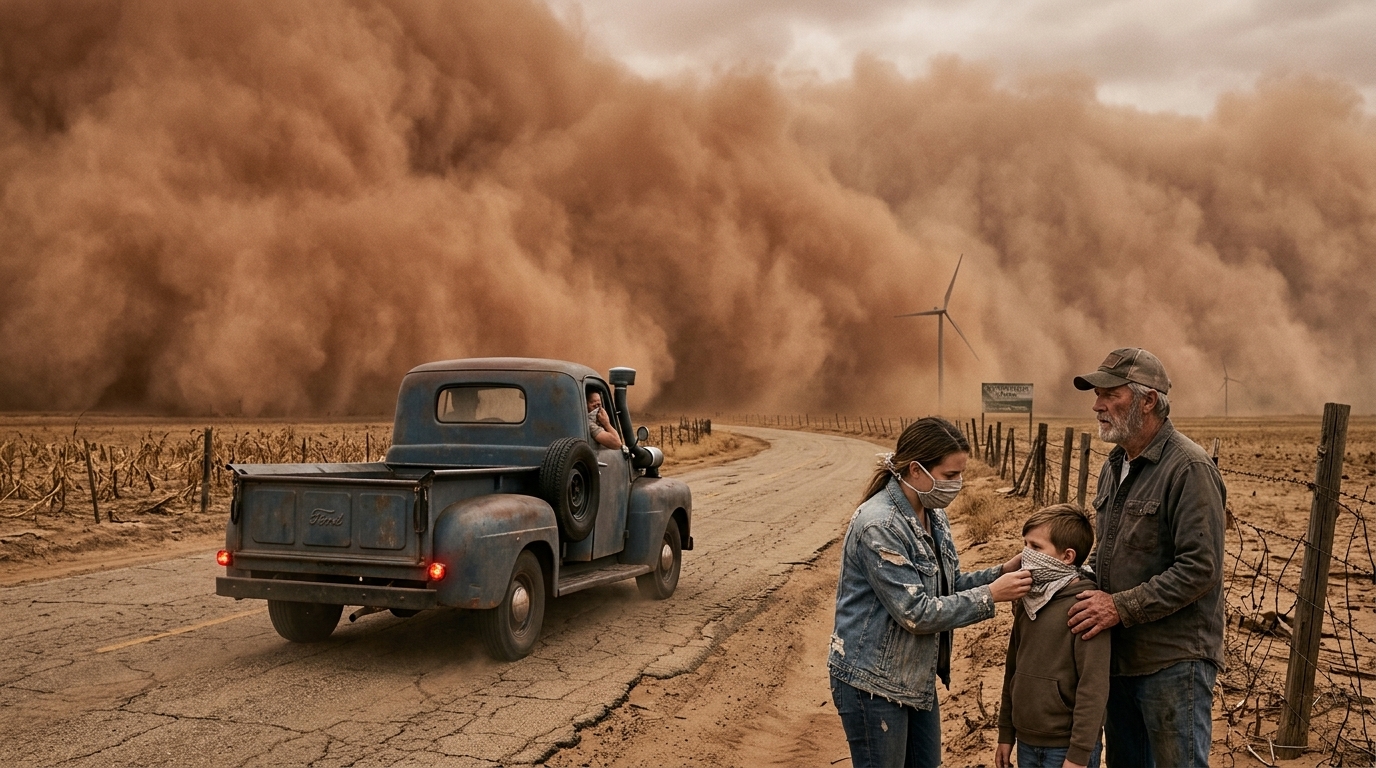
In the heart of the American Midwest, where vast stretches of corn and wheat fields feed the world, a sense of impending doom hangs over the soil. This is not just about the economic strain that has plagued the agricultural sector in recent years; it is a combination of factors that echoes the darkest chapters of American history. According to recent analyses and warnings from AccuWeather, the United States is on the threshold of a 'Super El Niño,' which threatens to trigger a multi-year drought, reviving the ghost of the 1930s 'Dust Bowl.'
The Economic Siege of the American Farmer
Even before the first signs of drought appeared, farmers in rural America were already under siege. The year 2026 finds the agricultural sector facing an explosive cocktail of high interest rates, increased production costs, and falling commodity prices. Net farm income has seen a significant decline as corn and soybean prices have retreated due to global oversupply in previous years, while the costs of fertilizers, fuel, and sophisticated agricultural machinery remain sky-high.
Dependence on credit has left many family farms vulnerable. With interest rates remaining at levels that make refinancing debt difficult, many producers are a step away from foreclosure. In this already fragile environment, the threat of a climate disaster is not just an environmental issue; it is an economic catalyst that could lead to mass land abandonment and the concentration of ownership into the hands of large corporate conglomerates.
The Arrival of the Super El Niño
The El Niño phenomenon, characterized by the unusual warming of Pacific Ocean waters, is not new. However, meteorologists warn that what we are facing now is a 'Super El Niño'—an extreme version of the phenomenon amplified by overall climate change. AccuWeather points out that atmospheric conditions are now such that they favor the creation of a 'heat dome' over the Midwest and the Great Plains.
This development is expected to lead to a dramatic reduction in rainfall during critical crop growing periods. The lack of soil moisture, combined with strong winds, creates the conditions for soil erosion. The 'dust' that gave the 1930s disaster its name was not just dirt; it was the precious topsoil that was lost forever, rendering the land barren. Today, despite improved farming techniques, the intensity of the expected phenomenon threatens to overwhelm the capabilities of modern irrigation and land management systems.
Technology: A Lifeline or an Added Burden?
In the context of this crisis, artificial intelligence and precision agriculture are being touted as the only solutions. AI systems that analyze satellite data and soil sensors can help farmers optimize water use and accurately predict which areas will be hardest hit. However, there is a paradox: the farmers who need these technologies most are often the ones least able to afford them.
Adopting advanced AI systems requires capital that most small and medium-sized producers do not have. This creates a two-tier gap. On one side, large agricultural corporations use technology to shield themselves from the drought; on the other, traditional farmers remain exposed to the elements. The 'Mini-Dust Bowl' crisis may accelerate the digital transformation of agriculture, but at the cost of the social disintegration of rural communities.
Global Implications and Food Security
The consequences of such a drought in the US will resonate across the globe. The United States remains the world's largest exporter of corn and a major supplier of wheat and soybeans. A significant reduction in production will lead to a spike in international food prices, primarily affecting developing nations that depend on imports.
Furthermore, the pressure on water supplies will trigger conflicts between the needs of agriculture, industry, and urban consumption. Rivers and aquifers, already at low levels due to over-exploitation, may reach critical points of no return. The need for a national and international strategy to manage the climate crisis in the agricultural sector has never been more urgent. 2026 may be remembered as the year humanity realized that technology alone is not enough to tame a nature out of balance.





