

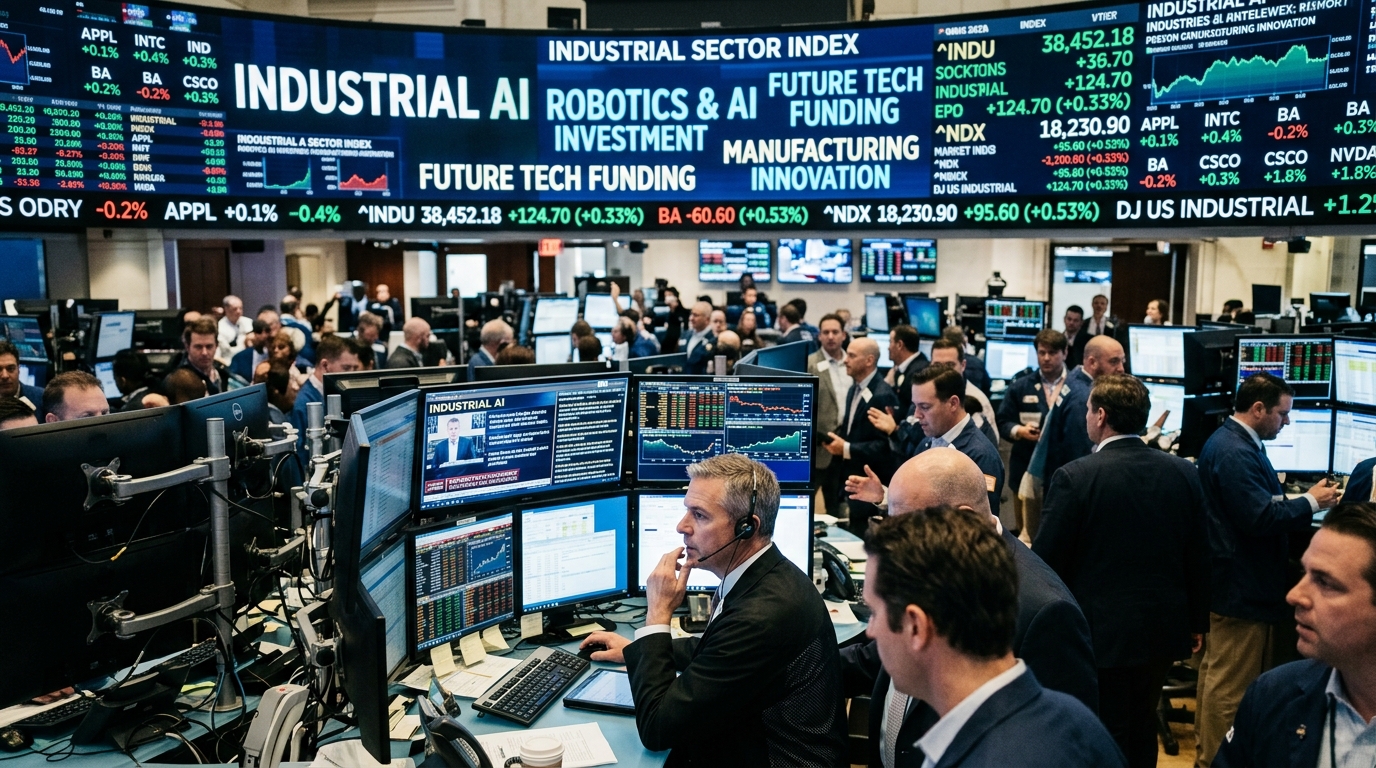
For nearly two years, the dominance of Artificial Intelligence in markets and public discourse focused almost exclusively on software. From ChatGPT to Claude, the "Great Linguistic Revolution" was about processing information on a screen. However, as we move through the second half of 2026, investment interest is rapidly shifting toward what analysts call "Physical AI." This is embodied intelligence—the application of AI models to robots, autonomous vehicles, and industrial systems that interact with the material world.
The Transition from Bits to Atoms
Physical AI is not merely automation. While traditional robots on production lines followed pre-programmed commands in controlled environments, Physical AI utilizes foundation models to understand and react to unpredictable situations. This evolution bridges the gap between the digital and physical worlds, allowing machines to "learn" how to manipulate objects, navigate complex spaces, and collaborate with humans without the need for exhaustive programming of every single movement.
Investors see this technology as the solution to long-standing global economic issues, such as labor shortages in manufacturing and the need for faster supply chains. Companies like NVIDIA, with its Isaac platform, and Tesla, with its Optimus program, are leading this race, transforming industrial production from a labor-intensive activity into a capital- and technology-intensive one.
Investment Strategy: The Return of Heavy Industry
The rise of Physical AI marks a significant shift in the investment landscape. For decades, "smart money" was directed toward software-as-a-service (SaaS) companies with high margins and low capital expenditures. Now, we are seeing a pivot toward "tangible" technology. Major industries in Europe and the US are investing billions to restart domestic production, using AI as the tool that will make Western production costs competitive against developing nations.
- Next-Generation Robotics: Investments in humanoid robots capable of performing multiple tasks.
- Autonomous Supply Chains: Systems that manage warehouses and transport with minimal human intervention.
- Digital Twins: Using AI to simulate entire factories before they are even built, reducing risk and cost.
This momentum is further fueled by geopolitical tensions. The need for "near-shoring" (moving production closer to consumption) makes Physical AI essential. Without the automation offered by machine intelligence, returning factories to the West would be economically unfeasible due to high labor costs.
Challenges and the Future of Work
Despite market optimism, the challenges remain immense. Training Physical AI models requires vast amounts of real-world data, which is much harder to collect than text from the internet. Furthermore, the energy consumption required to operate these systems at scale poses a critical question regarding the sustainability of the trend.
"We are no longer in the era where AI simply answers our questions. We are in the era where AI will build our homes and transport our goods," says a senior executive from a major City investment bank.
On a social level, concerns about worker displacement are intense. However, proponents of the technology argue that Physical AI will take over the "3D" jobs (Dirty, Dull, Dangerous), allowing humans to focus on oversight and creativity. The success of this new investment cycle will depend on whether societies can adapt at the same speed that algorithms evolve.





