

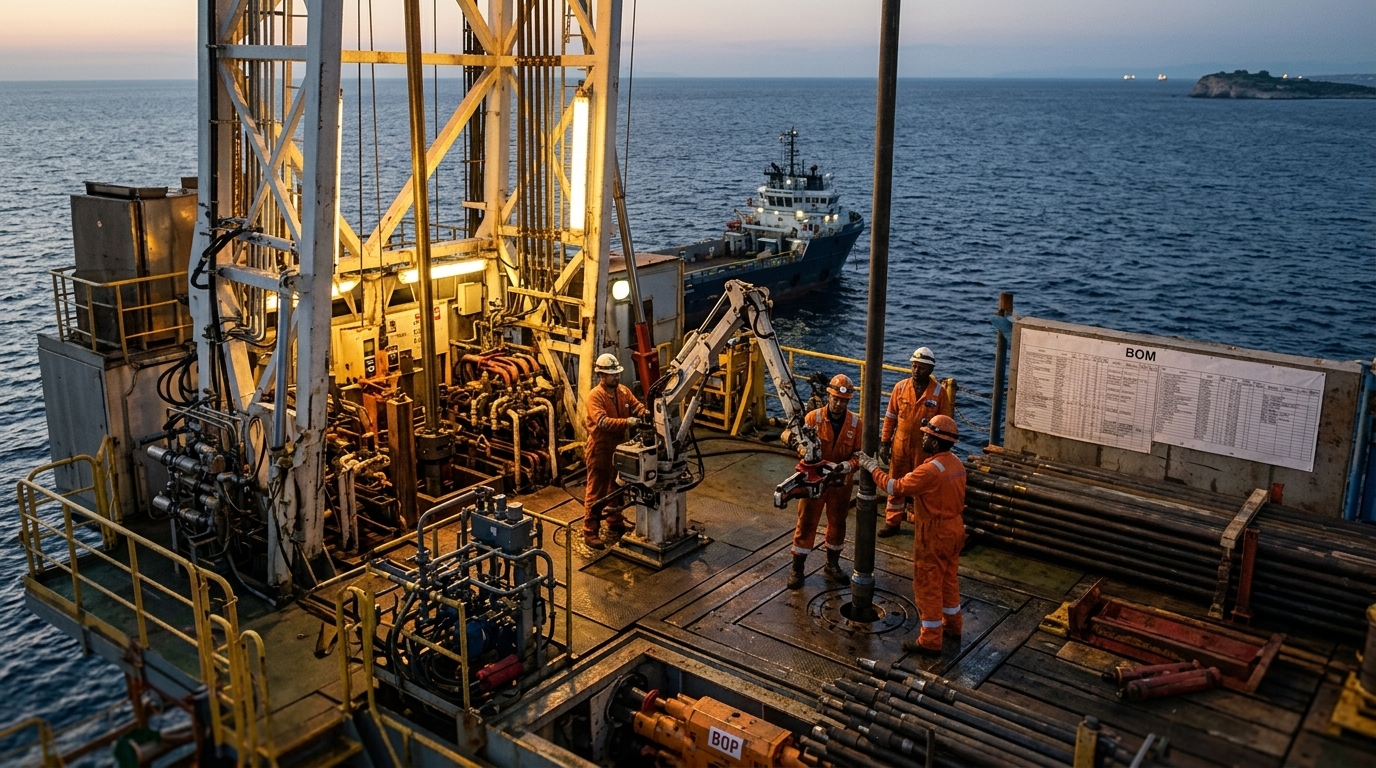
In a decisive turn for Greece's energy strategy, recent statements by Minister of State Stavros Papastavrou have brought the immense potential of Greek hydrocarbon deposits back into the spotlight. The estimate of revenues reaching 10 billion euros from a single deposit in the Ionian Sea is not merely a financial target; it is a geopolitical statement of intent at a time when Europe hungers for energy stability and independence.
The Strategic Weight of 2027
The year 2027 has been circled on the calendars of both the Greek government and international energy giants as the moment of truth. The first exploratory drilling in the Ionian Sea will serve as the ultimate test to verify the seismic data collected over recent years. According to Mr. Papastavrou, preparations are moving at a rapid pace, despite the bureaucratic and environmental hurdles that traditionally accompany such monumental projects.
The significance of this drilling extends beyond the narrow limits of extraction. It represents the validation of a national strategy that began a decade ago and has navigated through waves of skepticism and delays. If the results are positive, Greece will transform from a net energy importer into a potential exporter, drastically altering its current account balance and strengthening its position on the energy map of the Southeastern Mediterranean.
Geopolitical Stability and International Context
The Minister placed particular emphasis on the international environment, noting that the opening of the Straits of Hormuz and the gradual de-escalation of conflicts in the broader Middle East are positive signs. However, the energy crisis triggered in previous years has not been entirely eliminated. The need for supply diversification remains imperative for the European Union.
- Greece as a gateway for East Mediterranean natural gas to Europe.
- Utilizing deposits as leverage for lower energy prices in the domestic market.
- Collaboration with global giants like ExxonMobil and Helleniq Energy.
- Enhancing security of supply during periods of geopolitical instability.
Mr. Papastavrou's analysis underlines that Greece is not acting in isolation but as part of a broader Western plan. Ensuring energy flow is now a matter of national security, and exploiting domestic resources constitutes the first line of defense against external shocks.
Economic Footprint and the Green Transition
A question frequently raised is how hydrocarbon extraction aligns with the country's commitments to the Green Transition and the reduction of carbon emissions. The government's response is clear: natural gas is the 'bridge fuel.' Without it, the transition to Renewable Energy Sources (RES) risks being economically unbearable and technically unstable.
"Revenues from hydrocarbons can fund Greece's green revolution, ensuring that the transition does not happen at the expense of the most vulnerable citizens," government sources suggest.
The 10 billion euros, if confirmed, could be directed into a National Social Solidarity and Green Development Fund, following the Norwegian model. This would allow for infrastructure funding, strengthening the healthcare system, and reducing public debt, creating a safety net for future generations.
Challenges and Risks
Despite the optimism, the road to 2027 is not without its thorns. The technical difficulties of deep-sea drilling in the Ionian are significant. Furthermore, environmental organizations remain vigilant, raising concerns about marine ecosystems and potential impacts on tourism, which remains the country's primary industry.
The government must present rigorous safety protocols and ensure that resource exploitation is carried out with the minimum possible environmental impact. Transparency in contracts and social consensus in the local communities of Western Greece will be decisive factors for the venture's success. 2027 will not only judge the existence of natural gas but also the Greek state's ability to manage global-scale projects with professionalism and responsibility.





