

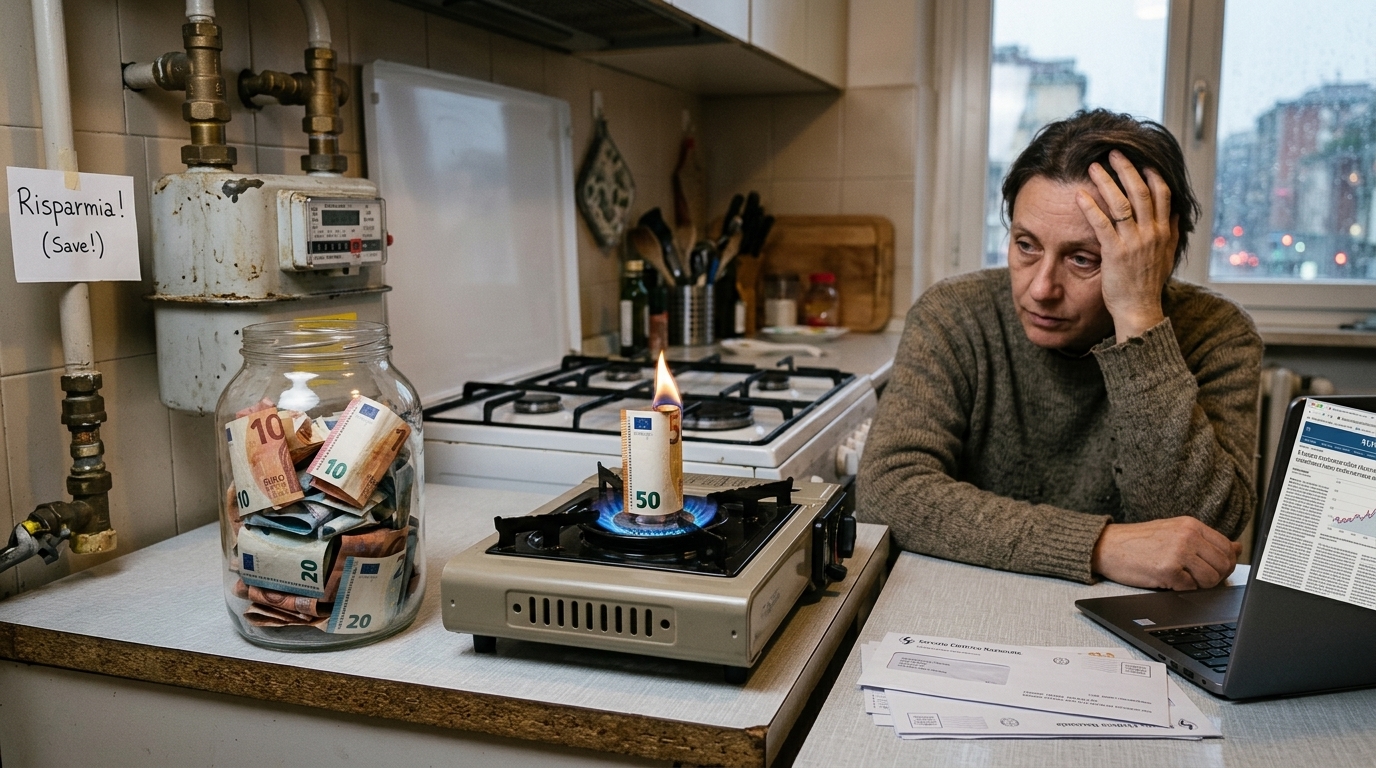
It is mid-2026, and the global energy chessboard resembles a zero-sum game more than ever. Despite reassuring statements from Brussels and efforts to stabilize international prices, the reality remains harsh: Europe has yet to escape the vicious cycle of energy insecurity. Recent focus on the Strait of Hormuz—perhaps the most critical chokepoint for global oil and Liquefied Natural Gas (LNG)—highlights a fundamental misunderstanding. Many analysts believe that free navigation through the Strait is the "golden key" to saving the European economy. However, the truth is far more complex and ominous.
The Geopolitical Chokepoint and European Dependency
The Strait of Hormuz, separating Oman from Iran, is the artery through which approximately 20-30% of global oil consumption passes, along with a massive percentage of LNG destined for the Old Continent, primarily from Qatar. Following the complete decoupling from Russian gas in 2022-2023, Europe turned frantically toward Qatar and the US. This created a new form of dependency. Even if the straits remain open, Europe remains a hostage to regional geopolitical tensions, as any "nervousness" in the markets skyrockets risk premiums and, consequently, prices on European energy exchanges.
The REPowerEU strategy aimed for independence but, in practice, led to replacing pipelines with ships. This transition carries a massive hidden cost: a lack of flexibility. While pipelines provided a steady, albeit politically charged, flow, LNG is subject to the laws of the global market. If Asia offers a higher price, cargoes change course mid-sea. The opening of Hormuz only guarantees the possibility of passage, not an affordable price for the European consumer or industry.
Structural Vulnerabilities: Beyond Transit Routes
Europe's problem is not just "where" the energy comes from, but "how" it is consumed and priced. European industry, particularly in Germany and Italy, was built on the model of cheap natural gas. Today, energy costs in the EU are three to four times higher than in the United States. This gap will not be bridged simply because tankers pass freely through the Persian Gulf.
- Lack of Storage Infrastructure: Despite improvements, Europe still lacks the necessary infrastructure for long-term storage that could absorb the shocks of a multi-year crisis.
- The Competitiveness Gap: Energy-intensive industries (aluminum, chemicals, steel) are migrating to climates with cheaper energy, causing a gradual deindustrialization that Hormuz cannot stop.
- The LNG Trap: Liquefied gas is inherently more expensive due to the processes of liquefaction, transport, and regasification.
Furthermore, the EU's political leadership seems trapped in a contradiction. On one hand, it pushes for a rapid green transition, which requires massive investment and rare earth minerals (controlled mostly by China), and on the other, it tries to keep the economy alive with expensive fossil fuels from the Middle East. This double strangulation creates a permanent state of crisis.
The Geopolitics of Uncertainty
Even if we accept that Hormuz remains "open" under the protection of the US Navy or through diplomatic agreements, instability in the Red Sea and the rise of BRICS+ are changing the game. Qatar and the UAE are increasingly looking East, signing 27-year contracts with China. Europe, with its obsession with short-term spot market contracts to avoid committing to fossil fuels beyond 2050, always finds itself at the back of the line.
"Security of supply is an illusion when not accompanied by economic viability. A Europe powered by the world's most expensive gas is a Europe headed for decline, regardless of whether the straits are open or closed."
In conclusion, the Hormuz issue is merely a symptom of a deeper malady. Europe needs a new energy architecture that includes nuclear power, real domestic production, and, most importantly, an honest admission: the era of abundance is over. Opening the straits offers only a breath of air, not the cure.





