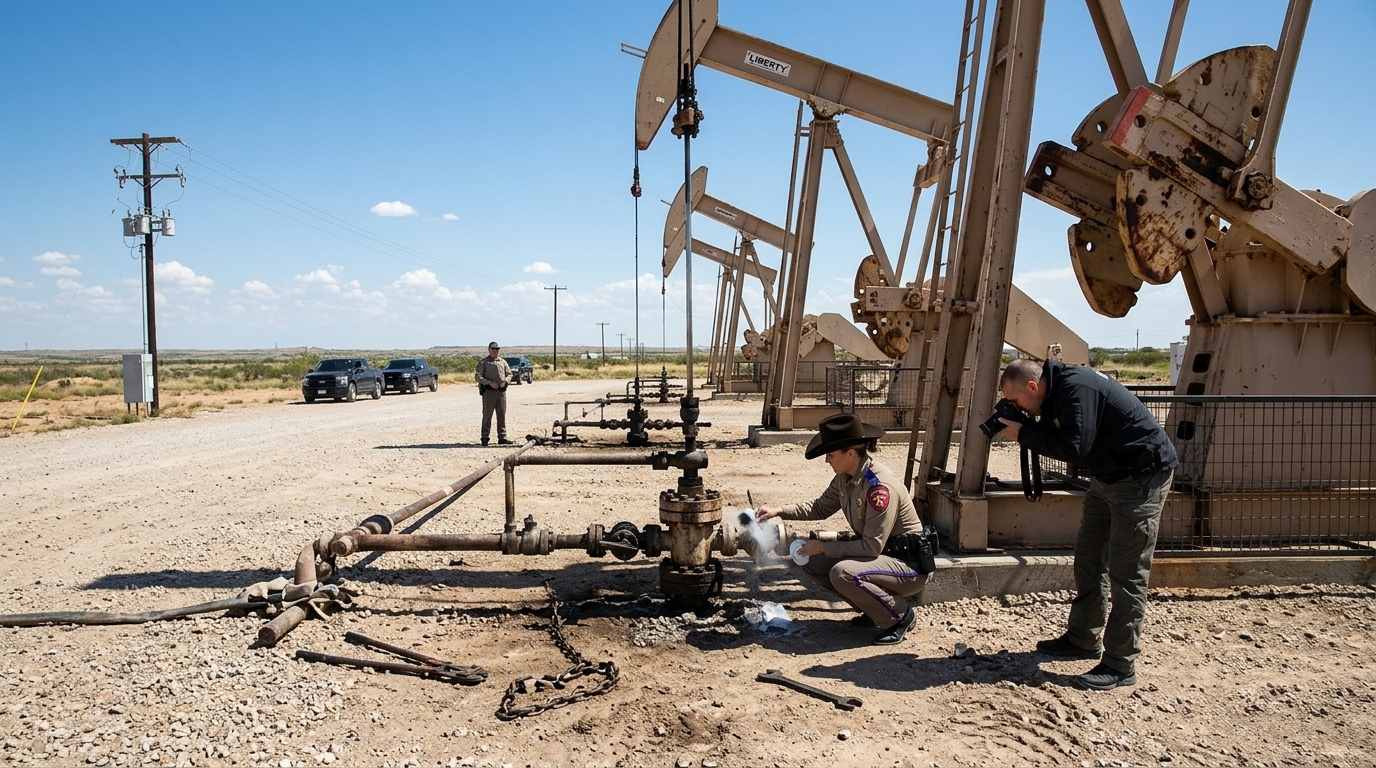
The surge in oil prices since the onset of the Iran war this year has lured professional criminals to the heart of U.S. shale country. With West Texas Intermediate (WTI) crude climbing 60% so far this year and hovering around $100 a barrel, oil theft has evolved from petty crime into sophisticated, organized heists.
The Permian Basin as a Target-Rich Environment
A survey by the Dallas Fed reveals that nearly half of the firms primarily operating in the Permian Basin—the epicenter of the U.S. energy revolution—have seen their operations impacted by theft. In contrast, 86% of firms operating outside this region reported no such impact. The vast landscape of West Texas and southeastern New Mexico, dotted with rigs, pipelines, and trucks, provides an ideal environment for criminals seeking high payoffs.
According to the survey, 47% of oil executives characterized the most common form of theft as targeted and organized, while 42% described it as opportunistic. Despite the frequency, 84% of respondents noted that the financial impact remains relatively low.
Enforcement and Internal Threats
The complexity of the oil fields makes policing a significant challenge. Howard County Sheriff Stan Parker noted that his jurisdiction sees between 1,000 and 1,500 barrels of oil reported stolen every month. "Our problem is we don’t know who’s supposed to be there and who’s not," Parker stated, highlighting the difficulty of identifying unauthorized activity at tank batteries.
Theft is not limited to external gangs. In August, an investigation titled "Operation Black Market Basin" led to felony charges against executives of a wastewater disposal company for oil theft and money laundering. The operation resulted in the seizure of over $12 million in petroleum products, vehicles, and cash across Texas, New Mexico, and Oklahoma.