

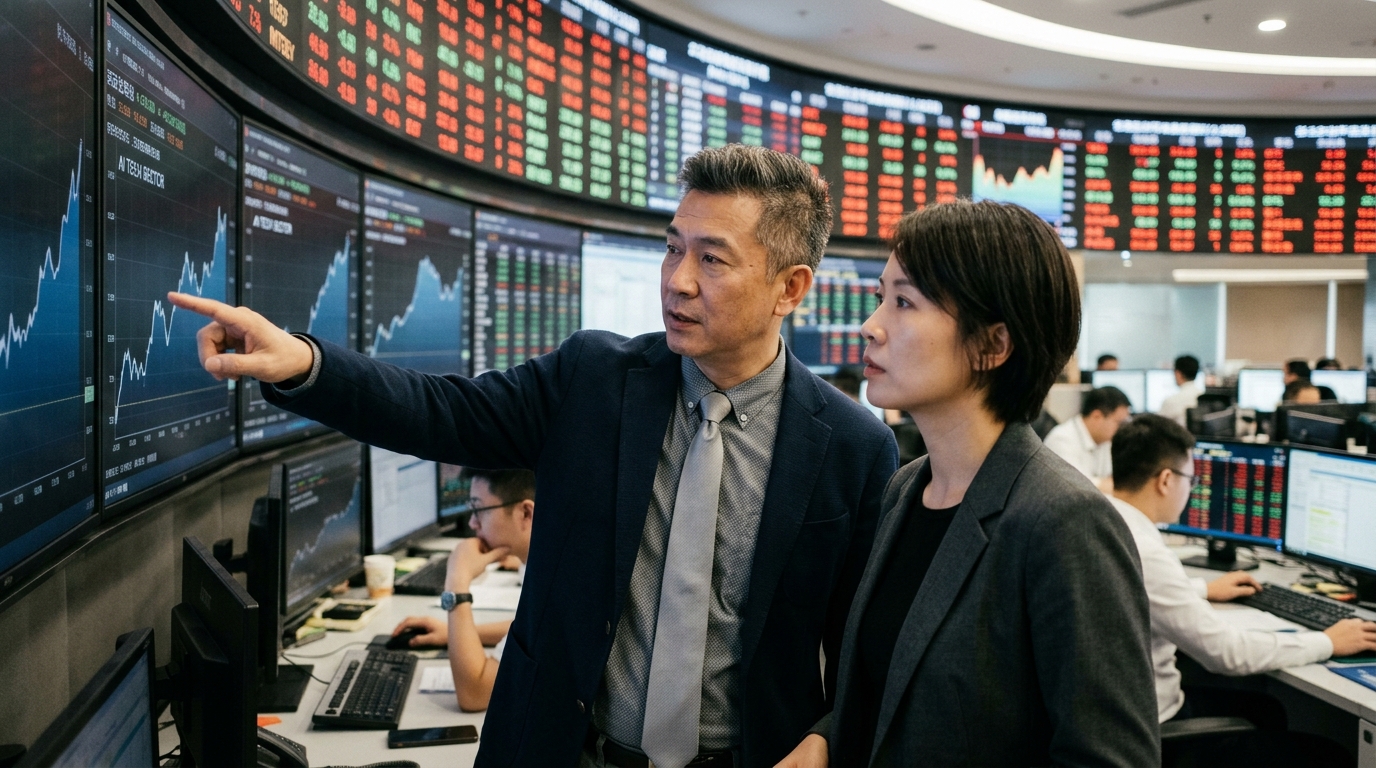
In a move that signals the start of a new, aggressive phase in the global competition for AI supremacy, the Chinese AI video industry has recorded its largest single financing round in history. With an amount exceeding 19 billion RMB (approximately $2.6 billion), China’s domestic scene is not just sending a message of financial might; it is executing a strategic consolidation of forces rarely seen in the tech sector.
The Alliance of Giants: BAT vs. Silicon Valley
The most remarkable element of this funding is not just the staggering figure, but the identity of the investors. China’s “Big Three”—Alibaba, Tencent, and Baidu—who traditionally operate as fierce competitors in everything from e-commerce to social media, have joined forces to back a unified national champion. This “holy alliance” underscores the importance Beijing places on developing technology that can compete on equal terms with OpenAI’s Sora and Runway’s Gen-3.
The investment is directed toward a new generation of companies specializing in Large Video Models (LVMs). Following the success of models like Kling and Vidu, the need for massive computing power and training data has made the independent path for startups nearly impossible. The participation of these giants ensures not only capital but also access to cloud infrastructure and vast content libraries essential for refining the quality of generated imagery.
Geopolitics and the Semiconductor War
This financing takes place within a highly complex international environment. With US restrictions on advanced chip exports (such as Nvidia’s) tightening around Chinese tech, the 19 billion RMB investment also functions as a “war chest” for developing alternative solutions. China appears to be betting on algorithmic efficiency: if they cannot have faster chips, they must have smarter software.
According to analysts at 36Kr, this move also aims at “content sovereignty.” In the world of 2026, AI video is no longer an experiment; it is a tool used in film production, advertising, and education. The country that controls the video generation algorithms will largely control the visual narratives of the future, influencing public opinion and cultural production on a global scale.
Economic Implications and the Road Ahead
For the market, this liquidity injection means violent consolidation. Smaller startups that failed to attract the interest of the “Big Three” are now in a precarious position, as the cost of training models increases exponentially. A wave of acquisitions and mergers is expected, leaving only a few, yet incredibly powerful, players on the stage.
- Infrastructure Scaling: A significant portion of the funds will be allocated to purchasing and developing domestic AI processing units.
- Talent Acquisition: A “hiring war” is beginning for top data scientists globally, with salaries reaching Wall Street levels.
- Commercial Application: The focus is shifting from “impressive demos” to “profitable applications” for Alibaba’s e-commerce and Tencent’s entertainment platforms.
In conclusion, the 19 billion RMB investment is more than just a business headline. It is confirmation that AI video is the new “holy grail” of technology, and China is willing to spend whatever it takes to avoid being left in Silicon Valley’s dust. The battle for the pixels of the future has just gained explosive new momentum.





