

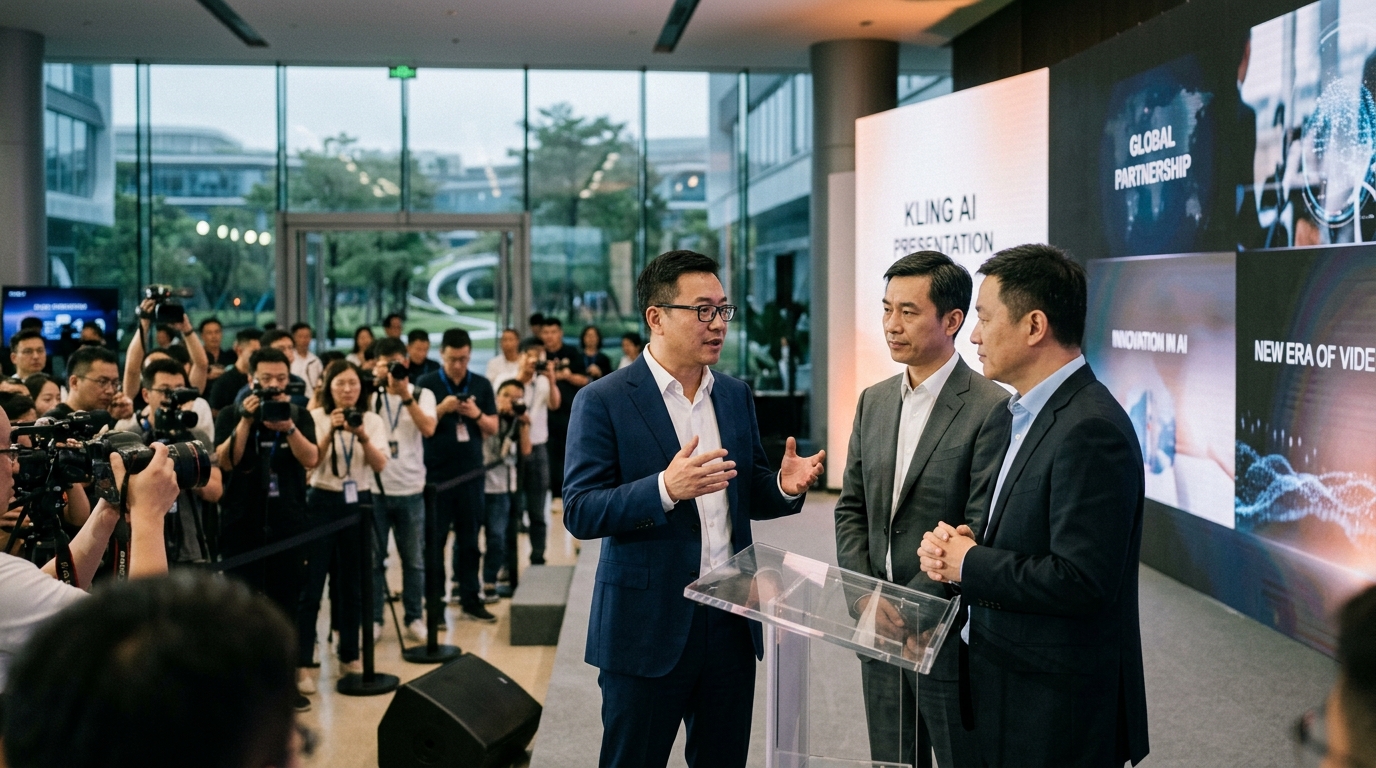
In a move that reshapes the geopolitical chessboard of artificial intelligence, Chinese tech titans Alibaba and Tencent have set aside their traditional rivalries to lead a massive $2 billion funding round for Kling AI, the advanced video generation model developed by Kuaishou. This move is not merely a corporate investment; it is a strategic declaration of national intent as China seeks to close the gap with the U.S. in the generative AI arms race.
The Strategic Alliance of 'Eternal Rivals'
The simultaneous participation of Alibaba and Tencent in the same funding round is a rare phenomenon that underscores the gravity of the technological shift. Historically, these two companies have been locked in a 'digital civil war' over everything from mobile payments to cloud computing. However, the rise of Kuaishou’s Kling AI, which many analysts view as the only credible competitor to OpenAI’s Sora, has created a collective need for consolidation.
Kling AI has already stunned the international community with its ability to produce high-definition videos up to two minutes long, featuring realistic physics and a complex understanding of the material world. Kuaishou, which operates China's second-largest short-video platform, is using Kling to transform content creation, allowing millions of users to generate cinematic-grade scenes from simple text prompts.
Kling vs. Sora: The Frontier of Generative Video
The clash between Kling and Sora is not just about pixel quality; it is about accessibility and data iteration. While OpenAI kept Sora in a closed testing environment for an extended period citing safety concerns, Kuaishou opted for a more aggressive rollout strategy. This allowed Kling to gather massive amounts of real-world usage data, refining its algorithms at a pace that Western counterparts are finding difficult to match.
- Video Duration: Kling now supports videos up to 10 minutes in experimental versions.
- Physical Simulation: The model shows exceptional performance in maintaining object consistency during motion.
- Global Accessibility: The international version of Kling has already attracted creators from Hollywood and the advertising industry.
The $2 billion funding will be primarily directed toward acquiring computational power and hiring top-tier researchers. In an era where U.S. export restrictions on Nvidia chips (such as the H100 and B200) are tightening the noose around Chinese tech, Kuaishou must invest billions in developing domestic alternatives and optimizing code to compensate for hardware scarcity.
Geopolitics and Technological Nationalism
This investment reflects the broader trend of 'technological nationalism' in China. Beijing has made it clear that AI is the key to the next phase of economic growth and national security. Alibaba and Tencent, acting partly as instruments of national strategy, are ensuring that China does not fall behind in the developments that will define the global economy for the next decade.
"It's no longer about who has the best app, but about who controls the operating system of reality," says a Beijing-based market analyst.
However, the challenge remains: can Kling maintain its global appeal while operating under the constraints of Chinese censorship regulations? The balance between the creative freedom required by the global market and the strict internal rules of China will be the ultimate test for Kuaishou and its investors.
Economic Implications and the Road Ahead
For Alibaba and Tencent, the investment in Kling AI is also a move of self-preservation. Alibaba sees generative video as the future of e-commerce (live streaming commerce), where virtual hosts will sell products 24/7. Tencent, on the other hand, aims to integrate these capabilities into WeChat and its gaming division, where AI-generated content can reduce development costs by up to 70%.
Kuaishou's market capitalization saw a significant boost following the announcement, as the market realizes the company is no longer just a social network but an AI infrastructure pillar. With $2 billion in its coffers, Kling AI now has the resources to wage a war of attrition against Silicon Valley giants, in a battle that will be decided by the ability of models to understand and replicate the complexity of human experience in digital form.





