

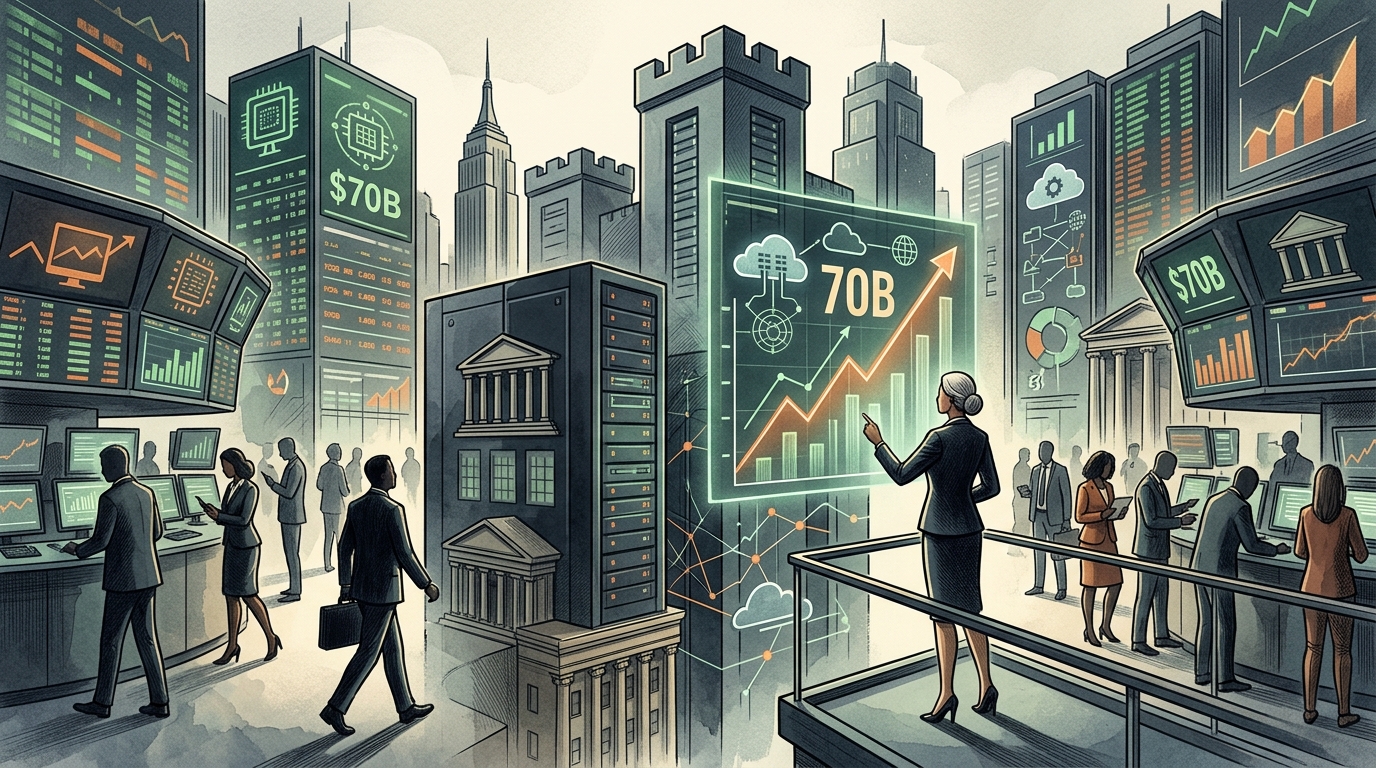
In the high-stakes world of global finance, few figures are as polarizing as Kevin O'Leary, known to millions as "Mr. Wonderful" from the hit show Shark Tank. Today, O'Leary isn't just looking for the next innovative consumer gadget; he is seeking to build the backbone of the future digital economy. With a colossal investment plan totaling $70 billion, the Canadian entrepreneur is shifting his focus toward data centers, which he views as the "new oil" of the Artificial Intelligence era.
Infrastructure as the New Frontier of Power
The explosion of Generative AI has created an insatiable thirst for computational power. Large Language Models (LLMs) require thousands of specialized Graphics Processing Units (GPUs) running 24/7. These units are housed in massive facilities—data centers—which have become the most critical assets on the global technological map. Recognizing this demand, O'Leary has mobilized capital from sovereign wealth funds and private investors, aiming to construct these "digital factories" on a global scale.
For O'Leary, investing in data centers is not merely a business move; it is a geopolitical necessity. He argues that the nation possessing the most robust infrastructure will dominate the 21st century. However, this aggressive strategy is clashing directly with local communities and environmental goals. Resistance is mounting, particularly in regions like Northern Virginia, where the density of data centers has reached a breaking point, straining local resources and public patience.
The Clash with NIMBYism and Environmental Hurdles
The "Not In My Backyard" (NIMBY) movement has found a new target in data centers. Residents are protesting the constant hum of cooling systems, the visual blight of massive industrial warehouses in rural areas, and, most critically, the staggering consumption of electricity and water. A single large-scale data center can consume as much energy as a small city, placing immense pressure on aging power grids. O'Leary, however, remains undeterred. In recent statements, he dismissed these objections as "noise" that hinders progress, emphasizing that economic growth and technological supremacy must take precedence over local grievances.
The environmental dimension is equally fraught. While Big Tech companies pledge to use "clean" energy, the reality is that demand is outstripping the supply of renewables. This is forcing utilities to extend the life of coal and gas plants to prevent grid failures. O'Leary has proposed a radical solution: integrating Small Modular Reactors (SMRs) directly into data center sites. While technically feasible, this proposal has sparked further backlash from environmental groups concerned about nuclear waste and safety in suburban corridors.
Economic Returns vs. The Infrastructure Bubble
From a financial perspective, O'Leary’s strategy rests on the conviction that AI demand is structural and permanent. Data centers offer stable cash flows through long-term leases to tech giants like Microsoft, Google, and Amazon. It is a "hard asset" play that serves as a hedge against inflation. However, some market analysts warn of a potential "infrastructure bubble." If the corporate adoption of AI fails to deliver expected productivity gains, the demand for new capacity could plummet, leaving behind billions in stranded assets.
Despite these risks, "Mr. Wonderful" is betting on scale. He believes the barrier to entry in this sector is so high that only a few players with access to massive pools of capital will survive. This creates an oligopoly in AI infrastructure, where investors act as the new "barons" of the digital age. O'Leary’s stance reflects a broader trend in Silicon Valley and Wall Street: prioritizing speed and power over social consensus and traditional regulatory hurdles.
Conclusion: The Ethics of Progress
The case of Kevin O'Leary and his $70 billion bet highlights the central dilemma of our time. How much are we willing to sacrifice for technological advancement? Data centers are essential for the breakthroughs promised by AI in medicine and climate modeling, yet their resource cost is tangible and immediate. O'Leary has chosen the path of ruthless realism. Whether this choice will be historically vindicated or serve as a cautionary tale of investment hubris remains to be seen in the coming years, as the pillars of these digital temples begin to rise.





