

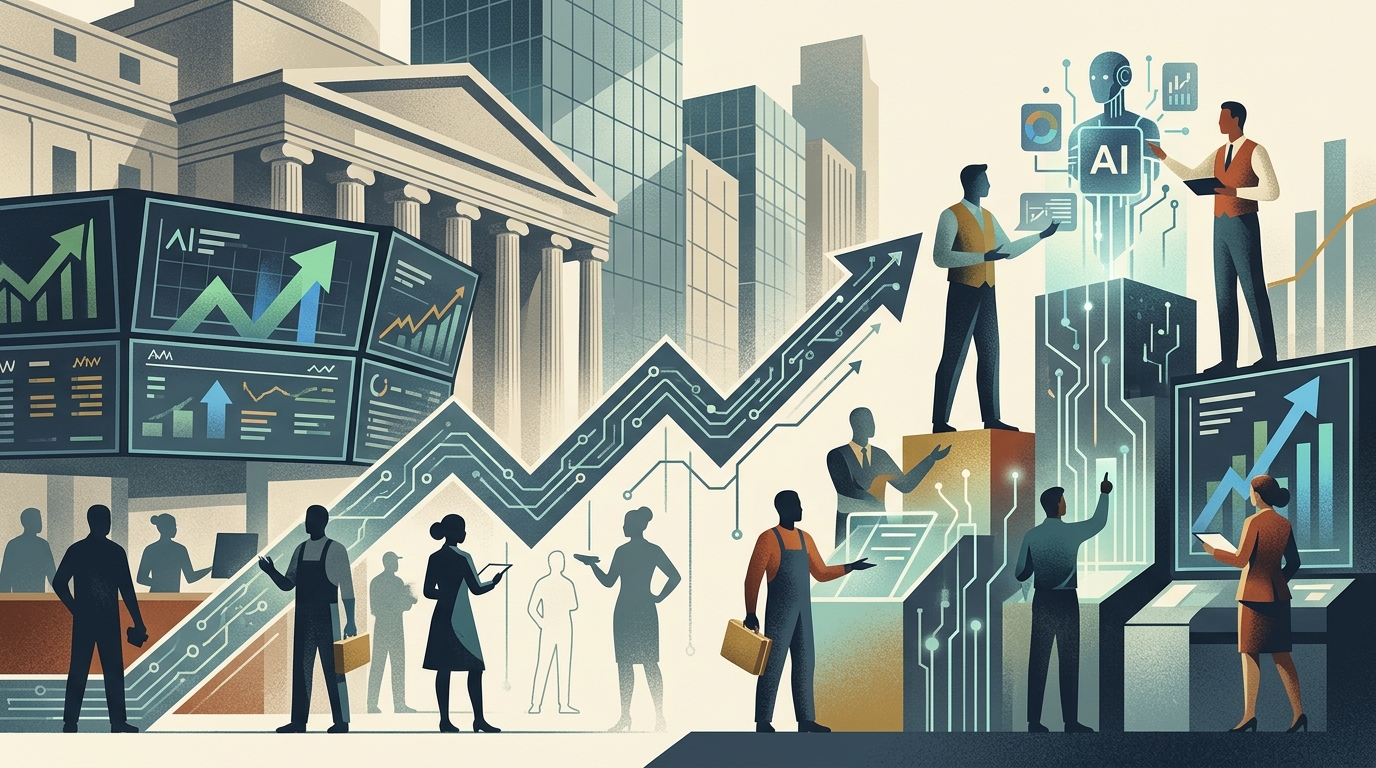
In an era where global public opinion watches the advance of Artificial Intelligence (AI) with bated breath, fearing a massive displacement of workers, Jeff Bezos has stepped forward to offer a diametrically opposed prediction. The billionaire founder of Amazon and Blue Origin, speaking at a recent forum, argued that AI is not going to "steal" our jobs, but will instead lead to an unprecedented labor shortage. His position is not merely an optimistic guess but is rooted in a profound economic analysis of the relationship between technology, productivity, and demand.
The Luddite Fallacy and the New Economic Reality
The history of technology is littered with prophecies of doom that never came to pass. From the Luddites of the Industrial Revolution to the critics of personal computers in the 1980s, the fear remains the same: that the machine will render the human obsolete. Bezos, however, points out that every time technology increases productivity, the cost of products and services drops, leading to an explosive increase in demand. This increased demand, in turn, requires more hands and minds to satisfy.
According to Bezos, AI will function as a "force multiplier." If a worker can currently produce 10 units of output, AI might allow them to produce 100. In traditional thinking, this means we need fewer workers. In Bezos's economic logic, this means companies will expand into new sectors that were previously economically unfeasible, thereby creating new needs for human oversight, strategy, and creativity.
The Demographic Deadlock and AI as a Lifeline
A critical parameter often missing from the AI debate is the demographic crisis hitting developed economies. With aging populations in Europe, Japan, and the US, the labor supply is shrinking dramatically. "We don't have enough people to do all the things we want to do as a civilization," seems to be the underlying message from Bezos.
In this context, AI is not replacing existing workers but filling the gap left by those who are missing. Automation in Amazon's warehouses, for example, did not lead to mass layoffs; it led to an increase in the volume of orders the company could handle, eventually resulting in hiring in other sectors like logistics and customer service. AI will allow smaller teams to achieve results that previously required armies of employees, enabling the economy to grow despite a shrinking workforce.
The Transformation of Skills: The "Centaur" Worker
The prediction of a labor shortage does not mean the transition will be painless. Bezos acknowledges that the nature of work will change radically. Demand will shift from repetitive tasks to "high-value skills." What is often described as the "Centaur" model—the combination of human intuition and artificial intelligence—will become the norm.
- Emotional Intelligence: The ability to manage human relationships and ethical dilemmas remains uniquely human.
- Strategic Planning: AI can analyze data, but humans set the goals and the vision.
- Complex Problem Solving: Handling unpredictable situations that fall outside of AI training data.
The danger, therefore, is not a lack of jobs, but a lack of workers with the necessary skills to collaborate with AI. This poses a massive challenge to global education systems, which must be redesigned to prepare citizens for an economy where AI literacy will be as fundamental as reading and writing.
Critique and Social Implications
Despite Bezos's optimism, many analysts remain skeptical. Criticism focuses on the fact that while new jobs may be created, they might not be accessible to those who lose theirs due to automation. Furthermore, there is the fear that the benefits of increased productivity will accumulate among the owners of the technology, further widening the inequality gap.
However, Bezos's perspective offers a necessary balance to the dystopian narrative. If AI leads to an era of abundance and lower costs, the challenge for society will not be surviving unemployment, but managing prosperity and ensuring that the "labor shortage" leads to better working conditions and higher wages for everyone.





