

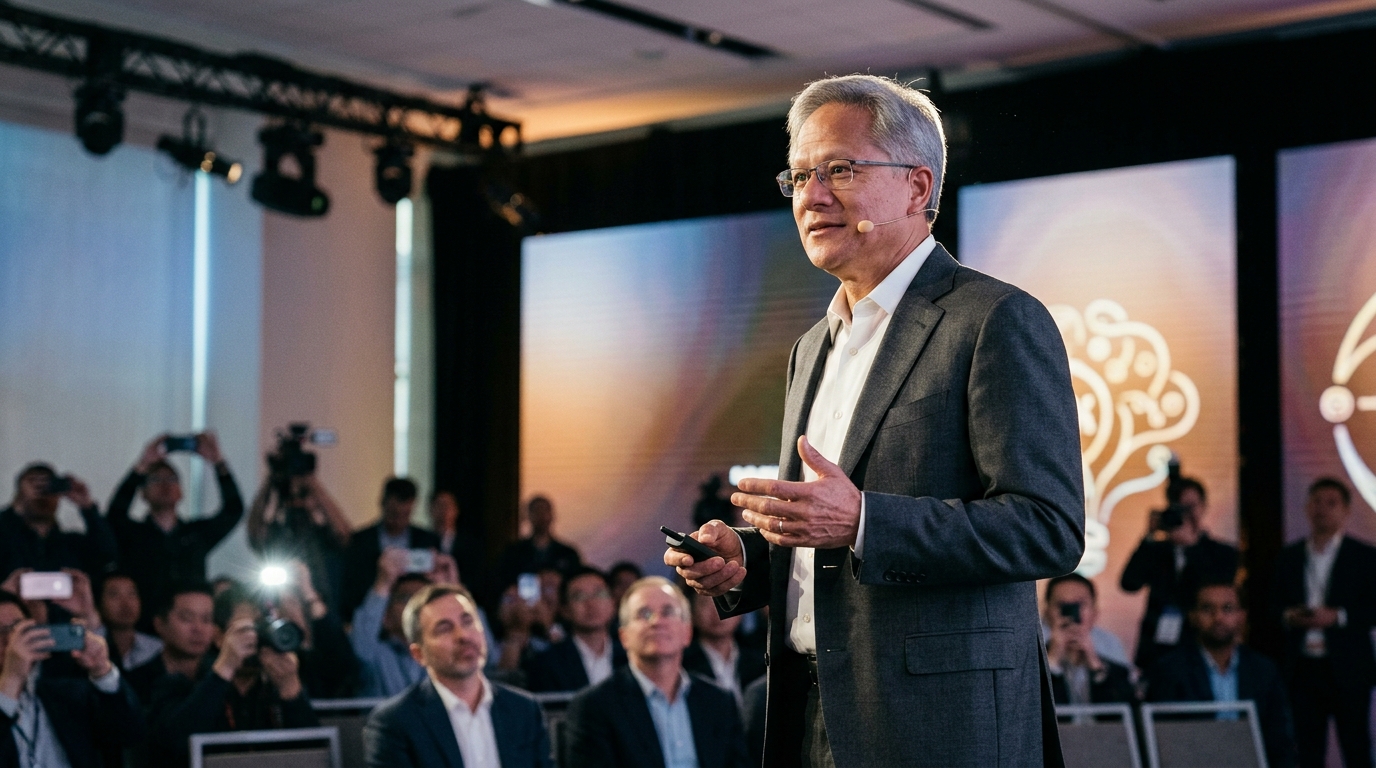
The news struck like a lightning bolt through the corridors of Silicon Valley and the global scientific community. One of Google’s most distinguished scientists, a Nobel Prize winner for his contributions to the AI revolution via AlphaFold, has announced his departure from the tech giant to join Anthropic. This move is not merely a high-level executive transfer; it is a symbolic and substantive defeat for Google DeepMind and a massive victory for Anthropic, the company that positions itself as the ethical guardian of AI development.
The Legacy of AlphaFold and the Weight of the Loss
To understand the magnitude of this news, one must consider what this scientist represents. His work on protein structure prediction via AI didn't just change biology; it proved that AI could solve problems humanity had struggled with for decades. Google, through DeepMind, had managed to identify itself with the "pure science" of AI. The departure of such a figure suggests a deeper crack in Google’s ability to retain its brightest minds, especially as they enter the global spotlight of peak recognition.
Analysts point out that Google, under pressure from shareholders to turn research into profitable products (like Gemini), may have begun to neglect the research environment that allowed for free scientific inquiry. The bureaucracy of an organization with 180,000 employees often clashes with the need of top-tier researchers for speed and agility. Anthropic, on the other hand, offers an environment that remains focused on research and safety, away from the immediate pressures of the advertising market.
Why Anthropic? The Dilemma of Safety vs. Ethics
Anthropic was founded by former OpenAI executives who were concerned about the commercialization of technology at the expense of safety. For a Nobel-winning scientist, the attraction to such a company isn't about the money—which Google can provide in abundance—but about the vision. Anthropic has successfully crafted a narrative of "responsible development" that resonates deeply within academic circles.
- Research Autonomy: The ability to work on fundamental problems without the need for immediate integration into consumer products.
- Safety Focus: Anthropic invests in methods to ensure AI remains aligned with human values, a field that fascinates top thinkers.
- Agility: A smaller team allows for faster decision-making and less internal corporate politics.
This move also sends a clear message to the market: Anthropic is no longer the "underdog." Backed by billions from Amazon and Google (ironically), it now has the prestige to attract the scientific elite, establishing itself as the primary challenger to OpenAI and Google in the race for Artificial General Intelligence (AGI).
The Geopolitics of Talent and Google’s Future
This departure comes at a critical time for Google. Despite its massive infrastructure, the company is struggling to prove it remains the leader in innovation. The loss of a Nobel laureate is not just a PR blow; it is a loss of intellectual capital that could have led to the next major breakthrough. In the AI world, where talent is the rarest resource, the movement of such an individual can trigger a "domino effect" of departures.
"In the knowledge economy, people are not just employees; they are the infrastructure itself. When a Nobel laureate leaves, they take an entire ecosystem of ideas with them."
In conclusion, this move highlights a new reality: the battle for AI will not be decided solely by Nvidia’s processors or internet data, but by who can offer the most inspiring vision to the few people who truly understand the future of technology. Google is now called to reinvent itself as a research hub; otherwise, it risks becoming a "library" of past successes while the future is written in smaller, more agile laboratories.





