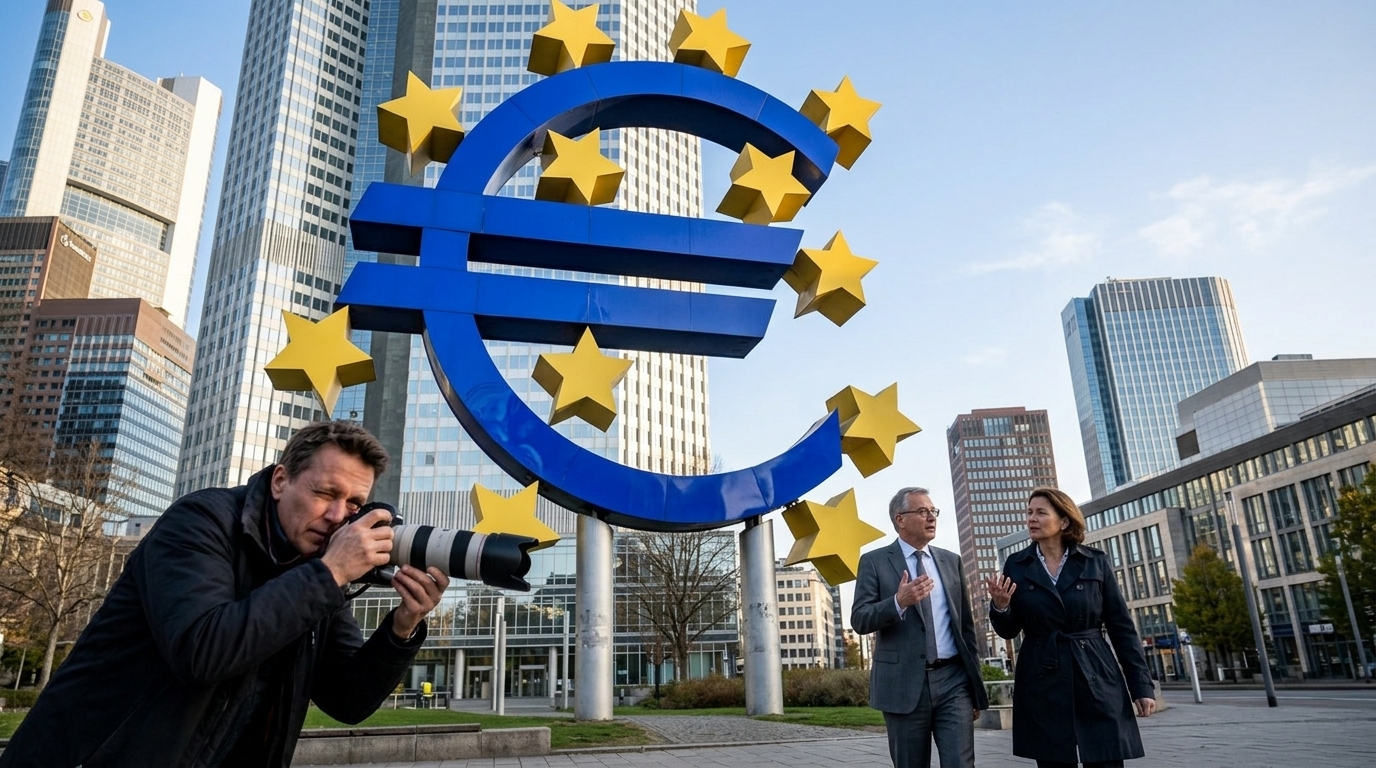
In the fluid landscape of the European economy, the European Central Bank (ECB) appears to be entering a phase of strategic reflection. The recent de-escalation of geopolitical tensions, which for months kept energy markets on edge, now provides policymakers with the 'luxury' of time. Martins Kazaks, a member of the ECB Governing Council and Governor of the Central Bank of Latvia, sent a clear message: haste is not an advisor in the current phase of monetary policy.
Geopolitics as a Regulator of Monetary Policy
For much of 2024 and early 2025, the ECB was caught between inflationary pressures caused by conflicts in the Middle East and the ongoing crisis in Ukraine. Oil and natural gas prices acted as 'wildcards,' threatening at any moment to derail the plan for returning inflation to its 2% target. However, the current relative calm on these fronts allows Frankfurt to breathe.
De-escalation does not necessarily mean a definitive solution to the problems, but it offers stability in the prices of imported raw materials. This reduces the risk of so-called 'second-round effects,' where increased energy prices are passed on to final products and services, fueling a vicious cycle of increases. Kazaks emphasizes that the ECB must remain data-dependent, avoiding commitments to specific timelines that could trap it if the scenery changes again.
The Dilemma of Inflation and Growth
Despite the optimism, the Eurozone remains at a critical crossroads. Service sector inflation remains stubbornly high, reflecting wage increases trying to recover the purchasing power lost in previous years. On the other hand, high borrowing rates have begun to 'strangle' growth in major economies, such as Germany, which is struggling with stagnation.
The ECB's strategy to 'buy time' is interpreted as an attempt to balance two opposing forces: the need to ensure that inflation does not flare up again and the need not to lead the European economy into a deep and prolonged recession. Kazaks, traditionally one of the more 'hawkish' officials, now seems to be adopting a more moderate stance, recognizing that excessive tightening could be just as damaging as premature easing.
The Importance of Predictability for Markets
Markets tend to react spasmodically to uncertainty. The ECB's wait-and-see stance, if communicated correctly, can act as a stabilizing factor. Investors seek clarity, and the message that 'we are in no rush' suggests a conviction that the current policy is bearing fruit. However, there is always the risk of the ECB being 'behind the curve' if economic conditions deteriorate faster than expected.
In this context, the next Governing Council meetings will be decisive. The analysis of new growth and inflation forecasts will serve as the roadmap for the second half of 2026. The ECB is called upon to prove it has the reflexes to adapt to a world where geopolitical balances are now as important as monetary indicators. 'Buying time' is a tactical move, but strategic success will be judged by how this time is used for the soft landing of the European economy.