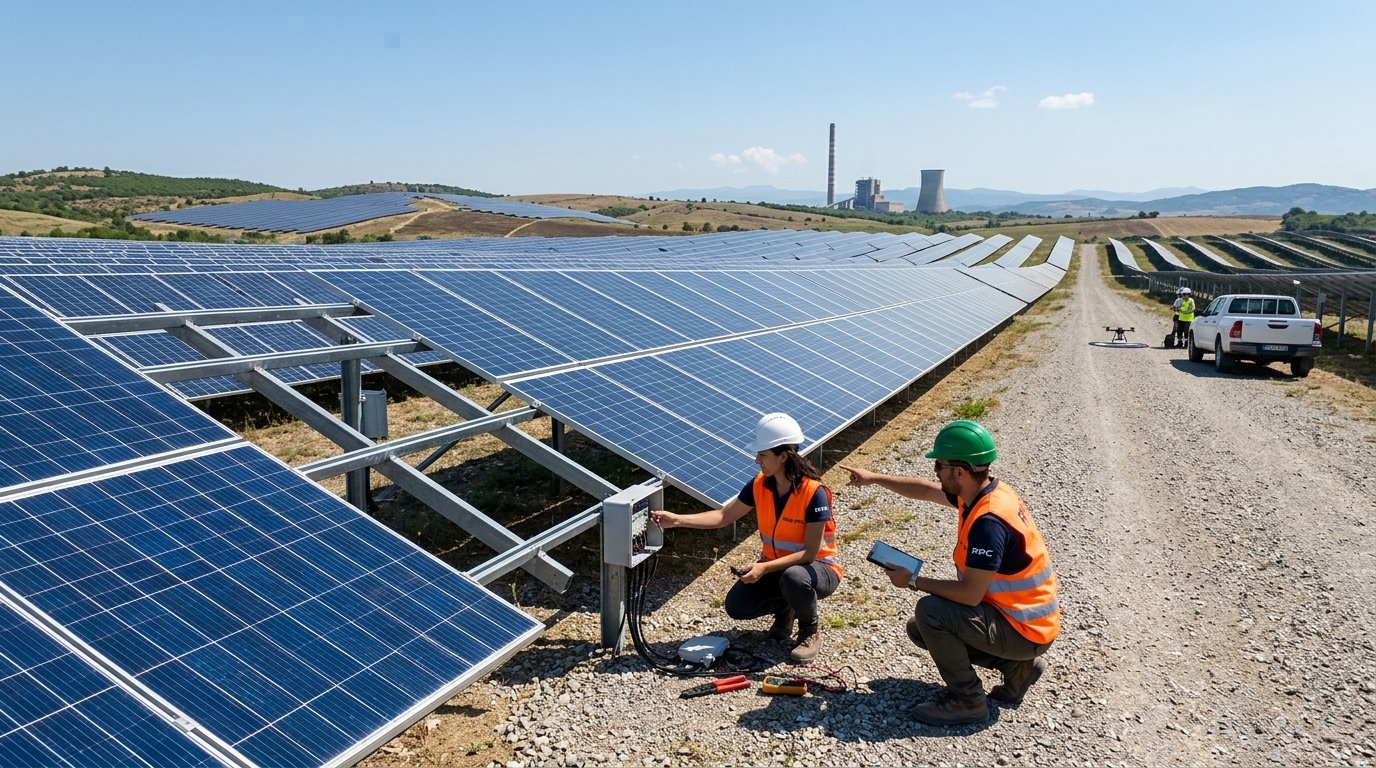
In a historic moment for Greece's energy transformation, Western Macedonia—the country's traditional lignite-producing heartland—is being reshaped into a European epicenter for solar energy. METON Energy S.A., a strategic joint venture between PPC Renewables (49%) and Germany’s RWE Renewables (51%), has announced the full commercial operation of nine large-scale solar parks with a total capacity of 930 MWp (884 MWac). This development is more than a corporate milestone; it is a powerful symbol of the "Just Transition" from fossil fuels to clean energy sources.
The Architecture of a Landmark Investment
The project, spanning the regions of Ptolemaida and Amyntaio, was developed at a pace rarely seen for such large-scale infrastructure in Greece. These nine solar parks can generate enough electricity annually to cover the needs of more than 400,000 households. The significance of this output is twofold: it bolsters national energy security and contributes drastically to the goals set by the National Energy and Climate Plan (NECP).
The financing of the project was equally innovative, leveraging resources from the Recovery and Resilience Facility (RRF) alongside bank loans from Greek systemic banks. This funding model highlights the confidence of both international and domestic markets in the prospects of the Greek green economy. The PPC-RWE partnership demonstrates that the synergy of domestic experience and international expertise can produce results that transcend national borders.
From Lignite to Silicon: A Social Challenge
Western Macedonia is undergoing a rapid yet necessary change in its productive model. For decades, the region was synonymous with lignite mining, providing thousands of jobs but also burdening the environment and public health. Installing solar parks on former mining lands is the answer to the question of land use in the post-lignite era. However, the challenge remains: how to ensure that the new "green" economy provides the same level of employment and social cohesion as the previous one?
METON Energy is not stopping here. An additional 567 MWp of solar projects are already under construction and are expected to be operational within the next year. Upon completion, the joint venture's total capacity will approach 2 GW, making it one of the largest players in Renewable Energy Sources (RES) in Southeast Europe. This scale allows for significant economies of scale and makes the electricity produced highly competitive, putting downward pressure on wholesale market prices.
PPC’s Role and the Future of the Grid
For PPC, this success is the "crown jewel" of its strategy for full decarbonization by 2028. Under the leadership of Georgios Stassis, the utility has managed to transform from a sluggish state-owned entity into a modern, outward-looking energy powerhouse. The pivot to RES is not just an environmental mandate but a financial necessity, as the cost of CO2 emissions has made lignite production prohibitively expensive.
However, the rapid penetration of RES brings the need for grid upgrades and the integration of energy storage systems (batteries) to the forefront. Without sufficient storage, surplus energy during peak sunlight hours risks being wasted. The next phase of the PPC-RWE collaboration is expected to focus precisely on this area, shielding the system against production fluctuations.
- Total operational capacity: 930 MWp
- Under construction: 567 MWp
- Household coverage: 400,000+
- CO2 emission reduction: Millions of tons annually
In conclusion, the full operation of these solar parks in Western Macedonia is a milestone confirming that Greece can lead the way in the green transition. The challenge now is to distribute this wealth to the local community and ensure that "green" energy translates into permanently lower bills for the average consumer.