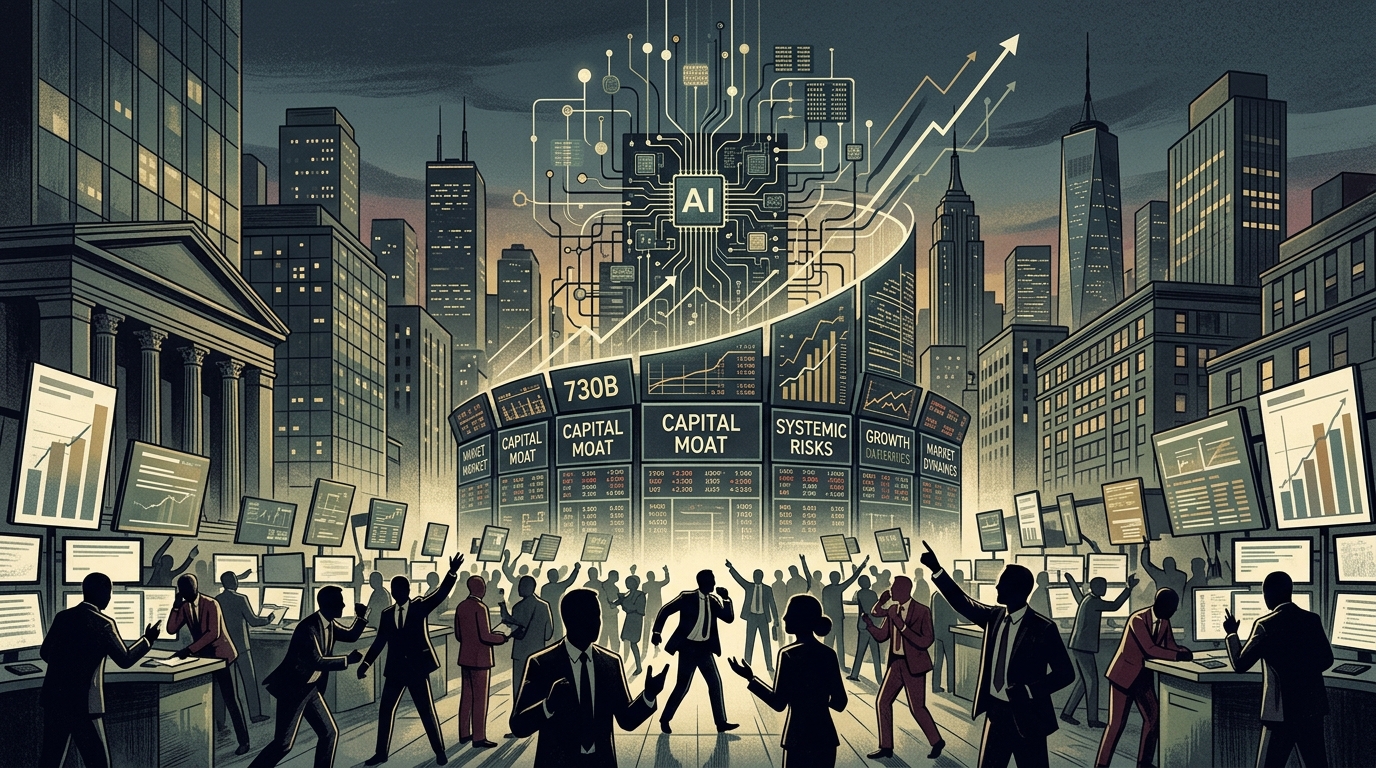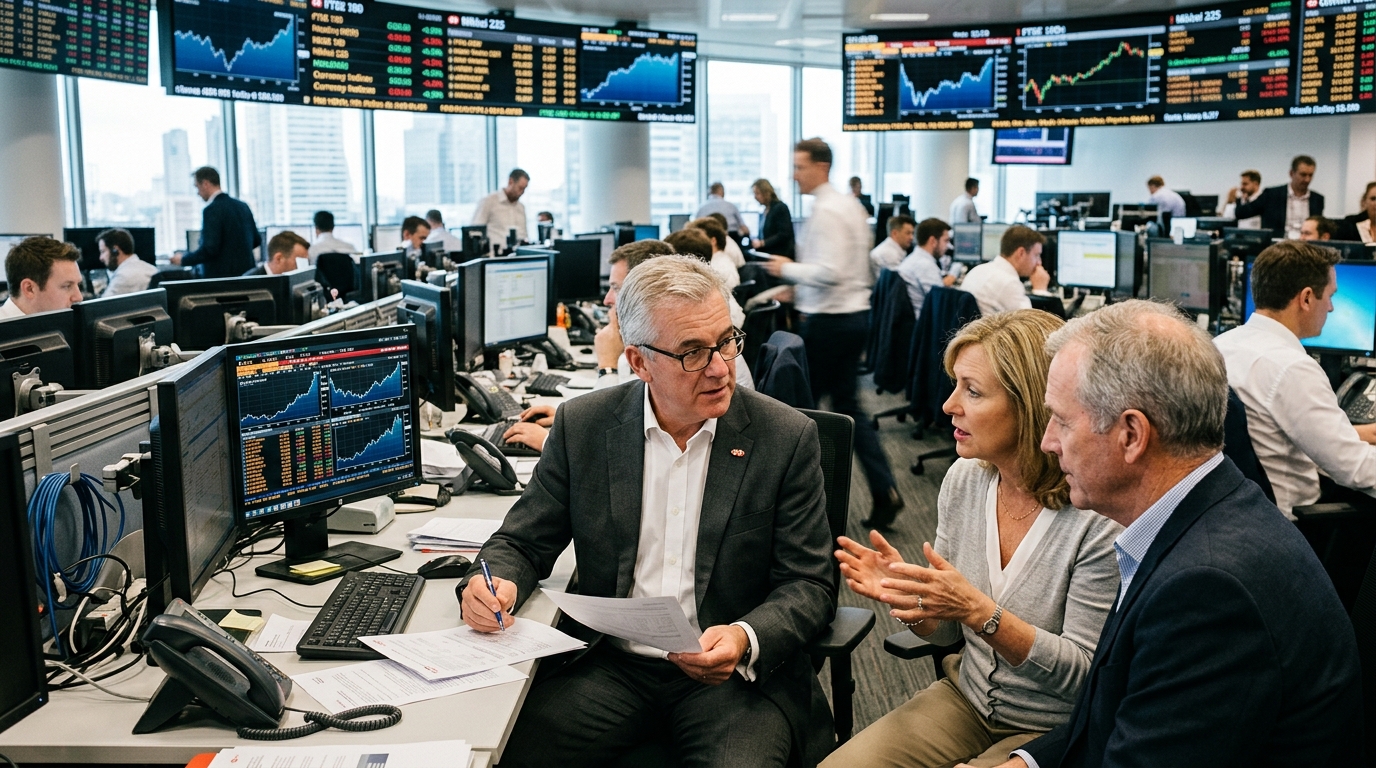
At the dawn of 2026, artificial intelligence has permeated every facet of the global economy, from automated supply chains to medical diagnostics. However, in a sector where logic meets raw emotion—personal wealth management—the 'ghost in the machine' seems to be retreating in the face of human presence. A new, extensive report from HSBC highlights an unexpected resilience: investors still trust human advisors far more than algorithms, despite promises of infallible predictions.
The Trust Paradox in the Digital Age
HSBC's study, conducted across a broad spectrum of clients—from retail investors to Ultra-High-Net-Worth Individuals (UHNWI)—reveals that 70% of respondents feel 'significantly more comfortable' when investment decisions are made or validated by a human. This comes even as Generative AI platforms have improved their data analysis performance by 40% over the last two years.
The primary issue is not capability, but accountability. 'When markets collapse, the investor doesn't want to read an error log file. They want to look someone in the eye and ask: "What do we do now?"' a bank executive noted. Emotional Intelligence (EQ) is proving to be the ultimate 'firewall' for traditional banking services against Silicon Valley's encroachment.
The Psychology of Risk and Algorithmic Suspicion
Investors seem to distinguish between 'information' and 'wisdom.' While AI excels at processing vast amounts of real-time data, it lacks the context provided by human experience. The HSBC report points out that investors fear the so-called 'Black Box effect'—the inability to understand how an algorithm arrived at a specific recommendation.
- Ethical Accountability: Investors seek someone who bears legal and moral responsibility for their advice.
- Life Complexity: Financial goals are often intertwined with family dramas, divorces, or inheritance issues that AI struggles to navigate with nuance.
- Resistance to Homogenization: There is a fear that if everyone uses the same AI, markets will become overly predictable or prone to mass panics.
'Technology is a tool for efficiency, but trust is a social contract. You cannot sign a social contract with Python code,' the HSBC analysis notes.
The Hybrid Model: The Centaur Advisor
Despite the preference for humans, the report does not herald the end of technology. Instead, it introduces the concept of the 'Centaur Advisor.' This is a model where the human uses AI as an 'exoskeleton' to enhance their capabilities. 85% of HSBC clients stated they would prefer an advisor who uses AI for research but makes the final decision themselves.
This evolution is changing the banker's role. From a 'number cruncher,' they are transforming into a 'relationship and psychology manager.' Their value no longer lies in access to information—which is now free and ubiquitous—but in the ability to filter noise and provide composure during periods of volatility.
Conclusion: A Return to Roots
The investor sentiment recorded by HSBC serves as a clear message to tech giants seeking to disrupt Wealth Management. Economics, at its core, remains a human activity. As we head into the latter half of the 2020s, the challenge for financial institutions will not just be adopting the best AI, but maintaining their humanity in an increasingly digital world.