

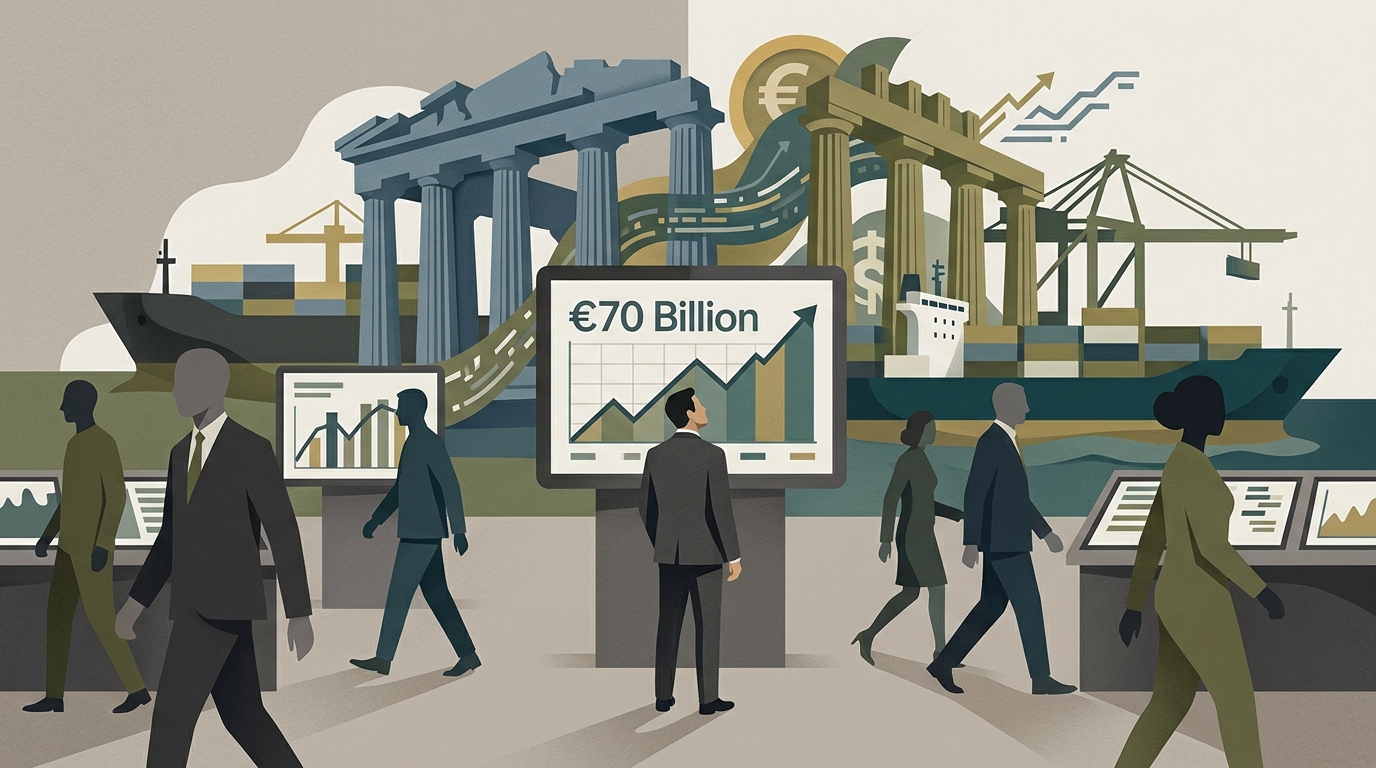
At a decisive moment for the Greek economy, the Minister of National Economy and Finance, Kostis Hatzidakis, unveiled the new Five-Year Extroversion Plan, setting a highly ambitious target: increasing goods exports to €70 billion by the end of the decade. This announcement is not merely a quantitative goal but a strategic manifesto for shifting the country's productive model, which has traditionally relied on domestic consumption and the services sector.
The Roadmap to 2030
The government's plan focuses on narrowing the trade deficit by boosting the competitiveness of Greek enterprises. According to Mr. Hatzidakis, Greece must capitalize on the momentum of regaining investment-grade status and its steady fiscal trajectory to aggressively enter new markets. The plan includes specific actions to support Small and Medium-sized Enterprises (SMEs), which form the backbone of the economy but often lack the scale and resources to compete internationally.
- Tax incentives for business mergers and strategic partnerships.
- Leveraging Recovery and Resilience Facility (RRF) funds for digital transformation.
- Strengthening economic diplomacy networks in emerging markets in Asia and the Gulf.
- Investing in the green transition of industrial units to meet EU standards.
The Productivity Challenge and the Role of AI
One of the core parameters highlighted by the Minister is the need for a qualitative upgrade of Greek products. In a world where supply chains are being restructured and Artificial Intelligence (AI) is disrupting production norms, Greece cannot afford to remain static. The adoption of AI technologies in manufacturing and precision agriculture is now considered a prerequisite for reaching the €70 billion target. Optimizing production and reducing costs through automation will allow Greek products to become more competitive in both price and quality on the global stage.
"Extroversion is no longer an option; it is the only path to a sustainable and resilient economy that will not be shaken by international crises," Mr. Hatzidakis emphasized during the presentation.
Geopolitical Risks and the International Environment
Despite the optimism, the road to 2030 is fraught with challenges. Geopolitical instability in the Eastern Mediterranean, the ongoing war in Ukraine, and global trade disruptions caused by tensions in the Red Sea directly impact shipping costs. Furthermore, Greek industry must grapple with high energy costs relative to other European counterparts. While the government promises targeted interventions, success will largely depend on the private sector's ability to adapt swiftly to the evolving demands of the global marketplace.
Conclusions and Outlook
Targeting €70 billion in exports by 2030 is a vote of confidence in the potential of Greek entrepreneurship. However, transitioning from a consumption-led economy to an export-driven one requires deep reforms in public administration, the judiciary, and education. Linking universities with production and fostering an innovation ecosystem are the keys that will unlock the door to international markets for Greek goods. The next five years will determine if this vision becomes a reality or remains a formal governmental aspiration.





