

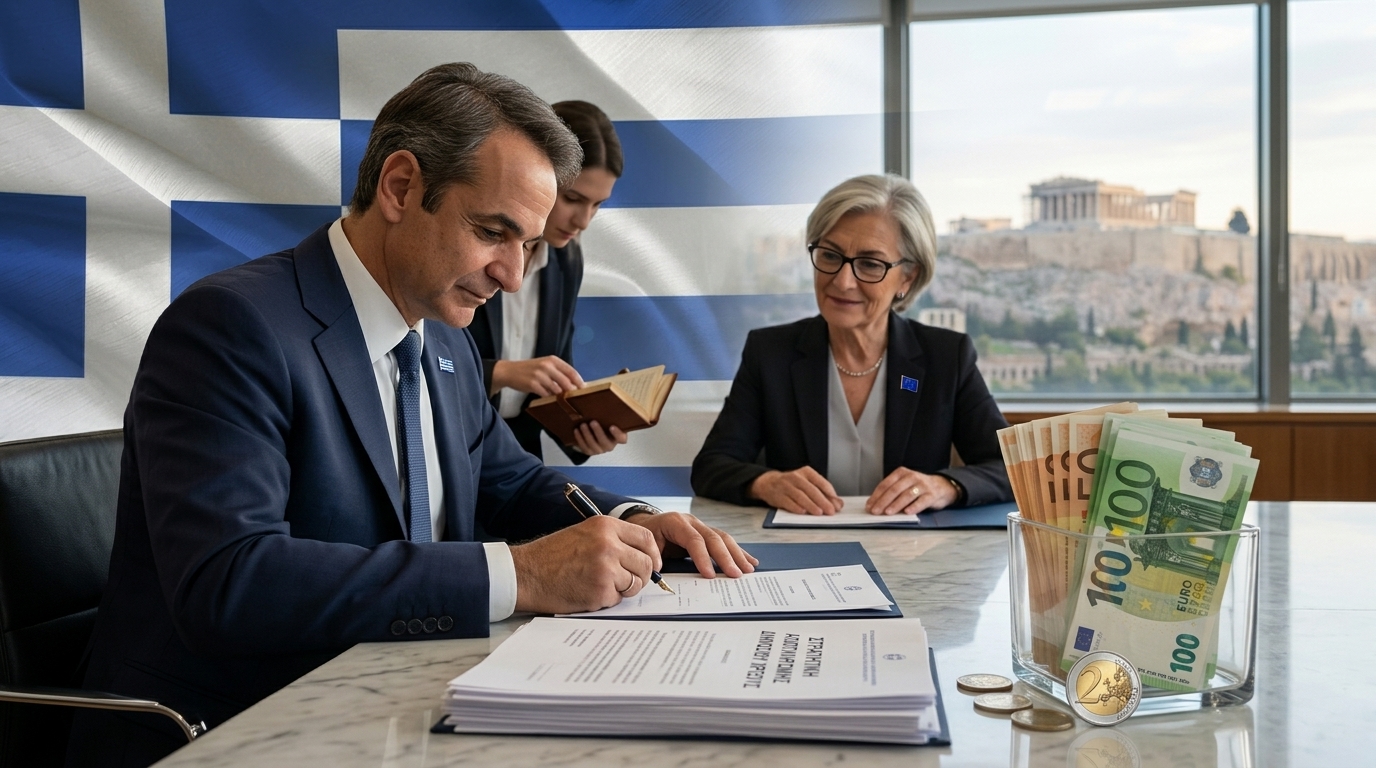
The Greek economy, in an effort to solidify its position as a stable and credible player within the Eurozone, is moving forward with another act of aggressive public debt management. The early repayment of €6.9 billion, concerning loans from the first memorandum (Greek Loan Facility - GLF), is not merely an accounting adjustment but a clear signal to international markets and credit rating agencies. This move, covering installments due in 2026, 2027, and 2028, marks the end of an era and the beginning of a new fiscal normalcy.
The Timeline of Decoupling and PDMA’s Strategy
The Public Debt Management Agency (PDMA) has adopted a strategy in recent years based on utilizing high cash reserves—the well-known "buffer"—and primary surpluses. The decision for the early repayment of bilateral loans with Eurozone countries (GLF) was made with the aim of reducing debt servicing costs. As these loans carry a floating interest rate (three-month Euribor plus a margin), maintaining them in an environment of high interest rates set by the European Central Bank would be disadvantageous.
With this move, Greece achieves a dual objective: first, it reduces the absolute debt figure, and second, it improves the maturity profile, eliminating repayment "peaks" that could cause market nervousness in the coming years. It is noteworthy that the Greek debt-to-GDP ratio follows the fastest downward trend in Europe, having dropped from 200% during the pandemic to levels below 150%, with a target for further decline towards 130% by 2028.
Market Reaction and the Investment Grade
Early repayment acts as a catalyst for further upgrades of the Greek credit rating. Although Greece has already regained its investment grade status from most agencies, the goal now is to climb to higher tiers (A-rated), which will allow even larger institutional portfolios to invest in Greek bonds. Analysts from JP Morgan and Goldman Sachs point out that consistency in budget execution and aggressive debt reduction differentiate Greece from other Southern European countries facing fiscal fatigue.
However, this strategy is not without its challenges. Maintaining high primary surpluses (above 2% of GDP) requires strict fiscal discipline, which often clashes with social demands for increased spending on health, education, and infrastructure. The government is called upon to balance satisfying the markets with boosting the disposable income of citizens, who are still pressured by inflation and housing costs.
The Future: From Crisis to Resilience
Looking ahead, the early repayment of €6.9 billion represents a milestone on the path to 2032, the key year when the grace period for EFSF loans expires. Greece is building "space" and credibility today so that it can refinance its debt on favorable terms in the future, without the need for external supervision or new memorandum-style restrictions.
- Reduction of annual interest costs by hundreds of millions of euros.
- Strengthening of foreign direct investment (FDI) confidence.
- Improvement of liquidity within the Greek banking system.
- Symbolic finalization of the exit from the previous decade's debt crisis.
In conclusion, Greece is not just "erasing" its debt; it is reintroducing itself to the world. The success of this endeavor will be judged by whether fiscal health translates into sustainable growth that reaches all of society, turning balance sheet figures into prosperity for its citizens.





