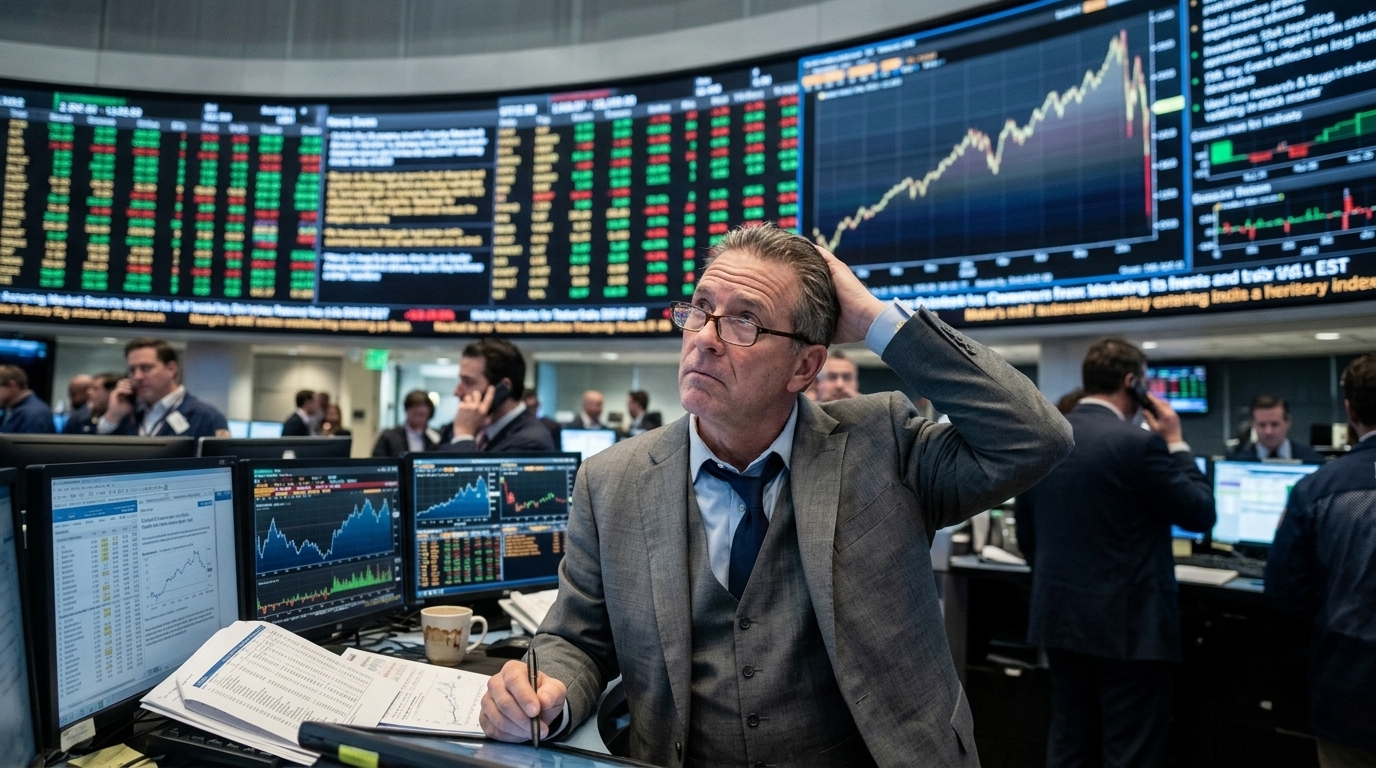
In the current economic landscape of July 2026, international markets appear to be sailing through calm waters. The VIX index, Wall Street's traditional 'fear gauge,' remains anchored at levels suggesting absolute complacency. However, a new report from Goldman Sachs analysts is set to stir the waters, warning that this calm is artificial and extremely fragile. The investment bank argues that we are facing a historical anomaly where traditional risk measurement tools fail to capture the accumulated pressure within the system.
The Decoupling of the VIX from Reality
For decades, the VIX has been the gold standard for assessing volatility. Calculated based on S&P 500 index option prices, it offered a glimpse into what investors expected for the next 30 days. Today, however, Goldman Sachs points out that the index has become 'blind' to specific dynamics. The rise of zero-day-to-expiry (0DTE) options has shifted trading volume into timeframes that the VIX simply does not track.
This shift creates a false sense of security. While the VIX shows low volatility, actual intra-day volatility remains high, and the correlation between stocks has dropped to levels that historically precede violent corrections. Goldman Sachs emphasizes that when dispersion is this high, the market becomes vulnerable to sudden shocks that can trigger chain reactions of liquidations.
The Role of AI and Capital Concentration
One of the key factors highlighted in the analysis is the extreme concentration in technology stocks, particularly those leading the Artificial Intelligence revolution. As we approach the second half of 2026, the market has become overly reliant on a few 'giants.' Goldman Sachs warns that any disappointment in these companies' earnings or a shift in the narrative surrounding AI profitability could act as a fuse.
- Excessive leverage in short-volatility strategies increases the risk of a 2018-style 'volmageddon.'
- Geopolitical tensions in Asia and Eastern Europe have not been adequately priced into options.
- Central bank monetary policy remains uncertain, despite expectations for rate cuts.
The bank notes that institutional investors have reduced their hedging positions, assuming the market will continue its upward trajectory unabated. This lack of protection means that if a sell-off begins, the decline will be much steeper and more violent, as everyone tries to exit through the same narrow door at once.
Survival Strategies in an Uncertain Market
What then does Goldman Sachs propose? The report does not call for panic, but for vigilance. Analysts suggest restructuring portfolios with an emphasis on defensive sectors and buying 'cheap' protection through options that are currently undervalued by the market. History has shown that when complacency reaches its zenith, a correction is just around the corner.
"The current calm is not a sign of health, but a sign that investors have grown accustomed to ignoring the risks staring them in the face," the report states.
In conclusion, the Goldman Sachs warning serves as a reminder that markets do not always move in a straight line. The illusion of security provided by the VIX may be the most dangerous element of the current investment environment. The coming months will show whether Wall Street can achieve a 'soft landing' or if we are headed for a rude awakening.