

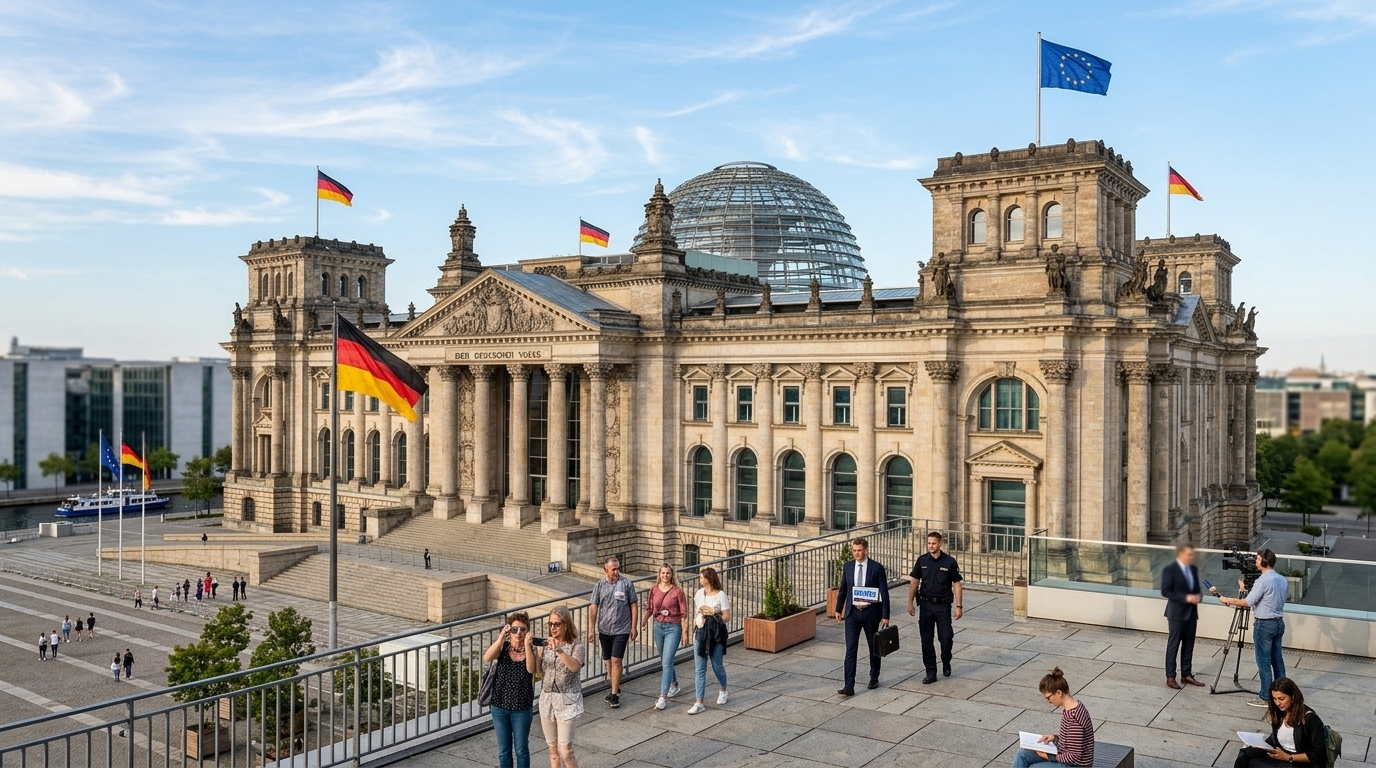
Germany, traditionally the powerhouse of the European economy and the rigid guardian of fiscal discipline, stands at a critical crossroads. Recent announcements from Berlin regarding the 2027 fiscal plan reveal a reality that many sought to avoid: the era of surpluses and the "black zero" (Schwarze Null) is definitively over. With net new borrowing projected to reach €118.7 billion, the German government is tasked with squaring the circle, balancing strict constitutional mandates with the pressing needs of the 21st century.
The Triple Threat to Fiscal Stability
The surge in financing needs is not the result of sudden profligacy but the convergence of three structural factors straining the German state. First, the geopolitical shift triggered by the invasion of Ukraine forced Berlin into a historic "Zeitenwende" (turning point). The commitment to spend over 2% of GDP on defense, combined with the depletion of the €100 billion special fund for the Bundeswehr, means the regular budget must now absorb massive costs for military modernization.
Second, the nation’s infrastructure—from the Deutsche Bahn rail network to highway bridges and digital connectivity—shows signs of decay after decades of underinvestment. Restoring these assets is no longer optional but a prerequisite for maintaining industrial competitiveness. Third, the social safety net is burdened by an aging population, driving up spending on pensions and healthcare at a time when tax revenues are falling short of expectations due to anemic economic growth.
The "Debt Brake" and Political Friction
At the heart of the debate lies the constitutionally mandated "debt brake" (Schuldenbremse). Finance Minister Christian Lindner remains its staunchest defender, arguing that fiscal credibility is Germany's strongest asset in international markets. However, his coalition partners, the Social Democrats (SPD) and the Greens, are pushing for a relaxation of the rules, contending that "investments for the future" should not be sacrificed on the altar of accounting austerity.
"Germany cannot remain a leading power with infrastructure from the last century and a defense based on shortages. Borrowing for investment is an investment in future growth," sources from the Green party suggest.
This conflict is not merely economic but deeply political. As elections approach, the management of the 2027 budget will serve as the ultimate test for the coalition's cohesion. The need for €118.7 billion in new borrowing indicates that the room for maneuver has narrowed dangerously, especially as debt servicing costs have spiked due to high ECB interest rates.
European Implications and Economic Stagnation
Germany’s fiscal trajectory directly impacts the entire Eurozone. If Europe’s largest economy continues to flirt with recession or stagnation, the consequences for its trading partners will be severe. The lower tax revenues cited in the Fortune Greece report are a symptom of a deeper crisis in the German business model, which once relied on cheap Russian energy and exports to China.
- The transition to green energy requires massive capital that the state is struggling to mobilize.
- A shortage of skilled labor is limiting production capacity.
- Competition from the US and China in new technologies threatens the vital automotive sector.
In conclusion, the €118.7 billion for 2027 is not just a figure on a spreadsheet. It represents the cost of Germany’s transition into a new era. The success or failure of this fiscal strategy will determine whether the country remains the economic heart of Europe or becomes the continent’s "sick man," trapped between the ideological dogmas of the past and the harsh demands of the future.





