

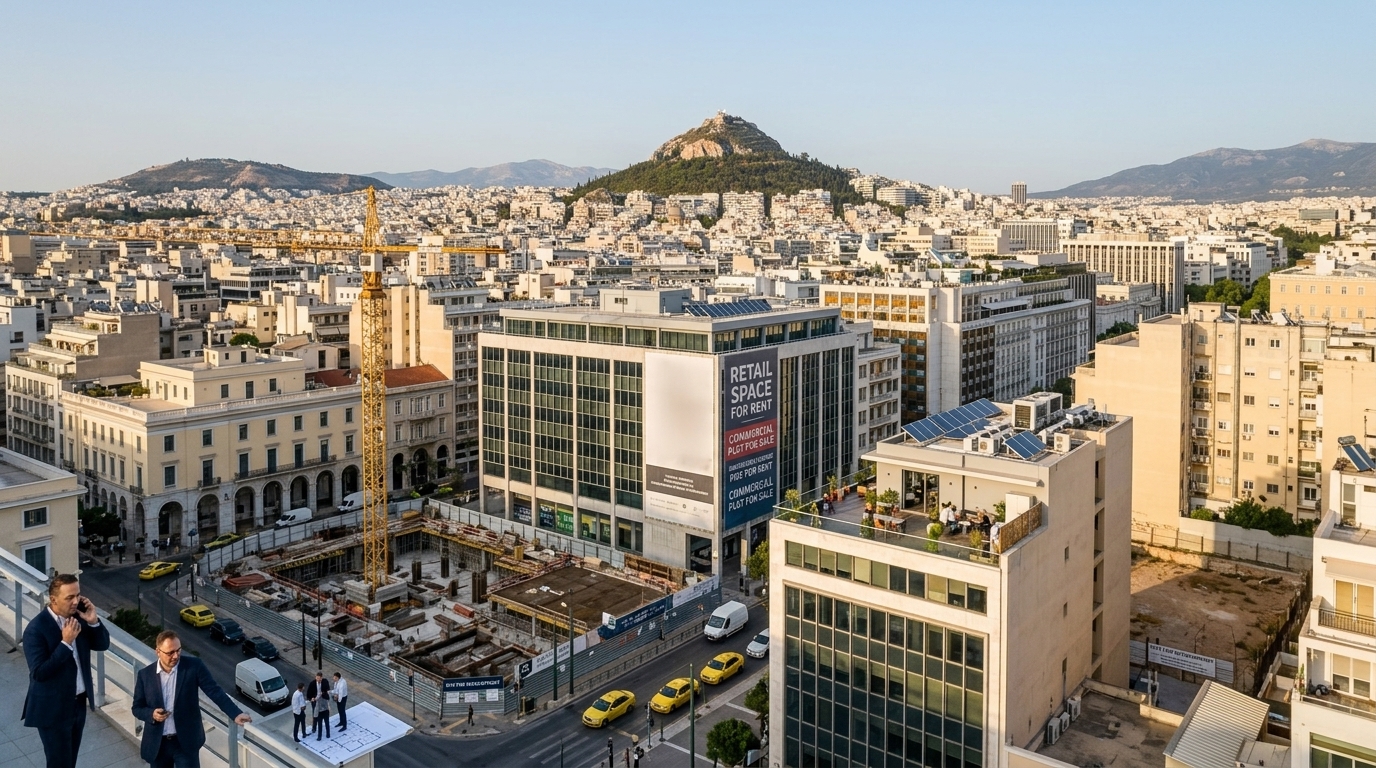
The Greek real estate market, a traditional sanctuary for domestic wealth and a newfound magnet for international capital, is traversing a period that many analysts describe as 'paradoxical.' While borrowing costs remain at levels that should logically dampen demand and construction material prices have stabilized at historic highs, the momentum for commercial spaces and land plots in Attica remains unabated. A recent report by Fortune Greece highlights a two-speed market, where quality and sustainability have become the sole passport to high returns.
The Dominance of Green Offices and Supply Scarcity
In the commercial real estate sector, demand for Grade A office spaces has surpassed all precedents. The shift of major corporations toward ESG (Environment, Social, Governance) criteria is no longer an optional choice but an imperative dictated by shareholders and European regulations. This has created a massive gap between modern, bioclimatic buildings and the older structures of central Athens.
Investors are focusing on buildings with LEED or BREEAM certifications, which offer lower operating costs and a better working environment. However, the supply of such spaces remains extremely limited. This tightness is driving rental and sales prices steadily upward, with areas like Maroussi, Syngrou Avenue, and Ellinikon leading the charge. The market is not just looking for square footage; it seeks infrastructure that can withstand time and integrate cutting-edge technologies.
Land Plots in Attica: Seven Years of Growth
Perhaps the most striking element of the current situation is the trajectory of land plots in Attica. For the seventh consecutive year, land prices are recording an upward trend, despite the fact that the cost of constructing a building has increased by at least 30-40% compared to the pre-pandemic period. The scarcity of available plots in prime areas, combined with intense residential development in the southern and northern suburbs, sustains this trend.
However, the land market faces a significant institutional challenge: the uncertainty surrounding the New Building Code (NOK). Recent decisions by the Council of State (StE) regarding building heights and construction 'bonuses' have frozen many investments. Developers are in a state of anticipation, as the legal framework remains fluid, creating risks for business plans that were based on specific building coefficients.
Retail and Strategic Locations
In the retail sector, the picture is equally compelling. High-street locations, such as Ermou in Athens or Metaxa in Glyfada, have not lost their luster. On the contrary, rents in these areas continue to rise as major retail chains seek 'flagship stores' that serve more as points of visibility and experience rather than mere sales points. The rise of e-commerce did not eliminate the physical store; it forced it to mutate into a space of high aesthetics and interactivity.
- Demand for logistics centers remains sky-high due to Greece's geopolitical position.
- REITs (Real Estate Investment Trusts) continue to be the primary market players.
- Tourism development directly impacts commercial property prices in the historical center.
In conclusion, the Greek real estate market in 2026 shows signs of maturation. It is no longer a blind price surge but a selective market where location, energy class, and legal security determine value. Challenges remain, primarily on the front of bureaucracy and the cost of money, but the momentum developed is unlikely to be halted in the near future.





