

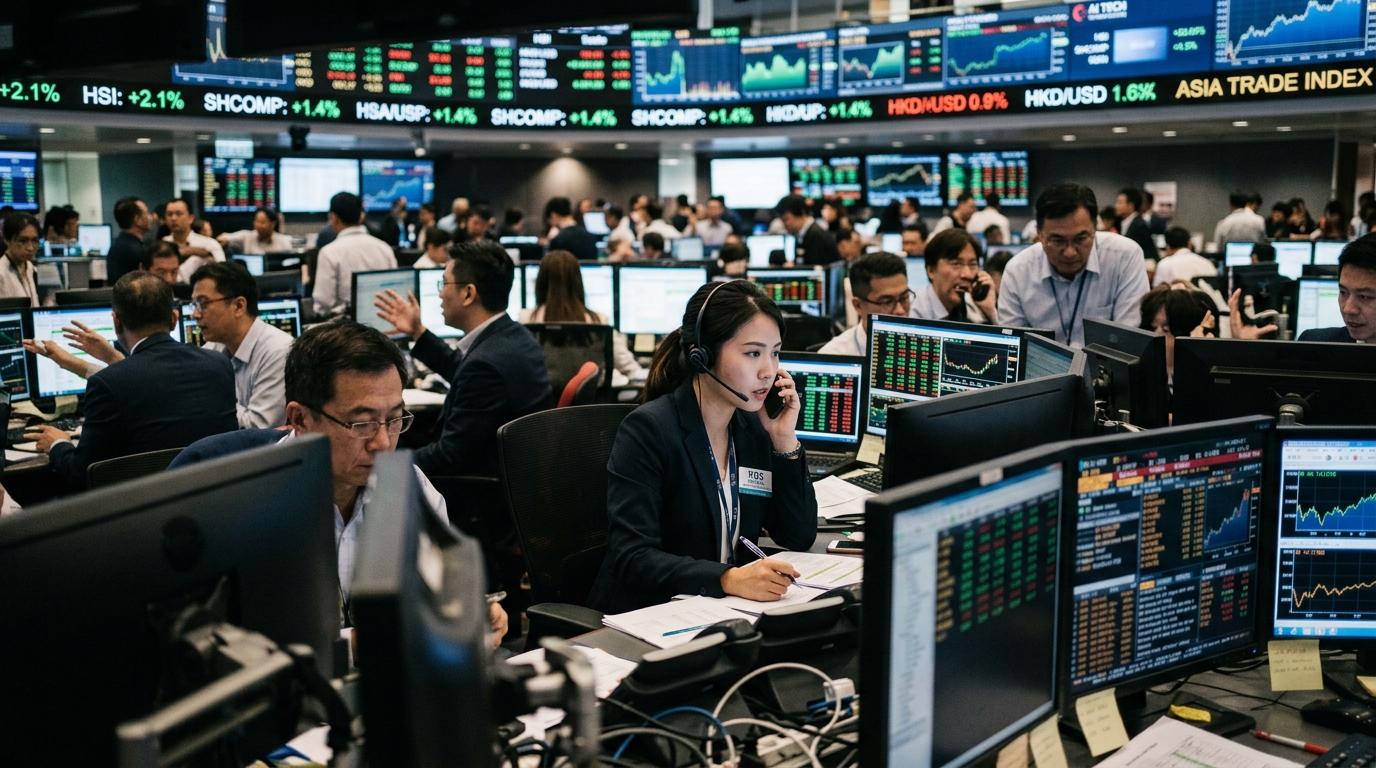
The global economic chessboard is undergoing one of its most dramatic shifts in decades, with Asia no longer merely serving as the 'factory of the world,' but as the laboratory of the future. As we move through the first half of 2026, the convergence of Artificial Intelligence (AI) and open trade policies is shaping a new growth paradigm that threatens to leave traditional Western economies behind. At the heart of this transformation lies Vietnam, a nation that has managed to transition from an agrarian economy to a high-tech hub in record time.
AI as a Productivity Catalyst
The adoption of AI in Asia is no longer limited to experimental chatbots or digital assistants. In the industrial zones of Vietnam and Southeast Asia, AI is being integrated directly into production lines. 'Smart manufacturing' allows local firms to compete in quality and speed with the most advanced units in Europe and the US. Using algorithms for demand forecasting, supply chain optimization, and automated quality control has reduced operational costs by 20-30% in many instances.
Furthermore, the investment in human capital is striking. Vietnam, for example, has restructured its educational system to emphasize STEM skills and AI literacy starting from middle school. This strategy is creating a new generation of workers who are not just machine operators but programmers and data analysts, capable of supporting the technological demands of the Fourth Industrial Revolution.
Open Trade and Vietnam’s Strategic Position
While protectionism seems to be gaining ground in parts of the West, Asia is moving in the opposite direction. Agreements like the RCEP (Regional Comprehensive Economic Partnership) and the CPTPP (Comprehensive and Progressive Agreement for Trans-Pacific Partnership) have created the world's largest free trade zone. Vietnam has leveraged these agreements to the fullest, acting as a bridge between China and Western markets.
The 'China + 1' strategy has prompted many tech giants, such as Samsung, Apple, and Intel, to move significant portions of their production to Vietnam. This brings not only capital but also technology transfer. The country is no longer a passive recipient of foreign investment but an active player negotiating terms for developing local innovation ecosystems. Hanoi's ability to maintain balanced relations with both Washington and Beijing serves as a masterclass in diplomatic and economic agility.
"Asia's growth is no longer based solely on low labor costs, but on its ability to combine digital intelligence with open market access," state analysts from the Asian Development Bank.
The Geopolitics of Tech and Future Challenges
However, the path to the top is not without obstacles. Competition for semiconductors and rare earth elements remains a critical friction point. Asia must manage its dependence on global value chains, which are vulnerable to geopolitical tensions. The rise of AI also brings challenges related to cybersecurity and data protection, areas where legislation in many Asian countries is still struggling to keep pace with technological reality.
Moreover, there is the risk of a 'digital divide' within the continent itself. While countries like Vietnam, Singapore, and South Korea are galloping ahead, other regions risk being left behind if they do not immediately invest in the necessary infrastructure. The success of the new Asian model will depend on whether the prosperity brought by AI and trade trickles down to all layers of society, avoiding the trap of rising inequalities.
Conclusion: The Asian Century is Here
2026 finds Asia in a position of power that few had predicted a decade ago. By combining the cutting edge of technology with an unwavering belief in open trade, the region is creating a growth engine that is simultaneously digital and globalized. For the rest of the world, the message is clear: innovation no longer has geographical borders, and adaptability is the only currency that holds true value in the new economic order.





