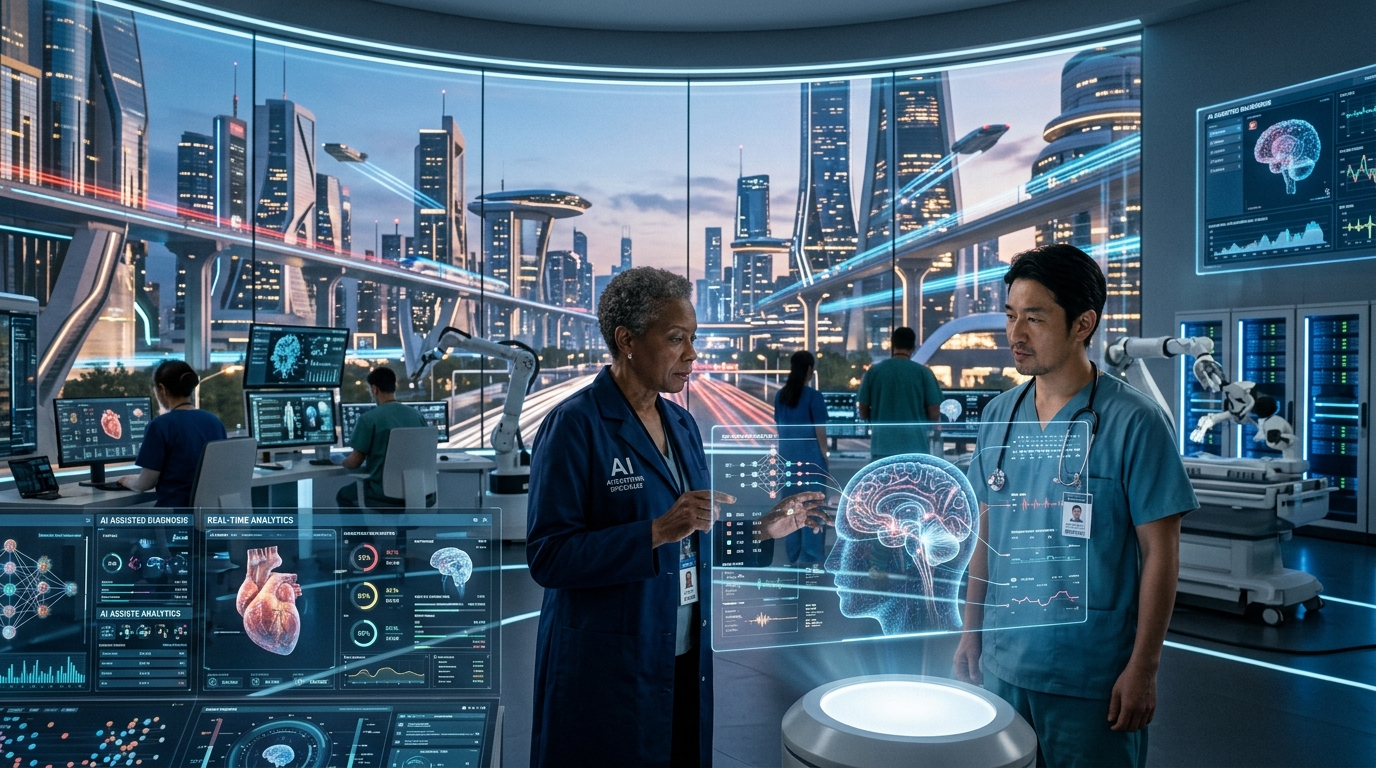
June 9, 2026, marks a watershed moment for the digital transformation of global healthcare. With recent reports from Vietnam and other emerging economies highlighting the rapid adoption of 'smart' hospitals, it is clear that Artificial Intelligence (AI) is no longer an experimental tool but the backbone of modern health systems. The concept of a smart hospital transcends simple digitization of records; it is an ecosystem where data flows seamlessly, allowing for the prediction of crises before they occur.
The Predictive Power of Algorithms in Clinical Practice
At the heart of the smart hospital lies predictive analytics. Instead of doctors reacting to symptoms, AI systems analyze patient vital signs in real-time, comparing them with billions of data points from similar cases worldwide. This allows for the identification of sepsis or cardiac arrest hours before they manifest clinically, giving medical staff the most precious commodity: time. In intensive care units in 2026, monitors do not just show current status but also the likely trajectory of the patient for the next six hours, with an accuracy reaching 94%.
Furthermore, the integration of Large Language Models (LLMs) has liberated physicians from administrative burdens. Automated transcription of consultations and instant updates to medical records mean that doctors can finally look patients in the eye instead of being hunched over a keyboard. This 'invisible' technology is what makes a hospital truly smart, allowing human touch to return to the center of therapy.
The Internet of Medical Things (IoMT) and Connectivity
The modern hospital functions as a living organism thanks to the IoMT. From 'smart' beds that adjust their incline to prevent pressure sores, to wearables that monitor glucose and oxygen without needles, the flow of information is constant. In Vietnam, the implementation of these systems in central hospitals has reduced emergency room waiting times by 40%, as AI automatically allocates resources and staff where the need is greatest.
- Automated patient triage based on case severity.
- Robotic pharmacy management to eliminate human errors in dosage.
- Geolocation systems for instant tracking of critical medical equipment.
- Smart lighting and temperature control to enhance recovery.
This infrastructure is not limited to hospital walls. Telemedicine 2.0 allows surgeons to monitor patient recovery at home via sensors, turning the patient's home into a virtual ward. This not only reduces costs but also minimizes the risk of hospital-acquired infections.
Challenges, Ethics, and the Digital Divide
Despite the excitement, the path toward the smart hospital is not without hurdles. Data security remains the number one issue. With hospitals becoming prime targets for cyberattacks, protecting sensitive medical information requires the use of quantum-resistant encryption. Additionally, there is the risk of 'algorithmic bias,' where AI might provide less accurate diagnoses for specific ethnic groups if not trained on diverse datasets.
"Technology must be the servant of medicine, not its master. A smart hospital without wise doctors is just an expensive building," says Dr. Nguyen, a digital health pioneer in Hanoi.
Finally, the digital divide is a harsh reality. While major cities invest in 5G surgical robots, rural areas often lack basic connectivity. The challenge for 2026 and beyond is to ensure that the smart hospital revolution is inclusive, offering equal access to innovation regardless of geographic location or economic status.