

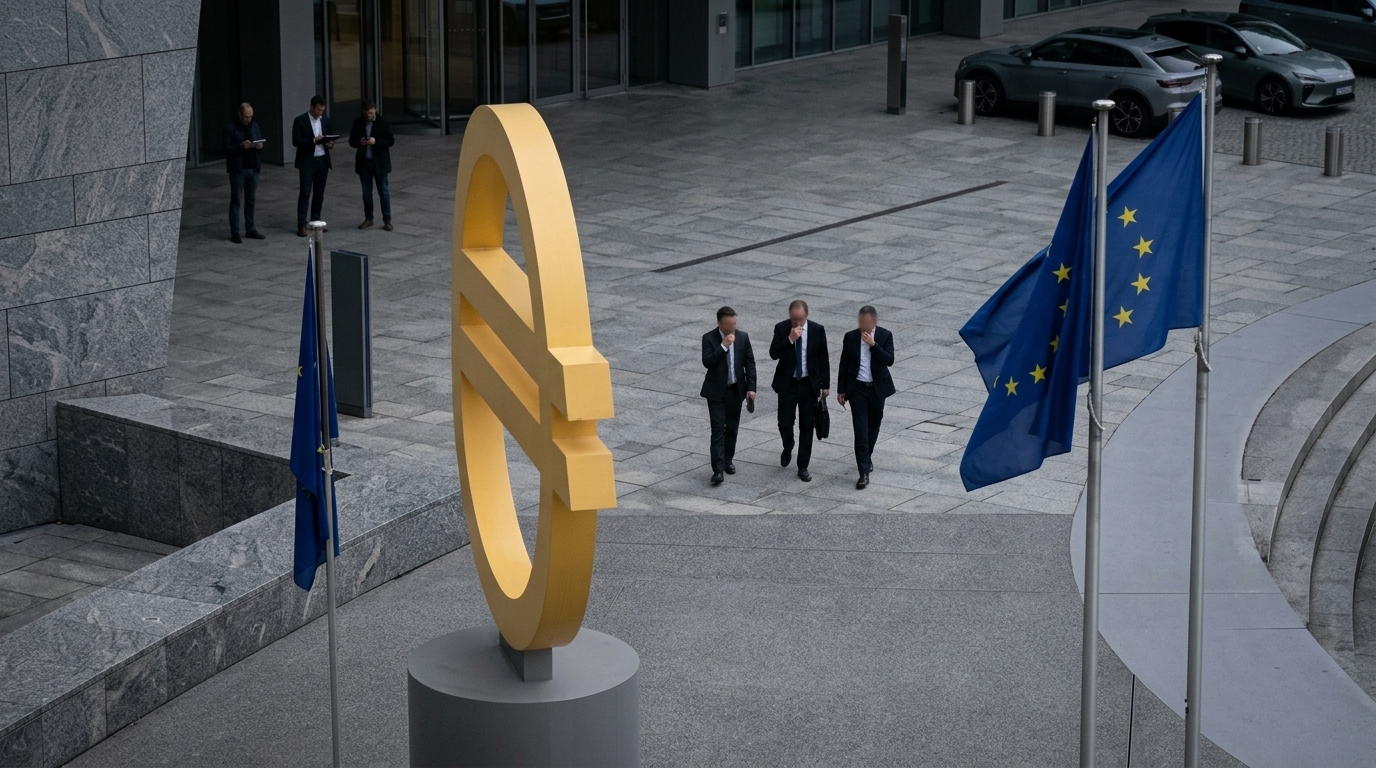
The dawn of 2026 finds the European economy in a state that analysts describe as "dynamic paralysis." Preliminary data from Eurostat for the first quarter of the year confirm Brussels' worst fears: growth was limited to a meager 0.1%, a figure that in reality borders on a statistical deviation from absolute stagnation. While the United States and emerging Asian economies show signs of recovery thanks to the accelerated integration of Artificial Intelligence, the Old Continent remains trapped in its structural weaknesses and exorbitant energy costs.
Europe's Energy "Achilles' Heel"
The central narrative behind this anemic growth remains energy. Despite promises of a "Green Transition" and decoupling from fossil fuels, the Europe of 2026 continues to pay the price of its geopolitical instability. Recent disruptions in Middle Eastern supply chains, combined with delays in implementing new nuclear reactors in France and wind farms in the North Sea, have kept electricity and natural gas prices at levels prohibitive for heavy industry.
Particularly in Germany, once the "engine" of Europe, the situation is critical. German manufacturing has been shrinking for three consecutive quarters, as production costs make German products uncompetitive in international markets. Greece and the European South, although performing slightly better due to tourism and Recovery Fund resources, cannot carry the weight of an entire continent that seems to be gasping for air on their own.
The ECB Dilemma: Rates or Growth?
The European Central Bank is now faced with an impossible puzzle. On one hand, inflation remains stubbornly above the 2% target, driven mainly by energy prices and increased labor costs. On the other, any further interest rate hike risks turning marginal growth into a deep recession. Markets are pricing in a wait-and-see stance from Frankfurt, but the voices of the "hawks" are growing, calling for further tightening to curb the wave of high prices hitting households.
- Household consumption has decreased by 0.4% compared to the previous year.
- Fixed capital investment remains stagnant due to high borrowing costs.
- Youth unemployment is starting to show upward trends again in peripheral countries.
Christine Lagarde, in a recent speech, emphasized that "monetary policy cannot substitute for necessary structural reforms." This statement is an indirect but clear criticism of national governments that hesitate to make breakthroughs in the labor market and the liberalization of the energy market.
The Productivity Challenge and Artificial Intelligence
In this bleak landscape, the only glimmer of hope seems to be the digital transition. However, Europe lags significantly behind in the adoption of Generative AI compared to the US. While American businesses are recording productivity gains due to automation, European companies are struggling with the EU's labyrinthine regulatory framework (AI Act), which, while protecting citizens' rights, creates barriers to rapid innovation.
"We are not just in an economic crisis, but in a crisis of identity. Europe must decide whether it will be a global museum or a laboratory of the future," says a leading analyst at Goldman Sachs.
In conclusion, 0.1% is not just a number. It is a warning bell. If the Eurozone fails to solve the riddle of energy costs and stimulate domestic production through technology, 2026 risks going down in history as the year Europe definitively missed the train of global competitiveness. The need for a common fiscal policy and a true Energy Union is now more urgent than ever.





