

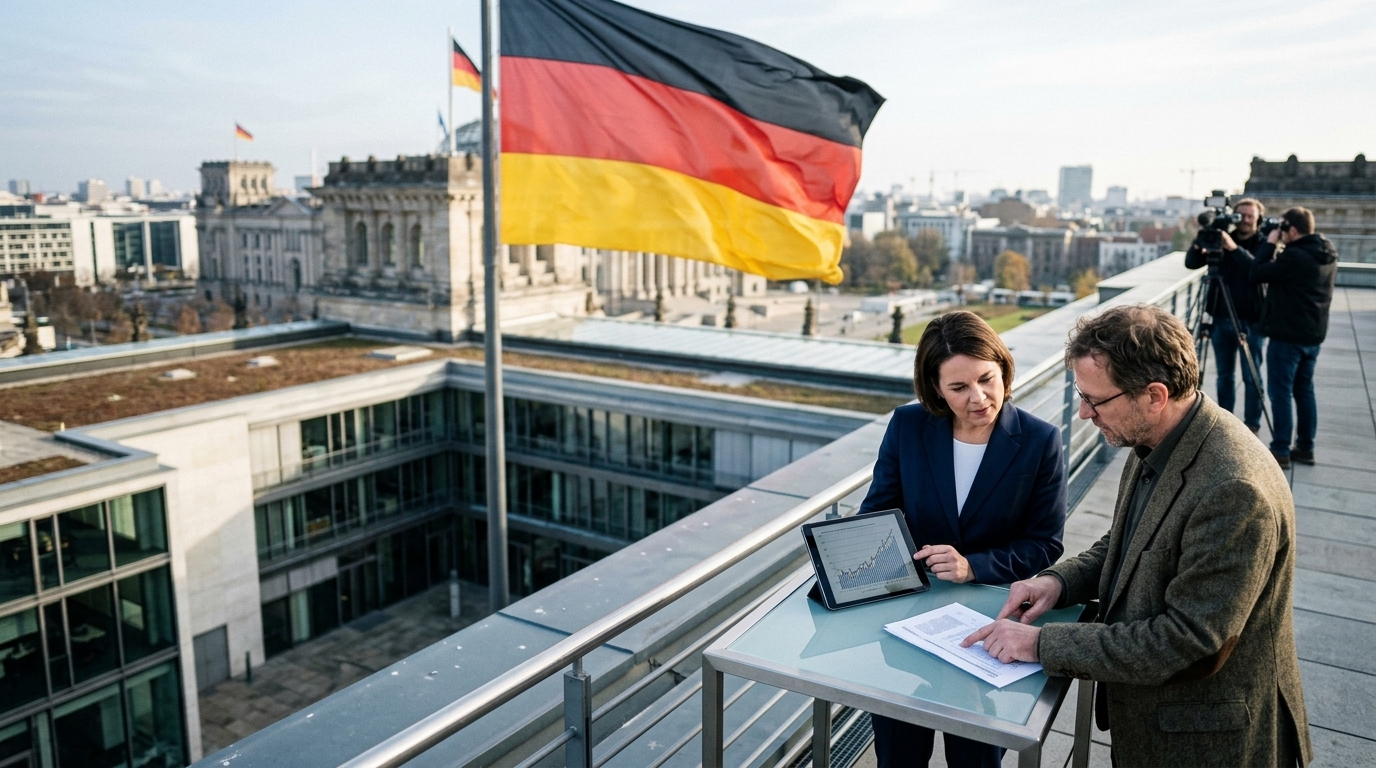
After a prolonged period of economic stagnation and uncertainty that defined 2024 and 2025, Germany appears to be regaining its footing. Data for the first quarter of 2026 shows an unexpected rise in Gross Domestic Product (GDP) by 0.3%, a figure that, while seemingly modest, represents a significant victory against forecasts of zero growth or even recession. The Eurozone's largest economy, often dubbed the continent's "engine," is showing signs of resilience that could signal the beginning of a broader European recovery.
Key Drivers: Consumption and Public Investment
Analysis of the data reveals that this growth was not a result of Germany's traditional export prowess, which continues to face challenges due to geopolitical tensions and competition from China. Instead, domestic demand made the difference. Private consumption rose significantly as inflation has now stabilized at levels near 2%, allowing households to regain some of their purchasing power.
Simultaneously, public spending played a decisive role. The German government, under pressure to modernize infrastructure and promote the green transition, increased investments in key sectors. The defense industry, bolstered by the 100-billion-euro special fund, continues to fuel domestic production, while subsidies for the digitalization of small and medium-sized enterprises (Mittelstand) have finally begun to yield results.
The Role of AI and Digital Transformation
A factor often underestimated in traditional economic analyses is the gradual integration of Artificial Intelligence (AI) into German manufacturing. As we move through 2026, German industry has begun adopting AI solutions to optimize supply chains and reduce operational costs. This "digital dividend" has helped companies remain competitive despite high energy costs that still plague the region.
- Automation of production lines using predictive maintenance.
- Improving energy efficiency through smart grids.
- Boosting productivity in the service sector through generative AI tools.
These changes, though structural and long-term, began to reflect in corporate profit margins during the first quarter of the year, contributing to general market optimism.
Challenges and the Geopolitical Landscape
Despite the good news, analysts remain cautious. Germany remains vulnerable to fluctuations in energy prices and the slowdown of the Chinese market, traditionally the largest destination for German cars and machinery. Furthermore, the shortage of skilled labor remains the "thorn" in the German economy, with thousands of jobs remaining vacant, limiting the potential for faster growth.
"The 0.3% growth is a breather, but not the end of the road. Germany must continue structural reforms if it wants to maintain its leadership position on the global stage," says a leading economist from the Ifo Institute.
The question now arises whether the European Central Bank (ECB) will continue its policy of cutting interest rates, given this small but steady recovery. Further monetary easing could provide the necessary boost to fixed capital investment, which remains the weak point of the current measurement.
Conclusion: A Hopeful Start for 2026
The German economy has once again proven it possesses deep roots and the ability to adapt. The 0.3% growth serves as a signal of confidence to investors and citizens. If this trend continues in the coming quarters, 2026 could be recorded as the year Germany definitively left behind its reputation as the "sick man of Europe" and embarked on a new phase of sustainable, technologically advanced growth.





