

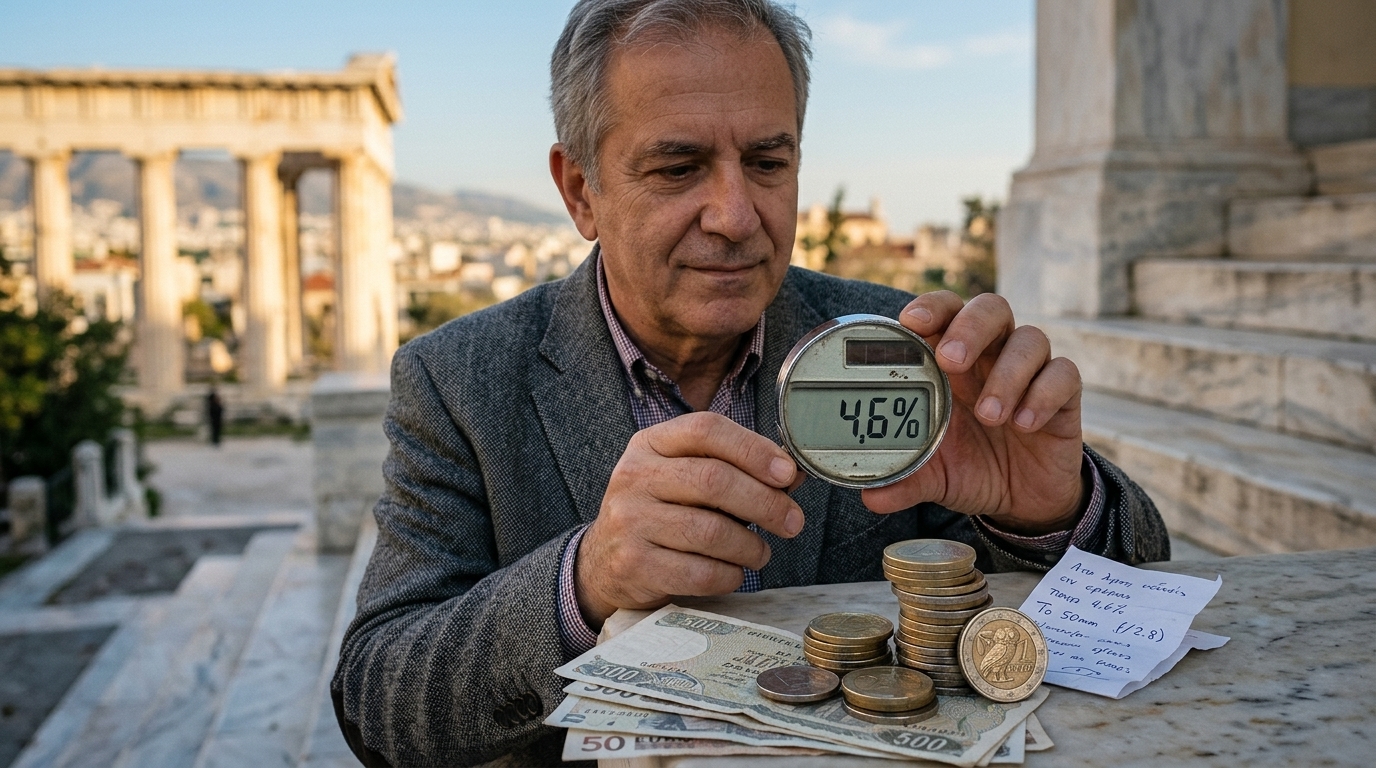
The Greek economy is facing a renewed wave of price hikes, as Eurostat data for April 2026 reveals a worrying acceleration in inflation. Greece's Harmonized Index of Consumer Prices (HICP) climbed to 4.6%, jumping from 3.4% in March. This development places the country significantly above the Eurozone average, which stood at 3%, highlighting structural weaknesses and the domestic market's vulnerability to external pressures.
The Energy 'Bomb' and Market Impact
The primary cause of this sharp increase is found in the energy sector. After a period of relative stability, energy prices in Greece recorded an annual increase of 10.9% in April. This surge is attributed to both fluctuations in international natural gas prices and the withdrawal of the last horizontal state subsidies that had been in place in previous years. Energy acts as a cost multiplier, affecting not only household utility bills but also the production and transportation costs of goods.
At the same time, inflation in food, alcohol, and tobacco remains at high levels, although showing slight signs of deceleration compared to the historic highs of 2024-2025. However, the cumulative burden of previous years has already exhausted the savings of the average Greek family, making every new increase exceptionally painful.
Divergence from the Eurozone
While the Eurozone as a whole appears to be gradually taming inflationary pressures, Greece is following an inverse trajectory. The 1.6 percentage point gap (4.6% vs. 3%) raises serious questions about the functioning of competition in the Greek market. Analysts point out that the Greek economy is characterized by 'greedflation' in certain sectors, where companies maintain high prices despite falling input costs to bolster profit margins.
Furthermore, the onset of the tourist season, which started earlier than ever this year, seems to be fueling service inflation. Increases in hotel prices, catering, and transport are rampant as foreign demand remains strong, inadvertently driving up the cost of living for permanent residents.
Challenges for Economic Policy
The government is now called upon to balance fiscal discipline, imposed by new EU rules, with the need to support the most vulnerable segments of society. With inflation at 4.6%, the real purchasing power of wages is declining, effectively nullifying recent increases in the minimum wage.
- Need for intensified market inspections by regulatory authorities to combat profiteering.
- Re-evaluation of energy strategy and dependence on fossil fuel imports.
- Pressure on the European Central Bank (ECB) regarding interest rate paths, as high inflation in the periphery complicates Frankfurt's decisions.
In conclusion, April 2026 serves as a wake-up call. The Greek economy cannot rely solely on high GDP growth rates if they are not accompanied by price stability. The risk of a new cycle of stagflation, where prices rise while consumption slows due to income exhaustion, is now visible.





