

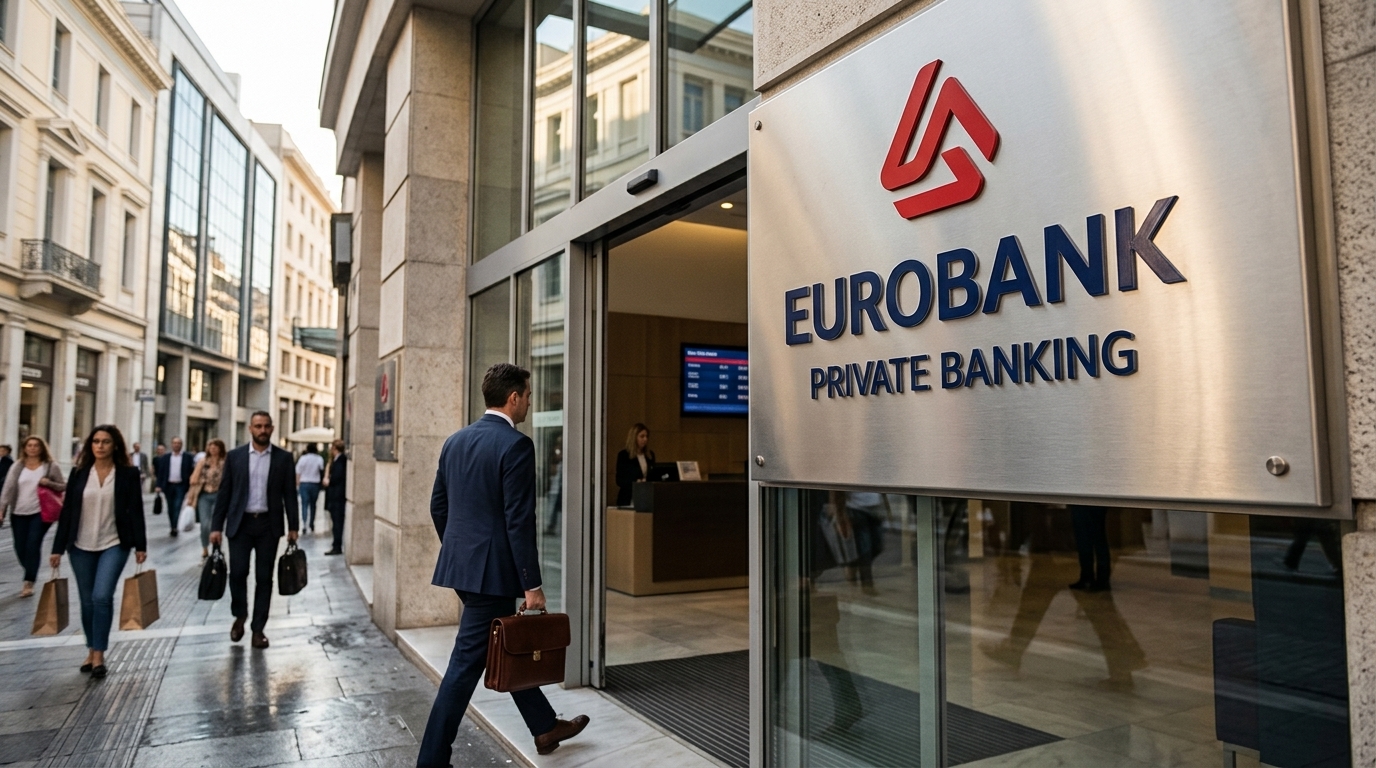
In a period marked by significant geopolitical turbulence and shifting monetary landscapes, Eurobank has demonstrated the resilience of its business model, announcing adjusted net profits of €351 million for the first quarter of 2026. These results are not merely a numerical success; they reflect the group's strategic shift toward a more diversified and extroverted profile, with international operations now contributing nearly half of the total profitability.
The Architecture of Profitability: Revenue and Margins
The profit surge was supported by the maintenance of net interest income (NII) at high levels, despite expectations of a gradual de-escalation of interest rates by the European Central Bank. Eurobank managed to effectively control funding costs while simultaneously benefiting from an increase in new loan volumes. Net fee and commission income also showed significant growth, bolstered by activities in Asset Management and bancassurance products.
Special emphasis must be placed on organic growth. The bank's CEO, Fokion Karavias, noted that credit expansion in Greece remains robust, with corporate lending leading the way, particularly in the energy, tourism, and infrastructure sectors. The bank appears to be capitalizing on the absorption of Recovery and Resilience Facility (RRF) funds, acting as a bridge for the major investments transforming the Greek economy.
The International Pillar and Strategy in Cyprus
Perhaps the most striking element of the Q1 results is the contribution from operations outside of Greece. With 48% of profits originating abroad, Eurobank is establishing itself as a regional powerhouse with a strong footprint in Southeastern Europe. The full integration of Hellenic Bank in Cyprus has begun to bear fruit, creating significant synergies and providing access to a rich deposit base and a market with high growth margins.
Bulgaria also remains a steady pillar of profitability, while operations in Luxembourg enhance the bank's profile in Private Banking. This geographical dispersion acts as a buffer against local economic cycles, allowing the group to maintain a steady Return on Tangible Equity (RoTE) exceeding 15%, a level considered exceptional by European standards.
Asset Quality and Future Challenges
Despite the optimistic climate, Eurobank's management remains cautious regarding asset quality. The Non-Performing Exposure (NPE) ratio continues its downward trajectory, approaching levels below 3%, demonstrating the successful balance sheet cleanup initiated in previous years. However, geopolitical pressures in the Eastern Mediterranean and uncertainty in energy prices are factors that could impact the repayment capacity of certain economic sectors.
- Continuous reduction of the NPE ratio through organic actions and restructuring.
- Strong capital adequacy with the CET1 ratio remaining at safe levels, enabling dividend distributions.
- Investments in digital transformation to reduce operating costs.
In conclusion, at the start of 2026, Eurobank appears to have definitively moved past the crisis era, transforming into a modern financial institution that does not rely solely on the domestic market. The challenge for the remainder of the year will be maintaining these growth rates in an environment where the cost of money may begin to decline, potentially compressing interest margins.





