

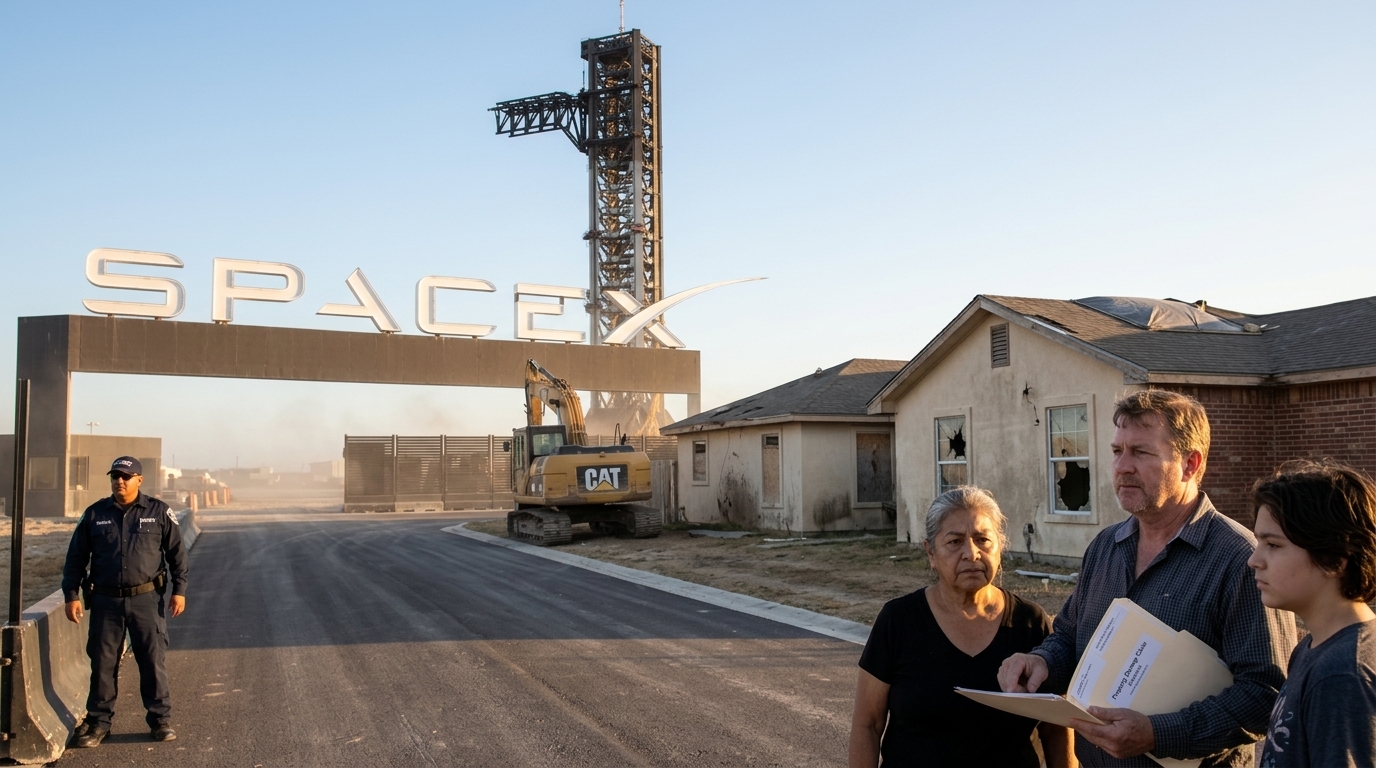
Elon Musk’s ambition to make humanity a multi-planetary species is now colliding with the much more mundane, yet legally complex, reality of terrestrial property rights. In Boca Chica, Texas—home to SpaceX’s 'Starbase' and the launch site for the massive Starship rocket—tensions between the company and the local community have reached a breaking point. A series of new class-action lawsuits have recently been filed, with plaintiffs describing a situation that feels more like a war zone than a cutting-edge scientific hub.
The 'Bombardment' of Daily Life
Residents of Cameron County, where the facility is located, allege that tests of the Raptor engines and Starship launches generate shockwaves akin to seismic tremors. Reports of cracked foundations, shattered windows, and structural damage to homes located several miles away have surged. According to legal filings, residents are experiencing a 'daily bombardment' of noise and vibration that makes living in the area nearly impossible.
The issue goes beyond physical damage. Plaintiffs argue that SpaceX operates with an 'outlaw' mentality, leveraging the political support it enjoys from Texas state authorities to bypass regulations that would be non-negotiable in other states. Noise pollution has reached unprecedented levels, with readings showing decibel levels capable of causing permanent hearing damage, while dust and debris from tests frequently rain down on private yards.
The Conflict Between Private Property and Space Expansion
This legal battle highlights a deeper question: What is the price of progress? SpaceX maintains that its operations are vital to U.S. national security and the future of space exploration, backed by multi-billion dollar NASA contracts. However, lawyers for the residents counter that no 'public good' justifies the destruction of private property without fair compensation.
The company has already bought out many properties in Boca Chica Village, often at prices well above market value, to create a safety buffer. However, many residents refused to sell, finding the offers insulting or wishing to preserve their way of life in one of Texas’s last pristine coastal areas. Now, these 'holdouts' find themselves under indirect pressure as their quality of life has deteriorated significantly.
- Cracks in structural elements of buildings due to atmospheric shockwaves.
- Decline in property market value due to proximity to the test site.
- Environmental impact on the neighboring wildlife refuge.
- Frequent closures of public roads and beach access for extended periods.
Regulatory Gaps and the FAA
The Federal Aviation Administration (FAA) is also at the center of the criticism. Residents accuse the agency of being overly lenient in granting licenses to SpaceX, failing to adequately assess the impact on the local community. Despite environmental reviews, the reality of Starship launches—the most powerful rocket ever built—has exceeded initial predictions regarding debris dispersal and noise intensity.
"We aren't against space; we are against lawlessness. You cannot build the future on the ruins of our homes," says one of the lead plaintiffs in the lawsuit.
The outcome of these legal battles will set a precedent for how private spaceports are developed in the future. If SpaceX is forced to pay massive damages or if stricter limitations are placed on testing hours, Musk’s timeline for Mars could face significant delays. Conversely, a victory for the company would send a message that big tech firms can operate with a form of 'extraterritoriality' in the name of innovation.





