

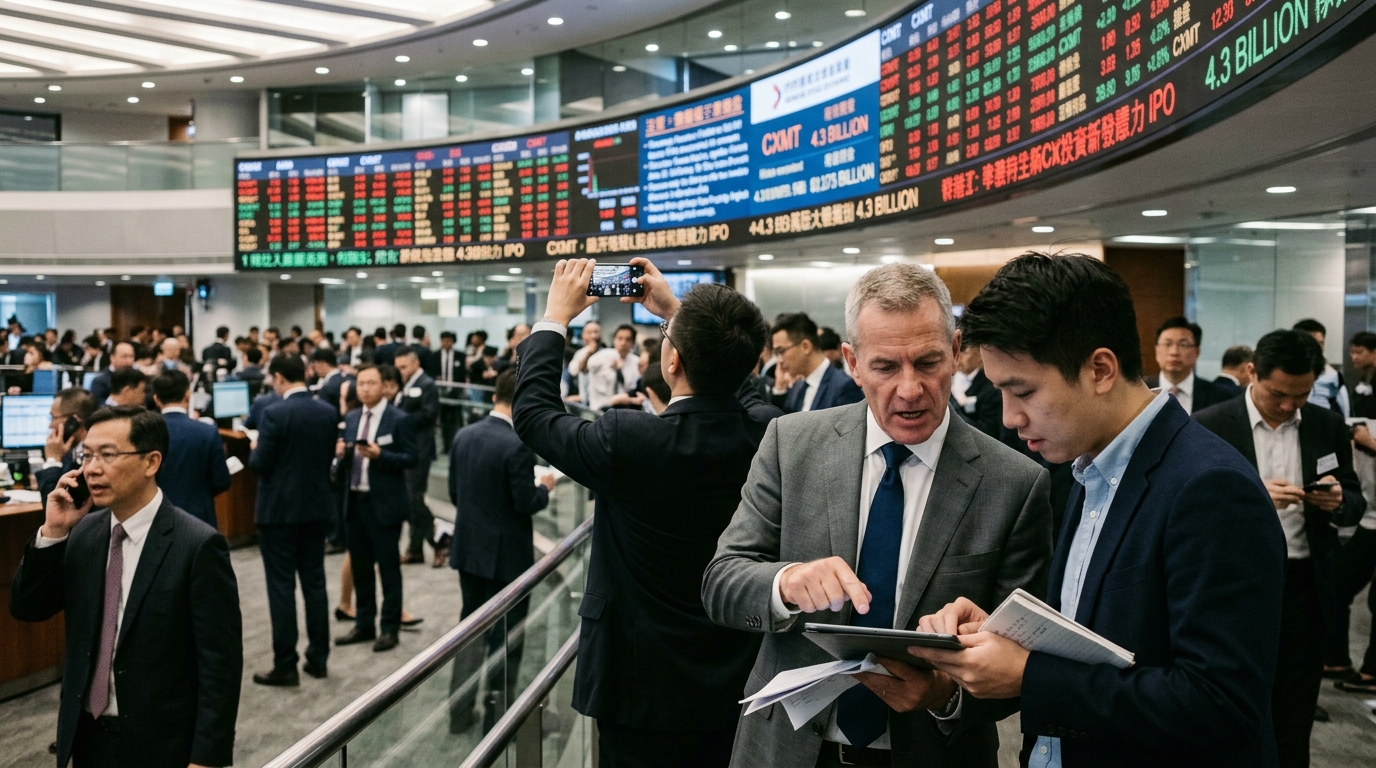
In the heart of Hefei, a city that has rapidly transformed into China's technological bastion, ChangXin Memory Technologies (CXMT) is preparing to make history. Next week, the memory chip giant will open subscriptions for its highly anticipated initial public offering (IPO), valued at $4.3 billion. This is not merely a financial transaction; it is an act of technological defiance in a world increasingly divided by digital iron curtains.
The Strategic Significance of CXMT in the Global Chessboard
CXMT is no ordinary corporation. It represents the tip of China's spear in the market for Dynamic Random Access Memory (DRAM)—the essential components that allow every computer, smartphone, and AI server to function. For decades, this market has been dominated by a "triopoly": South Korea's Samsung and SK Hynix, and America's Micron. CXMT’s emergence as a viable fourth global player fundamentally shifts the balance of power.
The IPO comes at a critical juncture. China's access to advanced semiconductor manufacturing equipment is being aggressively curtailed by the United States and its allies. Despite these headwinds, CXMT has managed to develop proprietary design techniques and leverage legacy patents (such as those from the defunct Qimonda) to reach 17nm and 10nm-class production. A successful IPO will provide the necessary capital to further expand production capacity and accelerate research into cutting-edge technologies like High Bandwidth Memory (HBM), which is indispensable for training large-scale AI models.
Navigating Sanctions and Building Resilience
CXMT’s path to the public markets has been fraught with challenges. The company has frequently been in the crosshairs of U.S. regulators, who continually weigh adding it to the "Entity List." However, Beijing has doubled down, supporting the company with billions of dollars through the National Integrated Circuit Industry Investment Fund, colloquially known as the "Big Fund." This IPO marks the next evolution: transitioning from state-led funding to market-based capital.
Analysts emphasize that CXMT acts as a strategic shield for the Chinese industry. In the event of a total decoupling from Western memory suppliers, CXMT would serve as the sole lifeline for Chinese tech giants ranging from Huawei to Lenovo. This "strategic redundancy" is precisely what makes the company attractive to domestic investors, despite the inherent risks of the ongoing tech war.
The Semiconductor Market in 2026: The AI Catalyst
As we navigate through 2026, the semiconductor landscape is undergoing a profound transformation. While demand for traditional PC and smartphone memory has stabilized, the hunger for memory that supports AI applications has reached a fever pitch. CXMT has already announced the mass production of LPDDR5 memory, offering high speeds and low power consumption—perfect for edge AI devices.
The $4.3 billion IPO is expected to be heavily oversubscribed by state-backed funds, institutional investors, and retail buyers who view CXMT as a "national champion." The lingering question is whether the company can maintain its pace of innovation without access to ASML’s most advanced Extreme Ultraviolet (EUV) lithography machines. Nevertheless, China’s strategy focuses on "good enough" technology at a massive scale, which could potentially dominate the bulk of the global market.
Economic Implications and the Road Ahead
The success of this IPO will send a resonant message to international markets: China is capable of financing its technological ascent internally. Following a period of volatility in Chinese capital markets, CXMT serves as a beacon for other high-tech firms considering listings on the Shanghai STAR Market or the Shenzhen exchange.
In the long run, CXMT aims to break China’s reliance on chip imports, which have historically cost the nation more than its oil imports. If the company successfully executes its roadmap, 2026 will be remembered as the year China secured its "digital sovereignty" in the memory sector.
- The $4.3 billion IPO is the largest in China for the year 2026.
- CXMT stands as the only significant domestic competitor to Samsung and Micron.
- Artificial Intelligence is driving unprecedented demand for new DRAM architectures.
- State support remains a cornerstone of the company's ability to weather U.S. sanctions.





