

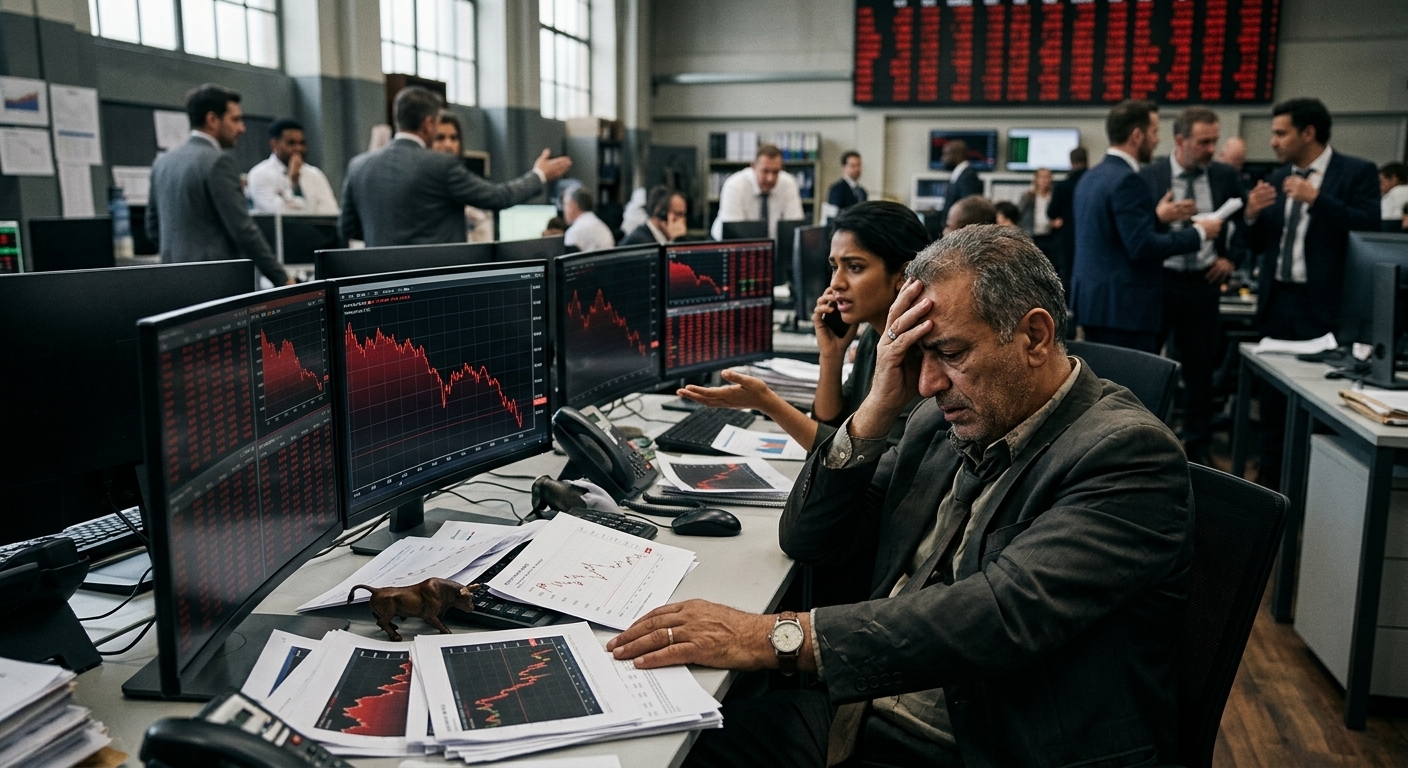
In an era where stock market indices frequently flirt with all-time highs, fueled by Artificial Intelligence euphoria and hopes for a “soft landing,” a group of seasoned analysts and investors is emitting an ominous signal. The theory of the “Everything Bubble” is not new, but the summer of 2026 finds these voices louder than ever. Robert Kiyosaki, the world-renowned author of “Rich Dad Poor Dad,” alongside banking veterans, argues that the crisis is not merely at the doorstep—it has already begun, catalyzed by staggering public debt and relentless money printing.
The Anatomy of the “Everything Bubble”
To understand the warnings of today’s Cassandras, one must look back at the last fifteen years. Following the 2008 financial crisis, central banks globally adopted policies of zero interest rates and Quantitative Easing (QE). This created an ocean of liquidity that had to flow somewhere. The result was a simultaneous surge in stocks, bonds, real estate, and more recently, cryptocurrencies. When every asset class rises in tandem without a corresponding increase in real productivity, an “Everything Bubble” is formed.
Kiyosaki contends that the US dollar, which he labels “fake money,” is in the process of collapsing. His concern centers on the fact that US national debt is increasing at a rate of approximately one trillion dollars every 100 days. For skeptics, this dynamic is unsustainable and will inevitably lead to a painful correction that could wipe out the savings of millions who rely on traditional investment vehicles.
Artificial Intelligence: Lifeline or the Final Act?
It is fascinating to observe how the rise of Artificial Intelligence (AI) fits into this narrative. On one hand, optimists view AI as a productivity revolution that justifies the current valuations of tech giants. On the other hand, critics, including certain veteran bankers, fear that AI is merely the “latest mania” keeping the bubble inflated, reminiscent of the dot-com bubble of the late 1990s.
- Capital concentration in a handful of tech companies makes the market fragile.
- AI profit expectations may have been priced in far too early.
- The infrastructure costs for AI (data centers, energy) are weighing on balance sheets without immediate ROI.
“We are not in a simple correction. We are at the end of a debt-based economic cycle, and the crash will be the largest in human history,” Kiyosaki frequently warns in his public appearances.
Geopolitical Instability and the Rise of BRICS
Another factor fueling expert concerns is de-dollarization. The BRICS alliance (Brazil, Russia, India, China, South Africa, and new members) is actively working to create alternative payment systems independent of the dollar. If global demand for the greenback wanes, the US will no longer be able to “export” its inflation, leading to internal economic strangulation.
Veteran bankers point out that geopolitical conflicts in Ukraine and the Middle East act as catalysts. Supply chains remain fragile, and energy prices are unpredictable. In this environment, trust—the foundation of any financial system—is beginning to erode. The advice from these “Cassandras” remains consistent: a shift toward “hard” assets such as gold, silver, and Bitcoin, which cannot be printed at will by any government.
Conclusion: Preparing for the Unpredictable
Whether one agrees with Kiyosaki or views him as a doomsayer, the data regarding debt and inflation is undeniable. The “Everything Bubble” may not burst tomorrow, but the pressures on the global financial structure are historically unprecedented. For the average citizen, understanding these risks is not just about wealth protection; it is about survival in a new economic reality where old rules may no longer apply. History has shown that crises often arrive when the majority is convinced that “this time is different.”





