

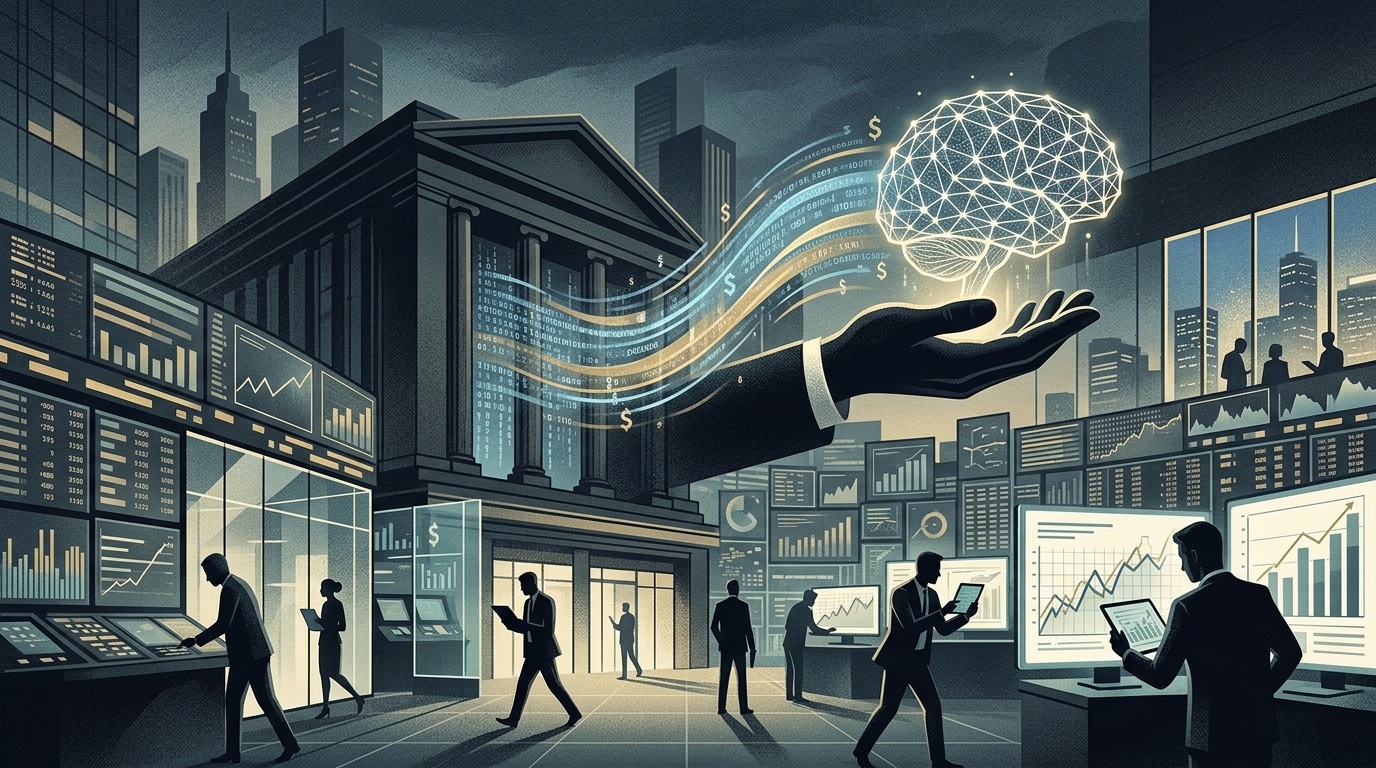
In a move that highlights the rapidly shifting dynamics between traditional banking and the bleeding edge of technological innovation, Bank of America (BofA) has executed a remarkable 180-degree turn. According to exclusive reports from Bloomberg Tech, the banking giant, which had initially shown hesitation in lending to OpenAI, has finally decided to extend a $520 million credit line to the company leading the generative AI revolution.
Wall Street's Strategic Reversal
This news is not merely a business deal; it is a symptom of the broader maturation of the Artificial Intelligence sector. Until recently, major commercial banks approached AI firms with skepticism, focusing on their massive cash burn rates and revenue uncertainty. OpenAI, despite its market dominance, requires billions of dollars to train its models and procure specialized hardware from the likes of Nvidia.
However, BofA appears to have been swayed by the explosive growth in enterprise subscriptions and the stability provided by OpenAI's deep partnership with Microsoft. Providing credit, rather than issuing new equity, suggests that OpenAI is entering a phase where it can reliably service debt—traditionally a hallmark of financial health and business predictability.
The Cost of Innovation and the Need for Liquidity
Why does OpenAI need a $520 million credit line when it is valued at hundreds of billions? The answer lies in capital expenditures (CapEx). Developing GPT-5 and subsequent model generations requires data infrastructure costing billions. The credit line offers Sam Altman’s company the necessary flexibility to manage day-to-day operations without constantly resorting to new funding rounds that would dilute existing shareholders.
This agreement also reflects the pressure on banks not to be left out of the AI "gold rush." With Goldman Sachs and Morgan Stanley vying for advisory roles in future initial public offerings (IPOs), BofA could not afford to stay on the sidelines. This move places them at the heart of the OpenAI ecosystem, securing a vantage point for future, even larger deals.
Risks and Outlook
Despite the optimism, risks remain. The AI market is fiercely competitive, with Google, Anthropic, and Meta constantly pushing boundaries. If OpenAI fails to maintain its lead or if the demand for AI subscription services hits a plateau, servicing debt could become a burden. Nevertheless, for Wall Street, the risk of not participating in OpenAI's growth is now perceived as greater than the risk of lending to it.
- The credit line serves as a "safety net" for OpenAI's operational liquidity.
- BofA recognizes OpenAI as a viable corporate entity rather than just a VC experiment.
- This move may pave the way for similar debt-financing deals with other industry players like Mistral or Cohere.
Ultimately, Bank of America's decision is a vote of confidence not just in OpenAI, but in the long-term profitability of artificial intelligence. As 2026 unfolds as a landmark year for the integration of AI into the global economy, the bridge built between Charlotte and San Francisco appears more solid than ever.





