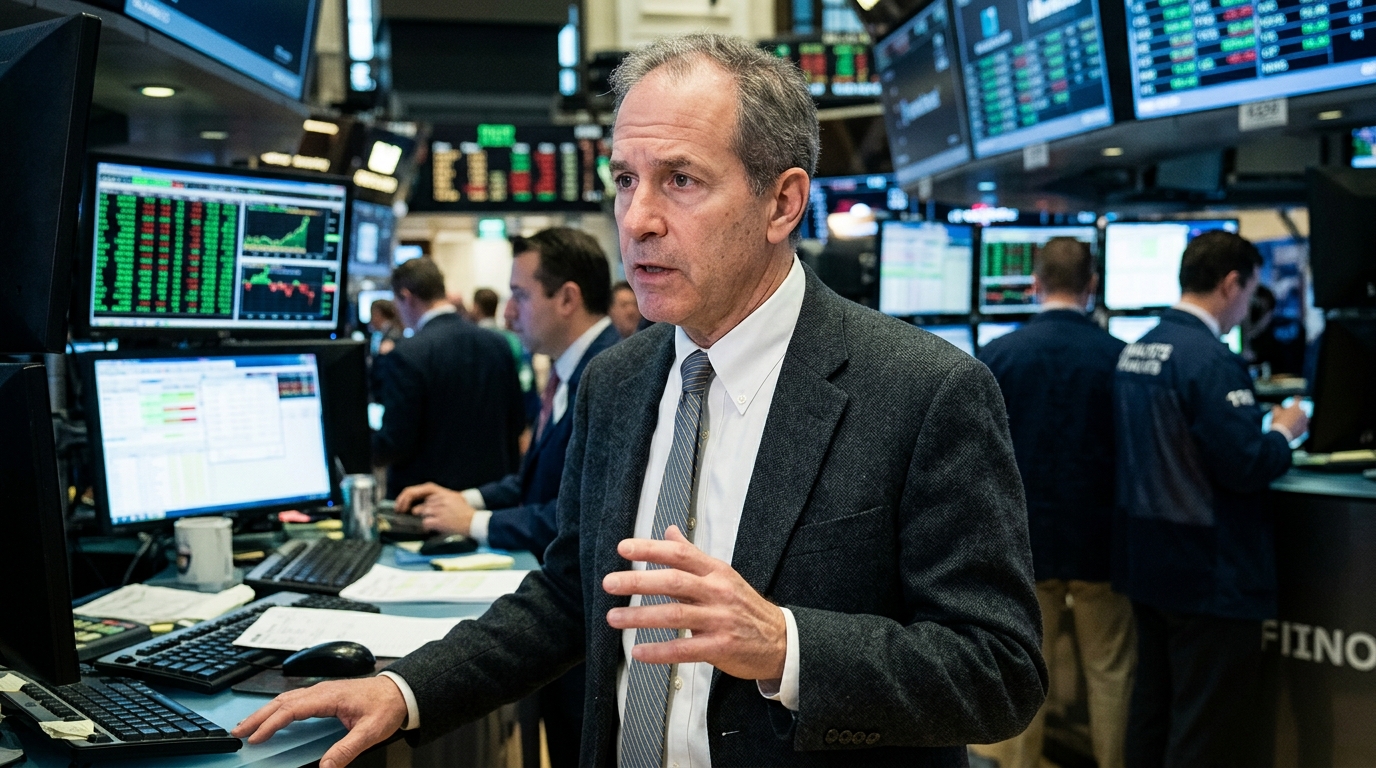
At a time when stock market indices are flirting with all-time highs, the veneer of euphoria appears to be masking a much more complex and potentially dangerous reality beneath the surface. Bob Sloan, Founder and Managing Partner of S3 Partners, speaking on Bloomberg Open Interest, has sounded the alarm regarding the structure of the current rally, focusing on the precarious divergence between passive capital flows and the strategic maneuvers of institutional investors. According to Sloan, while AI-related stocks continue to post gains, the driving force behind them is no longer fundamental conviction, but the mechanical operation of index rebalancing.
The Mechanics of the Passive Trap
Sloan’s analysis centers on how Exchange Traded Funds (ETFs) and passive investors are dictating price action. As mega-cap tech companies increase their weight within indices like the S&P 500 and Nasdaq, passive funds are contractually obligated to purchase more shares of these entities. This creates a self-reinforcing upward cycle that ignores valuations or underlying risks. Sloan argues that this "blind" buying power provides the necessary liquidity for hedge funds to liquidate their positions or reduce exposure without triggering an immediate price collapse.
"We are seeing a classic case where passive money is buying the top, while active money is preparing for the exit," Sloan notes. S3 Partners, which specializes in tracking short interest and market positioning, is observing a gradual reduction in exposure from major institutional portfolios. This suggests that the "smart money" believes the profit margins have been exhausted and that the current valuation of AI stocks carries excessive risk relative to potential rewards.
The Illusion of Stability
One of the most compelling points in Sloan’s intervention is the analysis of volatility. Despite prices appearing stable or trending upward, the internal structure of the market is remarkably fragile. When buying power stems almost exclusively from passive flows, the market loses its capacity for effective price discovery. If economic data shifts or if AI company earnings fail to meet the astronomical expectations priced in, passive investors will have no defensive mechanism, leading to a violent correction.
- Passive flow dominance diminishes the quality of the market rally.
- Hedge funds are utilizing current liquidity as a strategic "exit window."
- Concentration of capital in a few AI stocks increases systemic risk.
- Short interest is beginning to accumulate at strategic technical levels.
Sloan emphasizes that the AI market has transitioned from a phase of genuine excitement to one of mechanical maintenance. This means that any exogenous shock—whether related to Federal Reserve monetary policy or geopolitical tensions—could trigger a chain reaction of selling that passive indices would be forced to follow, thereby exacerbating the downside momentum.
The Future of AI Investments
Despite the warning, Sloan is not necessarily a bear on AI technology itself. On the contrary, he acknowledges its transformative power. However, he draws a sharp distinction between technological progress and stock market behavior. His warning concerns "positioning"—how the players are arranged on the board. When everyone is on the same side of the boat, the boat is at risk of capsizing.
"Market history teaches us that when participation becomes mandatory through indices rather than selective through analysis, the end of the road is usually painful," Sloan concludes.
For retail investors, the message is clear: caution is paramount. Monitoring the movements of hedge funds and S3 Partners' data can provide a more realistic picture than daily index charts. In a world where AI promises to change everything, old-fashioned financial prudence remains the most valuable tool for navigating the uncertainty of 2026.