

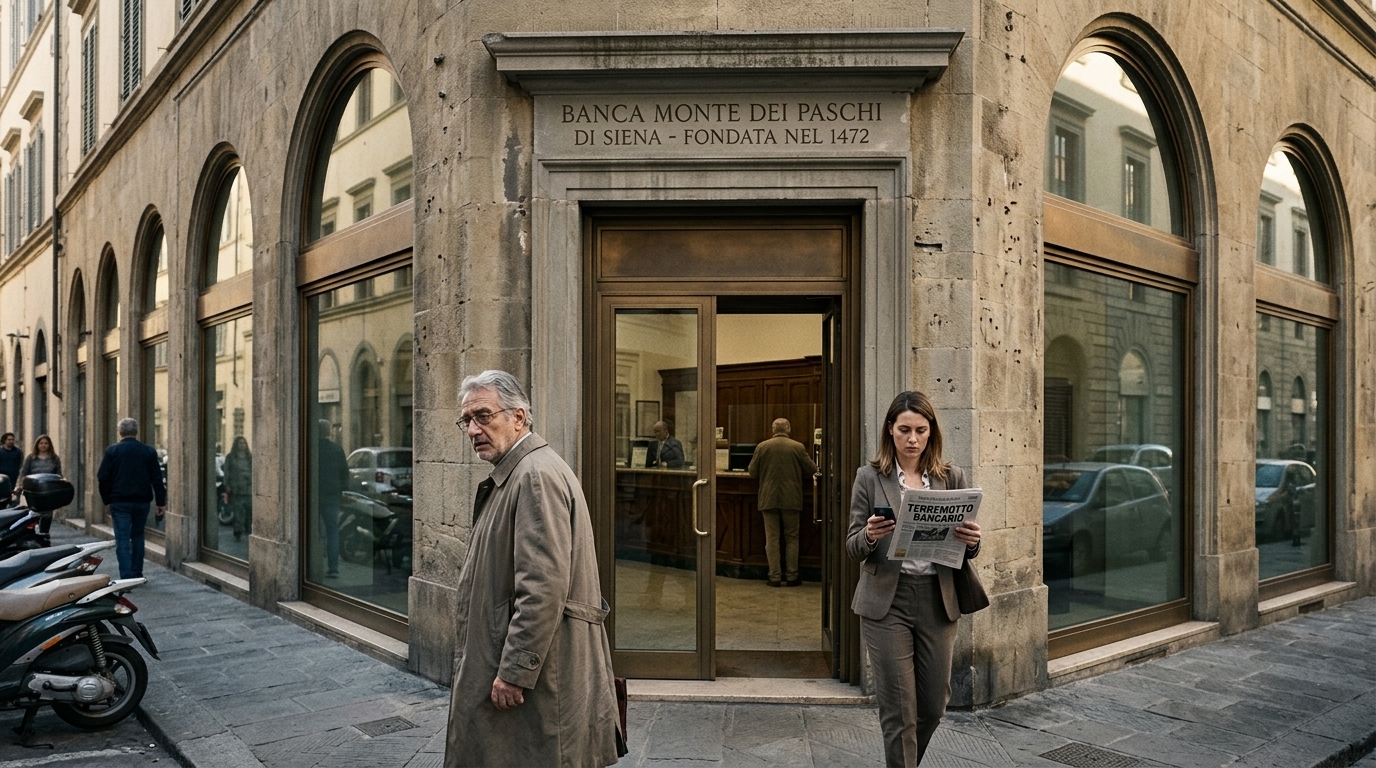
The news struck the European markets like a thunderbolt, although whispers of a major move in the Italian banking sector had been circulating for months. Intesa Sanpaolo, the undisputed leader of the Italian banking market, has submitted a formal takeover bid worth €30.6 billion for Banca Monte dei Paschi di Siena (MPS), the world's oldest bank. This move is not merely a business transaction; it marks the conclusion of a multi-year drama that rattled the Italian economy and tested the resilience of the Eurozone.
Consolidating Power: Why Intesa is Doubling Down on Italy
With this move, Intesa Sanpaolo’s CEO aims to fortify the bank’s dominance against its major rival, UniCredit, which recently caused a stir with its aggressive entry into Germany’s Commerzbank. The acquisition of MPS will provide Intesa with a vast branch network in central and southern Italy—regions where its presence was traditionally more limited compared to the affluent North. The €30.6 billion offer reflects a significant premium over MPS's current market valuation, suggesting Intesa’s confidence in the synergies to be realized.
Analysts estimate that the merger will allow Intesa to drastically reduce operating costs through IT system consolidation and network optimization. However, the challenge remains the integration of a bank that spent years in "intensive care," surviving only through state aid and continuous recapitalizations. Intesa is betting on the turnaround already achieved at MPS over the last two years, which returned to profitability under the leadership of Luigi Lovaglio.
From Bailout to Buyout: The Long Road for Monte dei Paschi
Monte dei Paschi di Siena was for years the "thorn" in relations between Rome and Brussels. Following the 2017 bailout, the Italian state held the majority stake, with the obligation to exit within a specific timeframe. Giorgia Meloni’s government, while initially hesitant, appears to see Intesa’s proposal as an "Italian solution" that prevents the acquisition of the historic bank by foreign capital, keeping the decision-making center within national borders.
"Intesa Sanpaolo’s move is not just financial; it is an act of national economic sovereignty at a time when European banks are seeking scale to compete with American giants," says a leading financial analyst in Milan.
However, the concentration of such power in the hands of a single player raises serious questions about competition. The Italian Antitrust Authority is expected to scrutinize the deal, as the new entity would control a disproportionately large share of the mortgage and deposit markets in Italy. Voices are already calling for the sale of hundreds of branches to third-party players, such as BPER or Banco BPM, to ensure healthy competition.
A New Era for European Banking Consolidation
This move in Italy is not an isolated event. It is part of a broader wave of consolidation sweeping Europe in 2026. With interest rates remaining at levels that allow for high profit margins, large banks possess the necessary liquidity to pursue acquisitions. The European Central Bank (ECB) has repeatedly called for the creation of stronger, cross-border banks, but reality shows that domestic mergers remain the preference for management due to lower risk and easier implementation.
- Intesa Sanpaolo now becomes one of the five largest banks in the Eurozone by market capitalization.
- MPS ends a 554-year cycle as an independent institution, joining a group with global reach.
- MPS shareholders are expected to receive a mix of cash and shares, valuing the bank at levels deemed unthinkable three years ago.
In conclusion, the "banking earthquake" in Italy signals the maturation of the system after a decade of crises. If the deal is finalized, Intesa will not only be Italy's champion but a player capable of standing toe-to-toe with French and Spanish giants, shifting the balance of power at the heart of the European financial system.





