

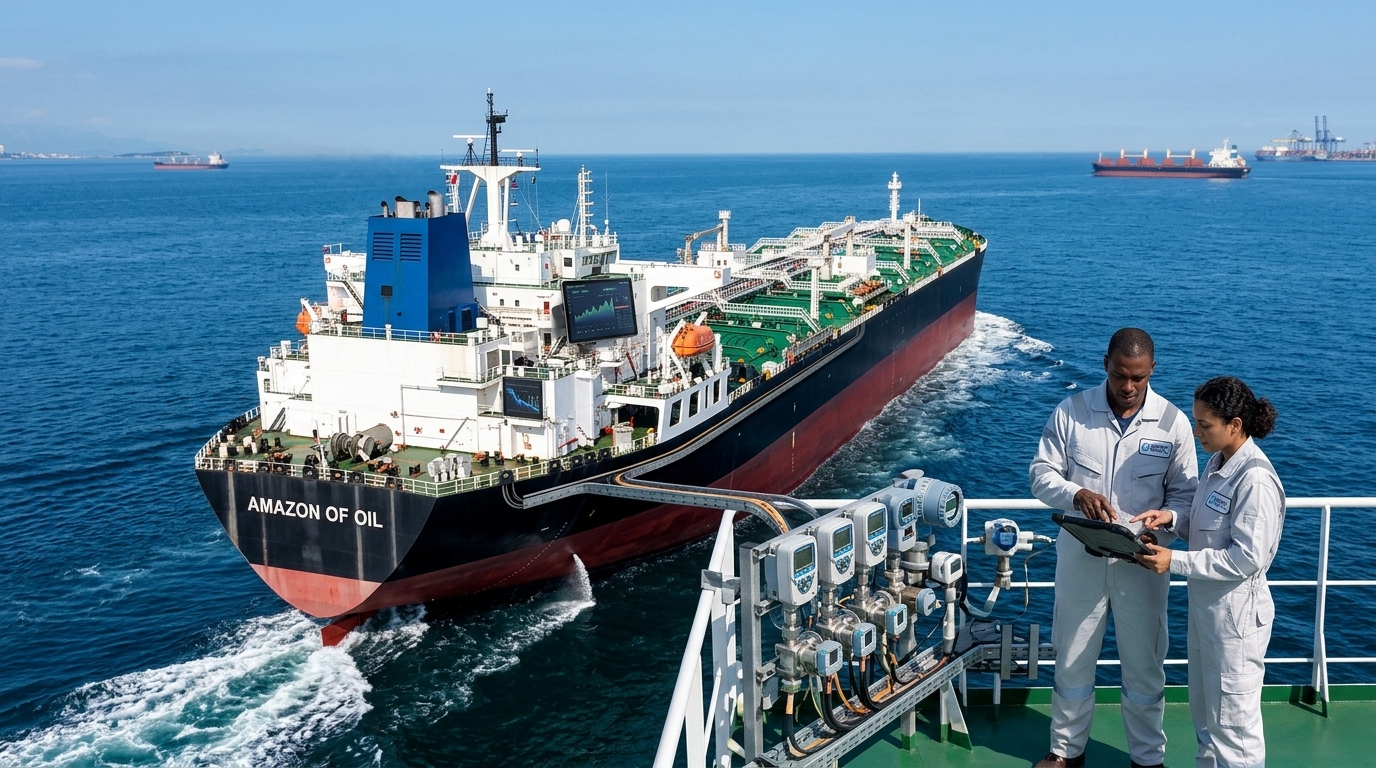
In previous decades, an escalation of tension in the Middle East, let alone a direct conflict involving Iran, would have sent crude oil prices to astronomical levels, causing global economic strangulation. However, throughout 2024 and 2025, we have witnessed remarkable stability. Despite attacks in the Red Sea and threats to the Strait of Hormuz, oil has remained within a price range that defied analysts' panic. The explanation lies not only in increased U.S. production but in a profound technological and structural shift: the creation of what experts call the 'Amazon of oil.'
The Digitalization of the Supply Chain
The traditional oil market relied on long-term contracts and a relative 'blindness' regarding the exact location of cargoes in real-time. Today, data analytics firms such as Vortexa and Kpler utilize satellite data, artificial intelligence, and AIS signals to track every barrel moving across the planet. This transparency has transformed the market into a platform reminiscent of Amazon's inventory management. Traders can now identify surpluses and shortages in seconds, directing tankers to where demand is highest, often before the need even appears in official statistics.
This 'liquidity' of data allows the market to absorb shocks. When a route closes—as happened with the avoidance of the Suez Canal due to Houthi attacks—the system adjusts automatically. Ships circumnavigate Africa, but the market knows exactly how much oil is 'on the water,' reducing the uncertainty that traditionally fueled speculation and price hikes.
Strategic Reserves and the Role of China and the US
Another critical factor is the strategic management of reserves. The U.S., through the Strategic Petroleum Reserve (SPR), and China, which has built massive storage facilities in recent years, act as the 'guarantors' of global supply. The ability of these two superpowers to release quantities of oil into the market serves as both a psychological and practical buffer. The market no longer fears an absolute shortage, knowing that safety cushions exist to cover gaps for months.
- Data transparency significantly reduces the risk premium.
- Tanker flexibility allows for rapid redirection of cargo.
- National strategic reserves act as effective price stabilizers.
- AI predicts consumption needs with unprecedented accuracy.
The 'Shadow' Market and Resilience
Paradoxically, the existence of a 'shadow fleet' (dark fleet) transporting oil from sanctioned countries like Iran and Russia has also contributed to price stability. Although this presents a geopolitical headache for the West, the continuous flow of this oil into the global market—often via ship-to-ship transfers and document falsification—ensures that total supply remains high. Tracking technology allows even these 'grey' flows to be perceived by major players, who price oil based on actual availability rather than just legal supply.
"Oil is no longer just a commodity; it is information. And information, when distributed correctly, kills volatility."
In conclusion, the transformation of the energy market into a high-performance digital ecosystem has changed the rules of the game. While the world remains geopolitically fragile, the technological infrastructure supporting energy trade has become so robust and flexible that it can withstand crises that would have previously led to a global recession. The bet for the future is whether this 'digital shield' will hold even in the event of a generalized conflict that could damage the production infrastructure itself.





