

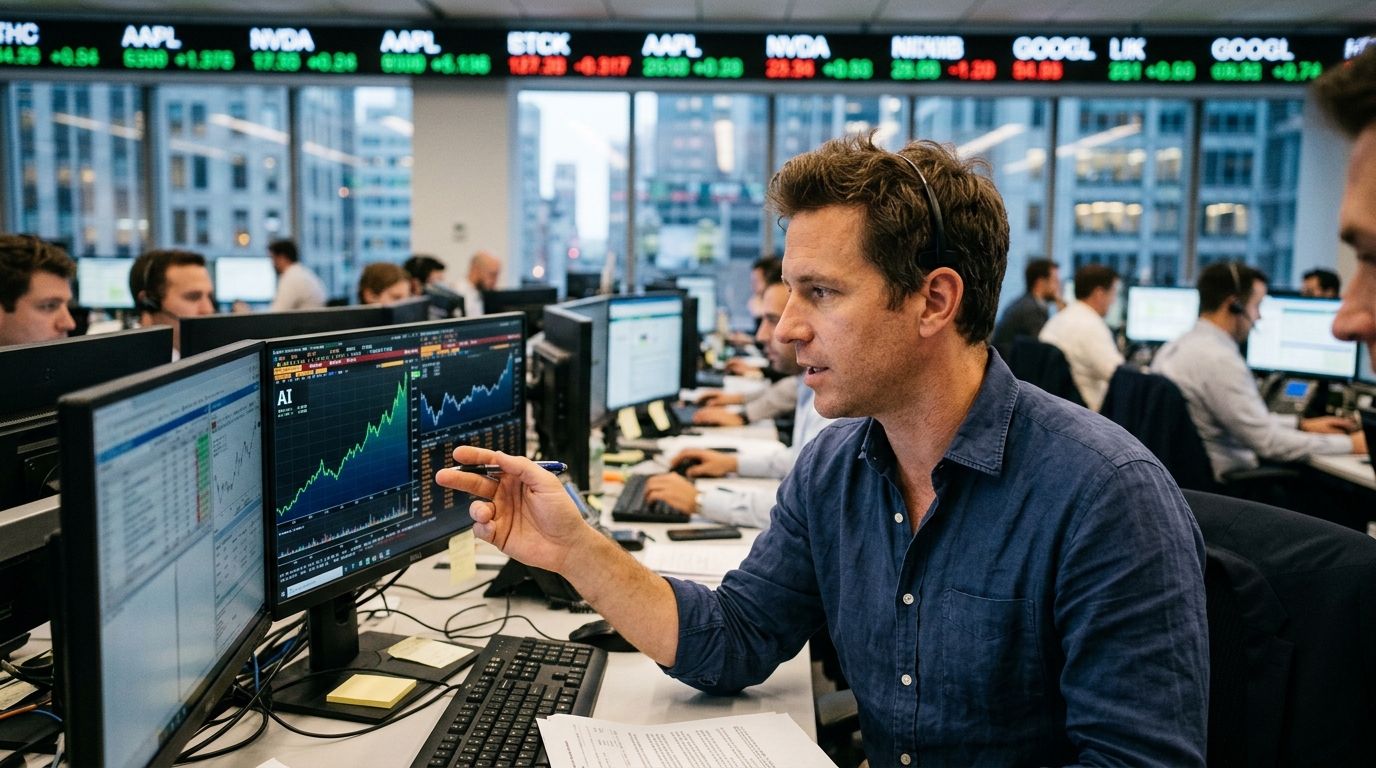
The stock market of 2026 has entered a phase of mature introspection. Following the initial hysteria of the 2023-2024 period, where any mention of "Artificial Intelligence" triggered double-digit stock surges, investors now demand tangible results, profitability, and sustainable business models. In this environment, Alphabet, Google's parent company, offers a unique opportunity reminiscent of the golden ages of tech rallies, but at far more reasonable valuations.
The Search Transformation and the 'Gemini Effect'
For decades, Google's dominance in search was taken for granted. However, the emergence of Large Language Models (LLMs) initially sparked fears that the traditional advertising model would collapse. Today, in mid-2026, we are witnessing exactly the opposite. Alphabet has successfully integrated Gemini, its most advanced AI model, across its entire product ecosystem, from Search Generative Experience (SGE) to YouTube and Gmail.
The company's strategy was not merely defensive but a total counter-offensive. AI did not replace search; it enriched it. Users no longer just receive links but synthesized answers that lead to higher-quality interactions. For advertisers, this translates into better targeting and higher conversion rates, shielding Alphabet's revenue during periods of economic uncertainty.
Google Cloud and the Infrastructure of the Future
One of the key pillars of Alphabet's investment thesis is Google Cloud. While Amazon (AWS) and Microsoft (Azure) hold significant market shares, Google Cloud has become the preferred platform for AI startups and organizations requiring specialized processing power. Google's development of its own chips, the TPUs (Tensor Processing Units), gives the company a massive cost advantage over competitors who rely exclusively on Nvidia.
The profitability of the Cloud segment has soared as economies of scale begin to pay off. Analysts point out that Alphabet is the only company in the world that owns the entire AI stack: from hardware (TPUs) and models (Gemini) to applications (Search, Workspace) and distribution infrastructure (Android, Chrome). This vertical integration creates a "moat" that is extremely difficult to breach.
Valuation and Financials: The Opportunity on the Table
Despite its technological superiority, Alphabet's stock often trades at a price-to-earnings (P/E) ratio significantly lower than that of Microsoft or Apple. This "discount" is partly due to concerns over antitrust investigations in the US and Europe. However, history has shown that such legal battles take years and rarely overturn the fundamental value of a company with such massive cash reserves.
- Free Cash Flow that allows for massive share buybacks.
- Consistent revenue growth from YouTube, which has become the dominant video consumption platform globally.
- Strategic investments in autonomous driving through Waymo, which by 2026 has begun to contribute substantially to the group's valuation.
In conclusion, Alphabet is no longer just a "promise" for the future of AI; it is its central axis. For the long-term investor, current market fluctuations represent a gift, allowing for a position in a giant that possesses the data, the computing power, and the talent to lead the next industrial revolution.
"AI is the most profound thing humanity is working on. More profound than fire or electricity," Sundar Pichai once stated, and in 2026, his company is proving it knows how to harness this fire for the benefit of its shareholders.





