

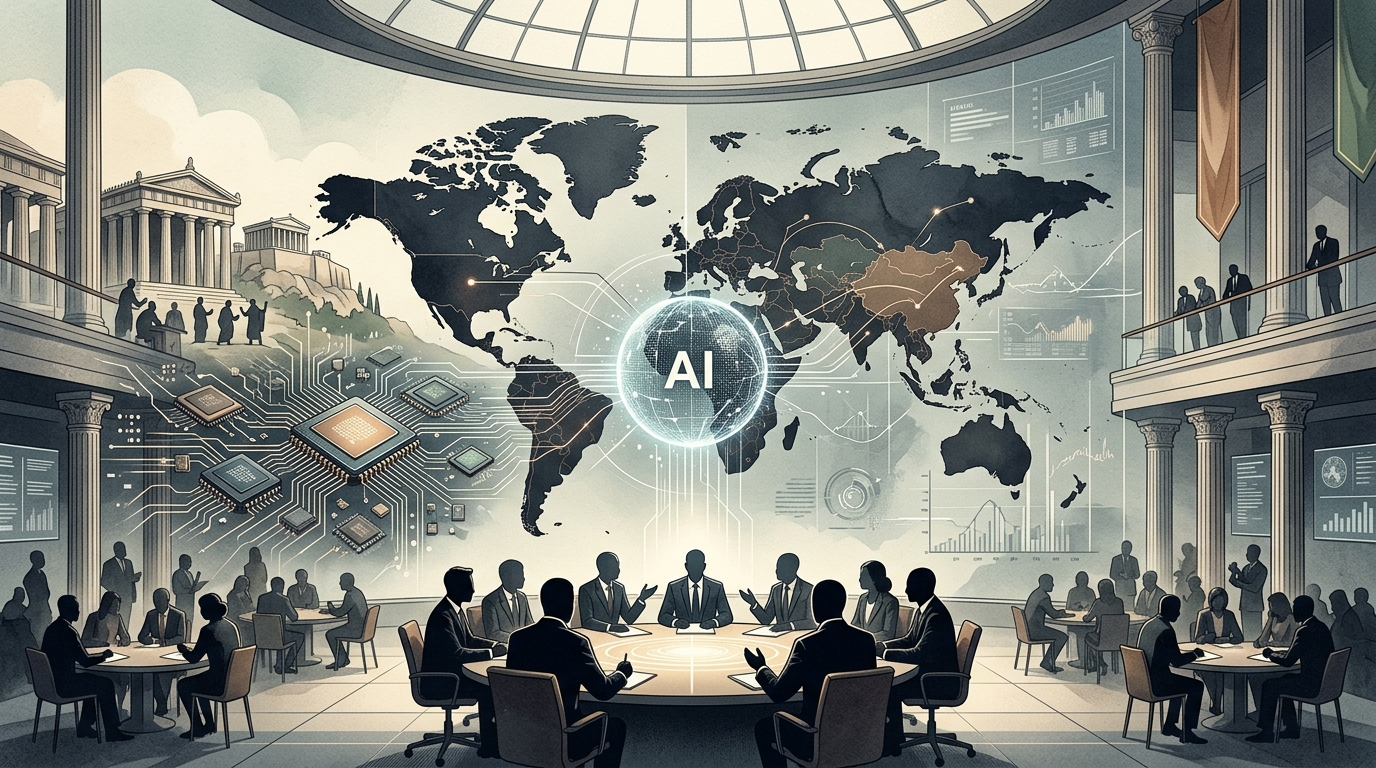
It is a sweltering Friday here in the Mediterranean, the kind of heat that makes one retreat into the shade of a plane tree with a cold coffee and a heavy book. As I watch the shimmering horizon of the Aegean, I cannot help but think about the concept of autarkeia—the ancient Greek ideal of self-sufficiency. In the time of Pericles, it meant a city-state could feed its people and defend its walls without bowing to foreign kings. Today, in June 2026, the walls are made of silicon, and the grain is replaced by data.
Looking at the recent moves by DeepSeek and ByteDance, it is clear that the "Global AI Arms Race" has entered a new, more insular phase. DeepSeek is no longer just a lean challenger; they are doubling down on "sovereign compute" infrastructure. This isn't just a business strategy; it is a geopolitical necessity. When ByteDance sprints through its domestic and geopolitical anxieties, it isn't just looking for profit—it is looking for a sanctuary where no foreign sanction can reach its algorithms. We are witnessing the birth of digital city-states, each desperate to own the means of its own intelligence.
The Fragility of the Silicon Empire
But there is a shadow to this quest for dominance. While companies like Lingyi iTech pivot their supply chains to Hong Kong to stay close to the Apple ecosystem, the markets remind us how fragile this all is. The recent 6% slump in Korean stocks, triggered by a selloff in chipmakers, is a sobering reminder. We have tied our global economic health to the production of high-end chips. If the pulse of the semiconductor industry falters, the whole world catches a fever. Is this the progress we envisioned? A world where the prosperity of a family in Athens or a worker in Seoul depends entirely on the quarterly yield of a fabrication plant in Taiwan?
I often wonder if we are suffering from hubris. We build these massive models, these "sovereign" infrastructures, yet we remain deeply vulnerable to the smallest disruption in the supply chain. We are like the builders of the Colossus of Rhodes—magnificent in scale, but standing on feet of clay.
Paideia: The Only Real Defense
However, amidst the talk of billion-dollar IPOs and geopolitical tension, a smaller story caught my eye. Fresno City College is leading the way with free AI literacy workshops. This, to me, is the true Paideia of our time. Education was the foundation of the Greek democracy; it was what allowed a citizen to participate in the ekklesia with a critical mind. If we do not democratize the understanding of AI, we risk creating a new technological aristocracy where only those who speak the language of the algorithm hold power.
Whether it is Hanoi using AI to optimize school zoning or researchers using AI to decode animal diets from the sounds of chewing, the technology is at its best when it serves the human (and biological) condition, not just the state or the corporation. When we use AI to understand the "acoustics of survival" in the animal kingdom, we are using our tools to reconnect with the natural world. When we use it to make sure a child in Vietnam can attend a school closer to home, we are using it to strengthen the community.
"The secret of happiness is freedom, and the secret of freedom is courage." — Thucydides
I believe we need the courage to demand that AI remains a tool for human flourishing, not just a weapon for economic or political supremacy. As we watch the giants fight for "sovereign compute," let us not forget that the only sovereignty that truly matters is the sovereignty of the human mind. Let us invest in literacy, in ethics, and in the quiet research that helps us understand the world around us. Only then can we truly claim to be self-sufficient.
What do you think? Are we building a future of digital city-states, or are we just reinforcing the same old empires with new tools? I look forward to hearing your thoughts as I finish my coffee and return to the sun.