

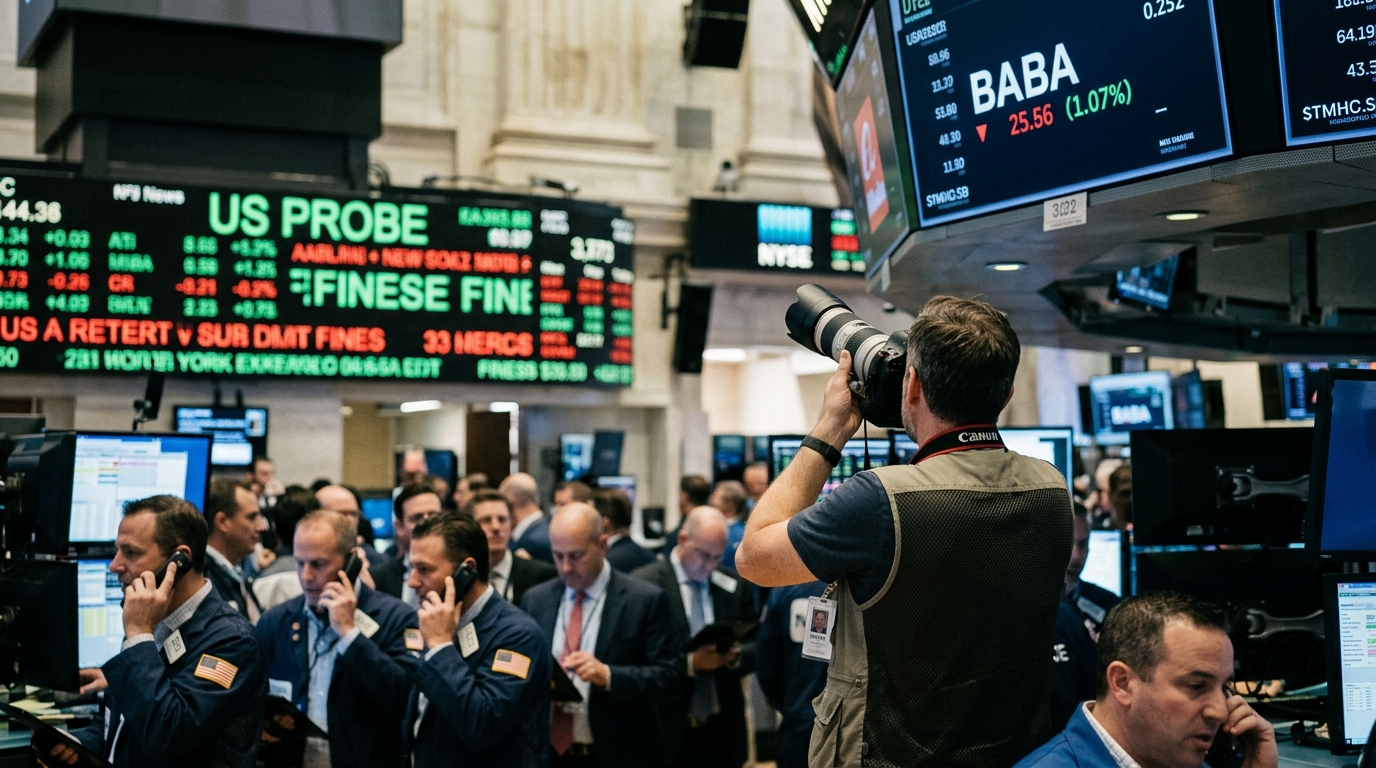
In a move that underscores the intensifying scrutiny of Chinese tech giants by U.S. regulators, Alibaba Group Holding Ltd and its U.S.-based digital payment processor have reached a landmark $600 million settlement. This agreement concludes a multi-year federal investigation led by the U.S. Department of Justice (DOJ), focusing on the companies' failure to prevent the sale and importation of illegal pharmaceuticals and controlled substances into the United States.
This case is more than just a financial penalty; it highlights the profound challenges global e-commerce platforms face in managing their supply chains and payment ecosystems. According to U.S. authorities, Alibaba allowed third-party merchants to utilize its services to traffic substances that often included chemical precursors for synthetic drugs like fentanyl, which has fueled a devastating public health crisis across America.
Anatomy of the Investigation: Payment Vulnerabilities
The federal probe revealed significant lapses in "Know Your Customer" (KYC) protocols and transaction monitoring processes. Federal agents discovered that, despite repeated warnings, the platform and its payment processor failed to implement adequate filters to detect suspicious shipments originating from China and destined for U.S. addresses. A central point of the allegation was the facilitation of transactions: without the perceived security and occasionally the anonymity provided by Alibaba’s digital payment infrastructure, the trafficking of these substances would have been significantly more difficult to execute at scale.
The $600 million figure is among the largest ever imposed on an e-commerce entity for issues related to public safety and regulatory negligence. The settlement also mandates rigorous new compliance measures, requiring Alibaba to undergo regular audits by independent monitors for the next three years. This development serves as a stark warning to other market players, such as Temu and Shein, that the regulatory "blind spot" they have enjoyed—often attributed to the de minimis exception for direct-to-consumer shipping—is rapidly closing.
Geopolitical Context and the Fentanyl Crisis
It is impossible to view this settlement in isolation from the broader geopolitical friction between Washington and Beijing. The U.S. government has been engaged in a sustained diplomatic and legal offensive against China regarding the flow of fentanyl precursors. While Beijing maintains it is taking enforcement actions, Washington is increasingly leveraging its financial and legal tools to penalize corporations that, even through negligence, facilitate this illicit trade. Alibaba, as the primary global face of Chinese digital commerce, represents a high-profile target for such enforcement.
Furthermore, the timing of the settlement is strategic. With U.S. elections on the horizon and anti-China rhetoric reaching a fever pitch in Congress, settling now allows Alibaba to avoid a protracted and public trial. Such a trial could have resulted in even more draconian sanctions or a potential ban on certain services within the U.S. market. For Beijing, allowing Alibaba to settle is a pragmatic sacrifice to ensure continued access to Western capital markets and consumer bases.
The Future of Global E-commerce Compliance
This decision is expected to reshape how platforms manage their third-party ecosystems. The era where digital marketplaces functioned as mere "neutral intermediaries" with no liability for the contents of the packages they facilitate is coming to an end. Companies will now be forced to invest billions in AI-driven detection systems and more stringent merchant vetting processes.
- Increased compliance costs for all cross-border platforms.
- Potentially slower processing times for international shipments due to enhanced screening.
- Stricter oversight of digital wallets and encrypted transaction methods.
Ultimately, the $600 million settlement is the price of globalization in an increasingly fragmented and regulated world. Alibaba must now demonstrate that it can operate as a responsible global actor, balancing its drive for market dominance with the ethical and legal imperatives of the nations in which it operates. The message from the DOJ is clear: if you provide the pipes for global commerce, you are responsible for what flows through them.





