

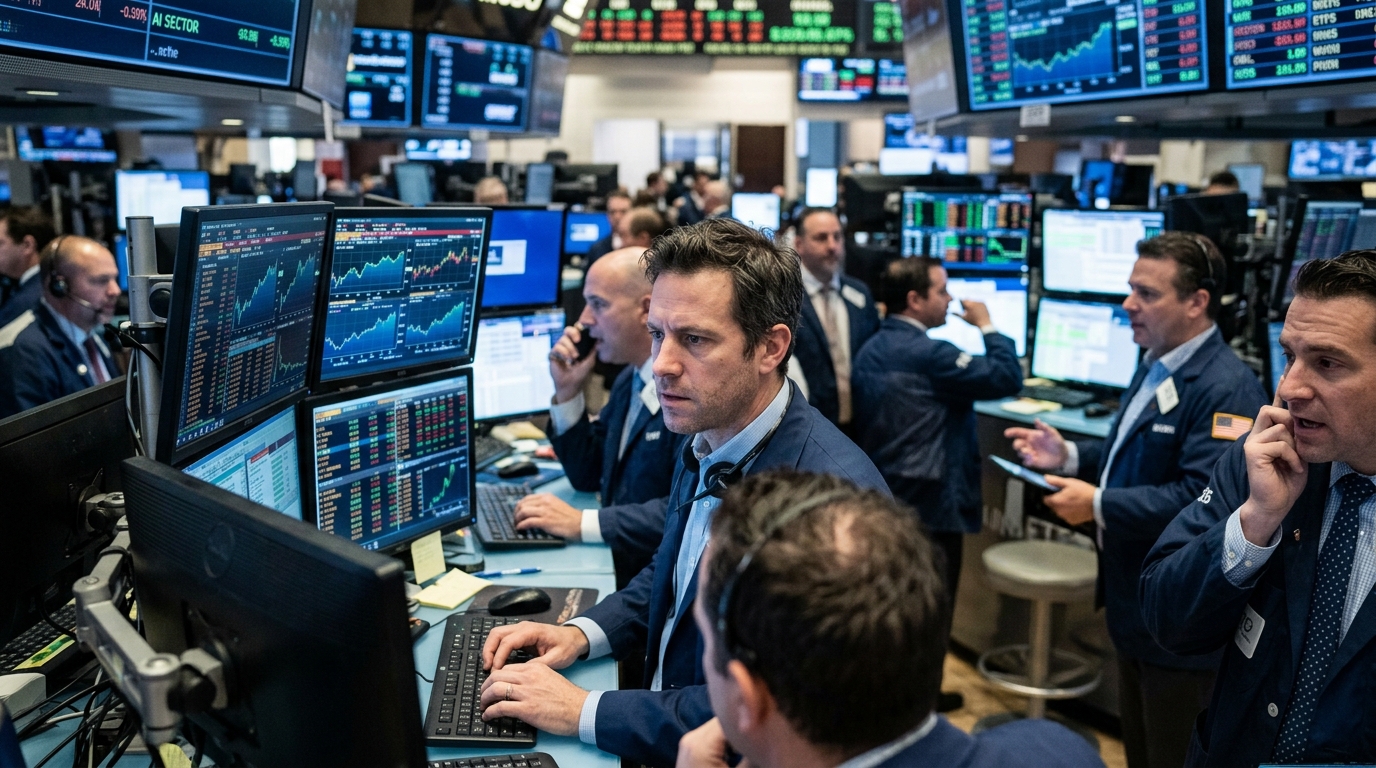
It is the summer of 2026, and the Artificial Intelligence (AI) landscape looks nothing like the chaotic surge of 2023. The market has transitioned from pure speculation to a phase of fundamental integration into the global economy. Yet, for the average investor, the question remains agonizing: Who will be the next big winner? While Nvidia remains the "king" of semiconductors, the emergence of new players in quantum computing and AI-driven cybersecurity makes individual stock picking an extremely risky strategy.
The Shift Toward Collective Investment
Recent analysis from The Motley Fool highlights a trend that we see solidifying this year: the rise of Exchange-Traded Funds (ETFs) focusing on AI. Instead of trying to predict whether a specific startup will dethrone Google or if a software company will dominate the Edge AI market, investors are choosing to "own the whole field." Low-cost ETFs allow exposure to the entire AI value chain — from chipmakers and cloud providers to companies developing Large Language Models (LLMs) and energy infrastructure.
The advantage of this approach is twofold. First, diversification protects the portfolio from the collapse of a single company due to mismanagement or technological obsolescence. Second, low expense ratios ensure that a larger portion of the returns stays in the investor's pocket, something crucial in a market that, while growing, now shows signs of intense volatility.
Beyond Hardware: The Value Chain in 2026
In 2026, investing in AI is no longer just about hardware. Modern ETFs now include utility companies providing the necessary power for data centers, as well as cybersecurity firms protecting models from sophisticated attacks. This "holistic" approach is what makes ETFs so attractive. As analysts point out, AI is no longer a sector of technology but a horizontal force affecting medicine, heavy industry, and retail.
- Diversification: Risk reduction through exposure to dozens of companies simultaneously.
- Low Costs: Passive ETFs offer market access with minimal fees.
- Automatic Rebalancing: Funds automatically adjust to market changes, removing the "losers."
"Picking the next Amazon in the AI space is like looking for a needle in a haystack. With an ETF, you buy the whole haystack, knowing the needle is in there somewhere," the analysis notes.
Concentration Risk and Future Strategy
Despite the benefits, investors must remain cautious. Many "AI ETFs" have a high concentration in so-called Big Tech companies. If Microsoft or Apple undergoes a significant correction, the ETF will follow. Experts' advice for the second half of 2026 is to look for funds that also weigh mid-cap companies innovating in specialized applications (Vertical AI).
In conclusion, the era where anyone could get rich by buying any stock with the word "AI" in its name has passed. Today, prudence and strategic dispersion through low-cost tools are the only path to securing long-term gains in an environment changing at the speed of light.





