

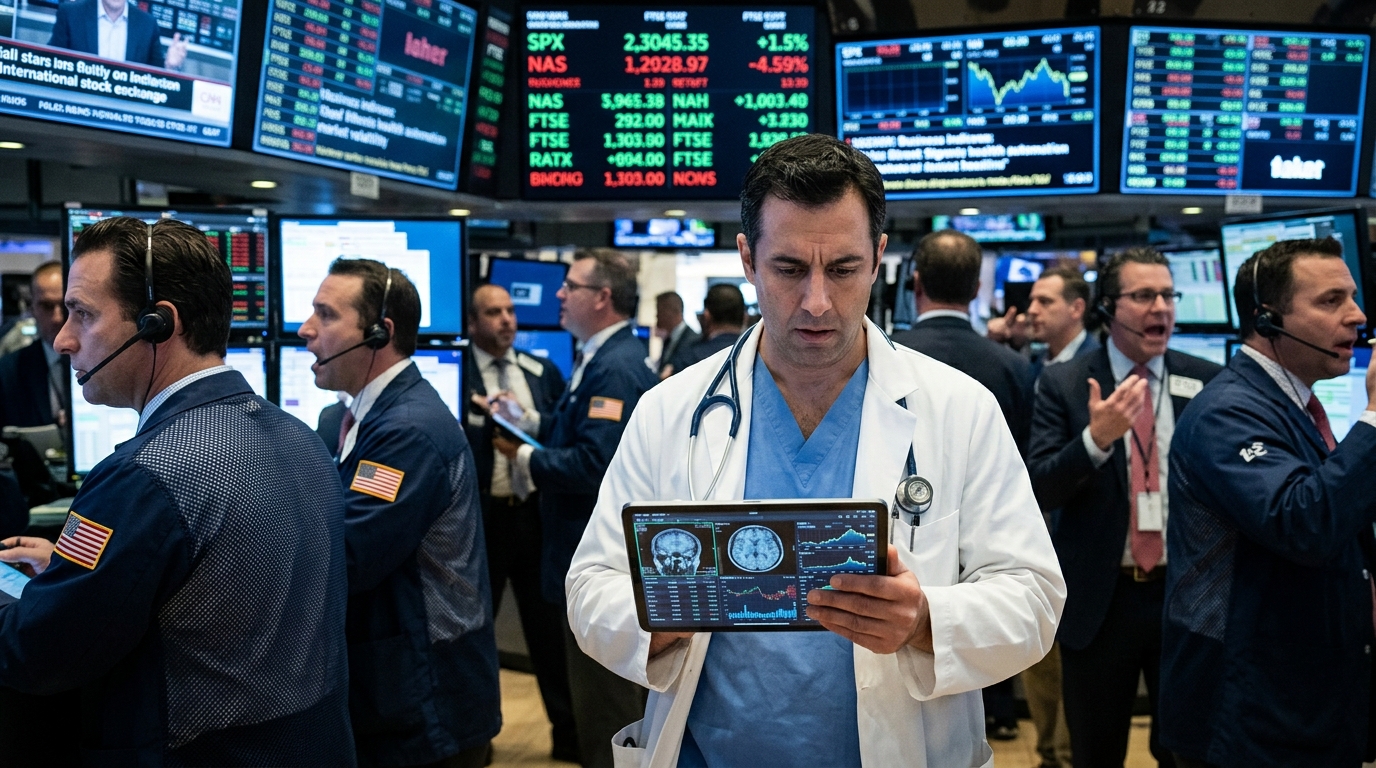
For decades, the medical profession was considered the ultimate sanctuary against automation. The complexity of the human body, the necessity for empathy, and the moral weight of life-and-death decisions created a sense of vocational security. However, the rapid advancement of Artificial Intelligence (AI) is beginning to crack this confidence. As analyzed in recent reports and medical industry discussions, job displacement is no longer just a threat to low-skilled labor; it is striking the heart of the most specialized and high-earning medical fields.
The Visual Revolution: Radiology and Pathology in the Crosshairs
Specialties that rely heavily on pattern recognition and image analysis are the first to feel the pressure. Radiology, Pathology, and Dermatology are at the forefront of this digital storm. Deep learning algorithms can now analyze thousands of X-rays, MRIs, and biopsies in seconds, identifying anomalies that the human eye might miss due to fatigue or limited experience.
The question is no longer whether AI can diagnose better than a radiologist, but when hospitals and insurance companies will view human intervention as an unnecessary cost or even a liability risk. If an algorithm has a 99% success rate and a human has 95%, the legal and economic pressure to adopt the former becomes irresistible. This does not necessarily mean the total elimination of doctors, but a drastic reduction in job openings and the demotion of the physician to a mere 'validator' of machine decisions.
The Economic Dimension: Efficiency vs. Expertise
From an economic perspective, AI promises to solve the problem of high healthcare costs, but at a steep price for the medical workforce. Large hospital systems see AI as an opportunity to increase productivity without hiring additional staff. In reality, AI's ability to handle vast amounts of data and suggest treatment regimens based on global literature reduces the need for large teams of specialists.
Furthermore, the 'democratization' of medical knowledge through AI could lead to what economists call 'de-skilling.' If a general practitioner, aided by an advanced AI system, can perform 80% of a cardiologist's diagnostic work, the market value of the cardiologist will inevitably decline. This creates a new dynamic in the labor market where specialization is no longer a guarantee of high income.
Ethics and Liability: Who is Responsible for the Error?
One of the biggest hurdles to the full replacement of doctors is the legal framework. In the event of a medical error, there is always a person held accountable. With AI, responsibility is diffused among developers, tech companies, and the medical staff who utilized the tool. However, this 'shield' is temporary. As AI systems become more reliable, legal liability may shift to the doctor who *failed* to follow the AI's recommendation.
"Medicine is not just a science, it is an art. But when science becomes so precise through algorithms, art risks being viewed as a subjective error."
The education of new doctors must also change radically. Medical schools continue to teach data memorization, a skill that machines have already mastered. The future value of a physician will lie in their ability to manage complexity, provide ethical guidance, and communicate with patients at a level no screen can replicate.
The Final Bastion: Empathy and Surgical Precision
There are areas where human presence remains irreplaceable, at least for now. Psychiatry, Palliative Care, and complex surgical procedures that require immediate adaptation to unpredictable conditions are more shielded. Nevertheless, even there, AI is penetrating. AI-guided robotic systems are already performing incisions with millimeter precision, while chatbots are being used to support patients with depression.
In conclusion, the threat of AI displacing medical specialties is real and imminent. This is not a science fiction scenario, but an economic and technological necessity reshaping the healthcare landscape. The doctors of tomorrow will not be those who know the most, but those who can best collaborate with the machines that know everything.





