

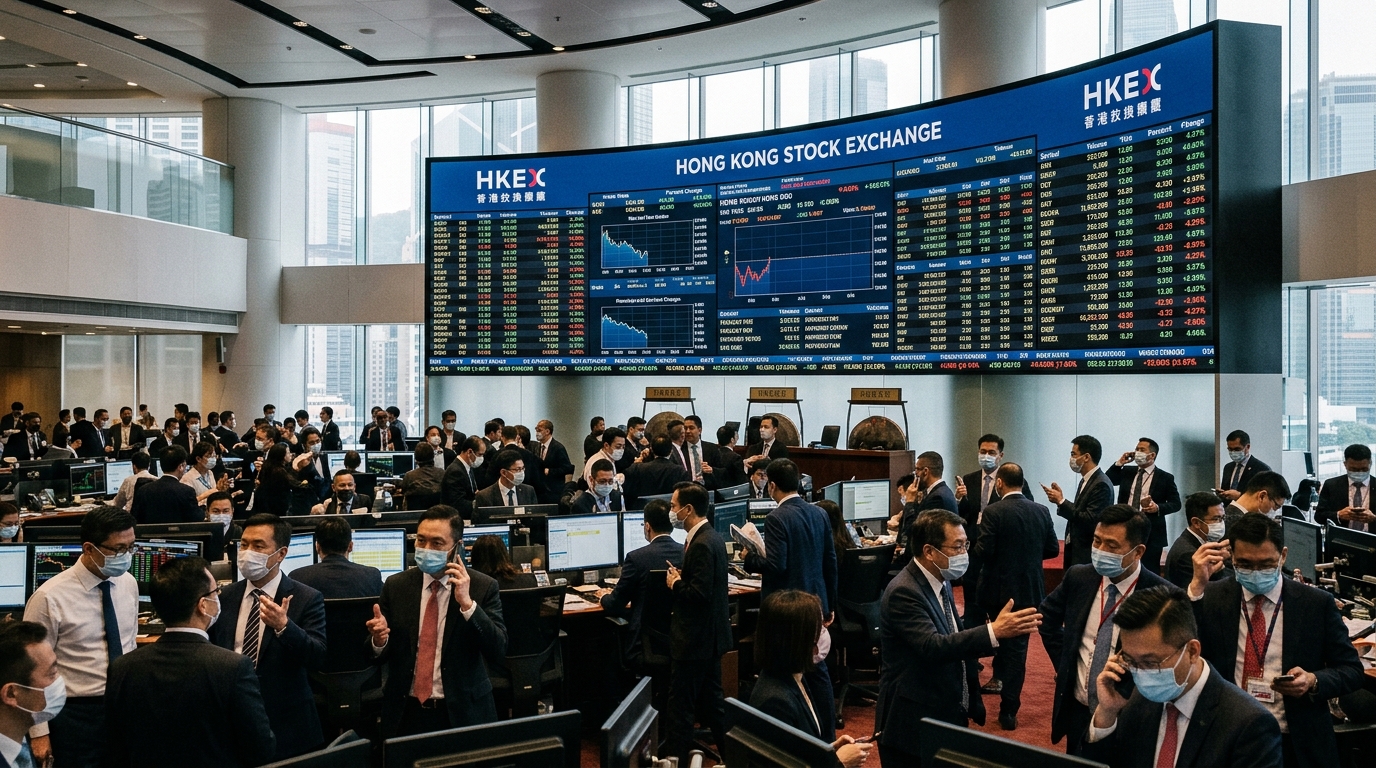
The story of Hong Kong has always been one of transition. From a humble fishing village to a global financial metropolis, the city has served as the vital point of contact between East and West. Today, as global competition for supremacy in Artificial Intelligence (AI) escalates, Hong Kong is being called upon to play a new, even more complex role: that of the central port for the Initial Public Offerings (IPOs) of Chinese AI companies. However, the city's potential goes far beyond mere capital raising.
The Strategic Shift of the HKEX
For many years, Chinese tech firms viewed Wall Street as the "holy grail" of stock exchanges. The liquidity of NASDAQ and the NYSE was unrivaled. However, tightening regulations by the U.S. Securities and Exchange Commission (SEC) and Beijing’s concerns over data security have fundamentally altered the landscape. The Hong Kong Stock Exchange (HKEX) has emerged as the natural alternative.
The introduction of Chapter 18C to the HKEX listing rules marked a turning point. This regulation allows "specialist technology companies" — including those involved in AI, quantum computing, and green energy — to go public even if they have not yet achieved profitability. This move acknowledges the nature of the AI industry, where investments in Research and Development (R&D) are massive and profitability horizons are long-term.
Beyond Capital: An Ecosystem of Innovation
While IPOs provide the glamour, Hong Kong’s true value lies in its potential to function as a data and talent bridge. The Greater Bay Area (GBA) initiative, which links Hong Kong with Shenzhen and other cities in the Pearl River Delta, creates an economic juggernaut capable of rivaling Silicon Valley.
- Data Flow: Hong Kong maintains a separate legal system, allowing for more flexible data management compared to mainland China, making it an ideal testing ground for AI models targeting the international market.
- Hardware Access: Proximity to Shenzhen, the world’s electronics manufacturing hub, allows AI companies to integrate their software into hardware at an accelerated pace.
- Scientific Talent: Hong Kong’s universities consistently rank among the world's best in AI research, attracting academics and researchers who desire an internationally oriented environment.
"Hong Kong is no longer just a financial gateway. It is the space where Chinese innovation meets international standards, creating a hybrid growth model that exists nowhere else in the world."
Geopolitical Challenges and Chip Constraints
Despite the prospects, the road is not without obstacles. U.S. export restrictions on advanced semiconductors (such as Nvidia’s GPUs) directly affect AI companies based or listed in Hong Kong. The city finds itself in a delicate balance: it must remain "Chinese" enough to have Beijing's support, yet "international" enough to avoid total isolation from Western technological supply chains.
The recent trend of China's AI giants, such as SenseTime and Fourth Paradigm, strengthening their presence in Hong Kong suggests the city is their "fortress." However, to become more than just an IPO hub, Hong Kong must invest more in its own computing infrastructure and ensure that the freedom of research remains intact.
Conclusion: A New Identity
Hong Kong's future as an AI hub will depend on its ability to offer something that neither Shanghai nor New York can: a space where Eastern capital meets Western expertise under a regime that favors high technology. If it succeeds, it will not just be the place where AI companies go public, but the place where the next generation of global intelligence is forged.





