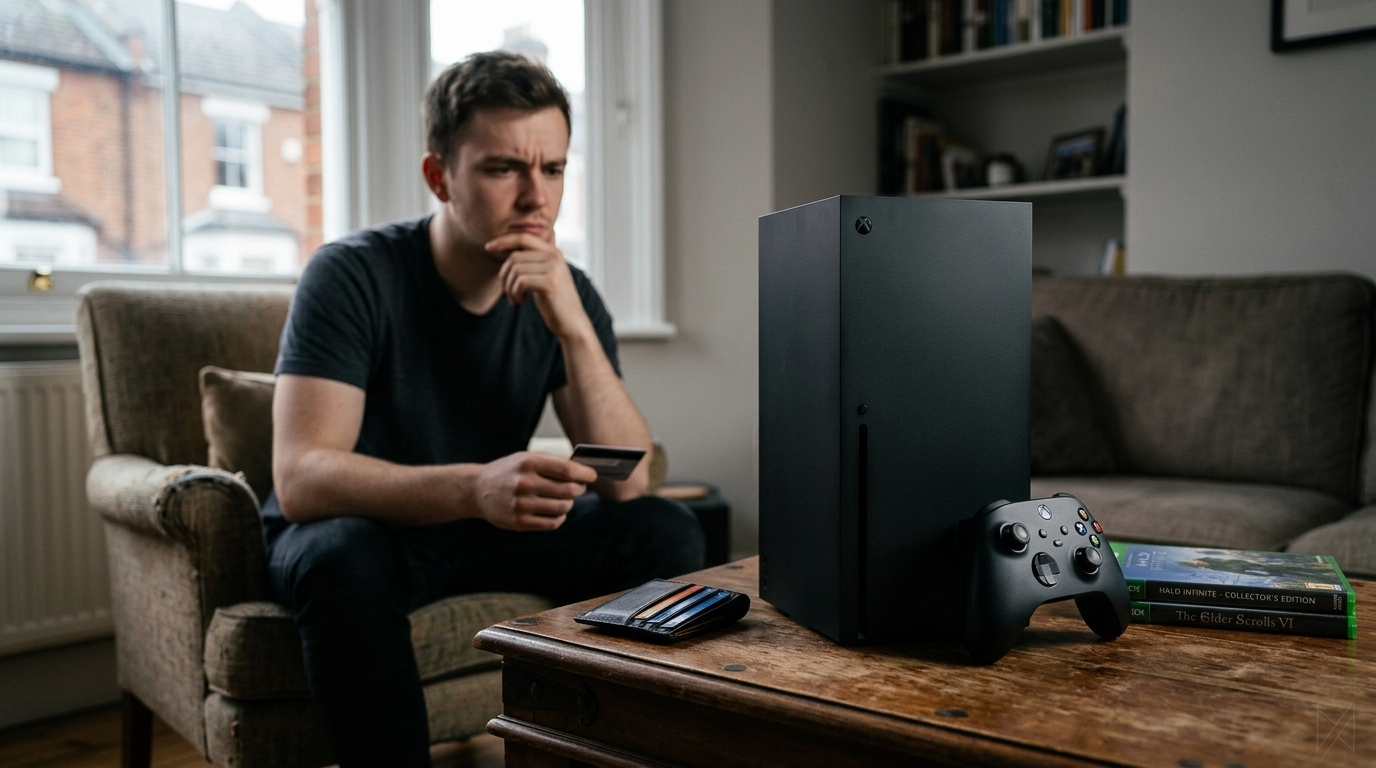
In a move that has sent shockwaves through the global gaming community, Microsoft has announced an unprecedented price hike for its Xbox Series S and Series X consoles. Starting August 1st, consumers will face a new reality where entry into the Microsoft ecosystem requires significantly deeper pockets. The increase, which amounts to $100 for 512GB models and $150 for 1TB models, marks a historic turning point in industry pricing strategy, which has traditionally seen hardware prices decrease as a console's lifecycle progresses.
The Anatomy of the Hike and the New Price Points
According to official statements, the Xbox Series S—once the most affordable gateway to next-generation gaming—will now start at $499.99. Even more striking is the increase for the disc-less Xbox Series X, which will jump to a starting price of $749.99. These changes are not merely inflationary adjustments; they reflect a profound crisis in the semiconductor supply chain, specifically regarding NAND and DRAM memory units.
Microsoft contends that production costs have escalated to levels that make it impossible for the company to continue absorbing the losses. For years, console manufacturers' business models relied on selling hardware at razor-thin margins or even at a loss, recouping revenue through software sales and subscriptions. However, the current memory shortage appears to have broken this model, forcing the tech giant to pass the costs directly onto the end-user.
The Memory Crisis and Geopolitical Context
The justification of a "memory shortage" is not without merit. Market analysts point out that memory chip prices have spiked due to the insatiable demand for Artificial Intelligence (AI) infrastructure. Data centers powering large language models require vast quantities of HBM (High Bandwidth Memory) and DRAM, leaving fewer resources for consumer electronics. In this context, gaming hardware is being sidelined in favor of the high-margin profitability promised by the AI revolution.
Furthermore, geopolitical tensions in East Asia, where the bulk of semiconductor manufacturing is concentrated, have created a climate of uncertainty. Export restrictions and tariffs on critical components are contributing to the rising final cost. For Microsoft, maintaining steady production levels now requires a financial sacrifice that Satya Nadella’s leadership is no longer willing to bear alone.
Strategic Pivot: From Hardware to Services
Beyond component costs, there is a broader strategic reading of this move. Microsoft has invested billions into Xbox Game Pass and cloud gaming. By raising the price of physical hardware, the company is effectively nudging a segment of its audience toward streaming services, where expensive hardware is not required—only a stable internet connection and a monthly subscription.
- The console is transitioning from a mass-market product to a luxury item.
- Game Pass becomes the primary vehicle for recurring revenue.
- Long-term reliance on hardware manufacturing is mitigated.
This "luxurification" of gaming may alter player demographics. If an Xbox Series X costs $750, it ceases to be a standard holiday gift for the average family and becomes an investment for tech enthusiasts. The lingering question is how Sony will respond with the PlayStation 5, and whether Nintendo will follow suit with its successor to the Switch.
Consumer Impact and the Road Ahead
For the average gamer, this news is disheartening. At a time when the cost of living is rising globally, home entertainment served as a relative sanctuary. With these new prices, the gap between the "haves" and "have-nots" in the digital world widens. Consumers must now decide if the Xbox experience justifies the premium or if it is time to pivot to PC gaming, where GPU prices also fluctuate but offer greater versatility.
In conclusion, Microsoft’s move is a bold gamble. If the market accepts these price points, we will see a permanent shift in price tiers across the industry. However, if there is a massive backlash, Microsoft may be forced to reconsider, though the underlying memory shortages suggest their room for maneuver is limited. What is certain is that the summer of 2026 will be remembered as the moment gaming definitively lost its affordable innocence.