

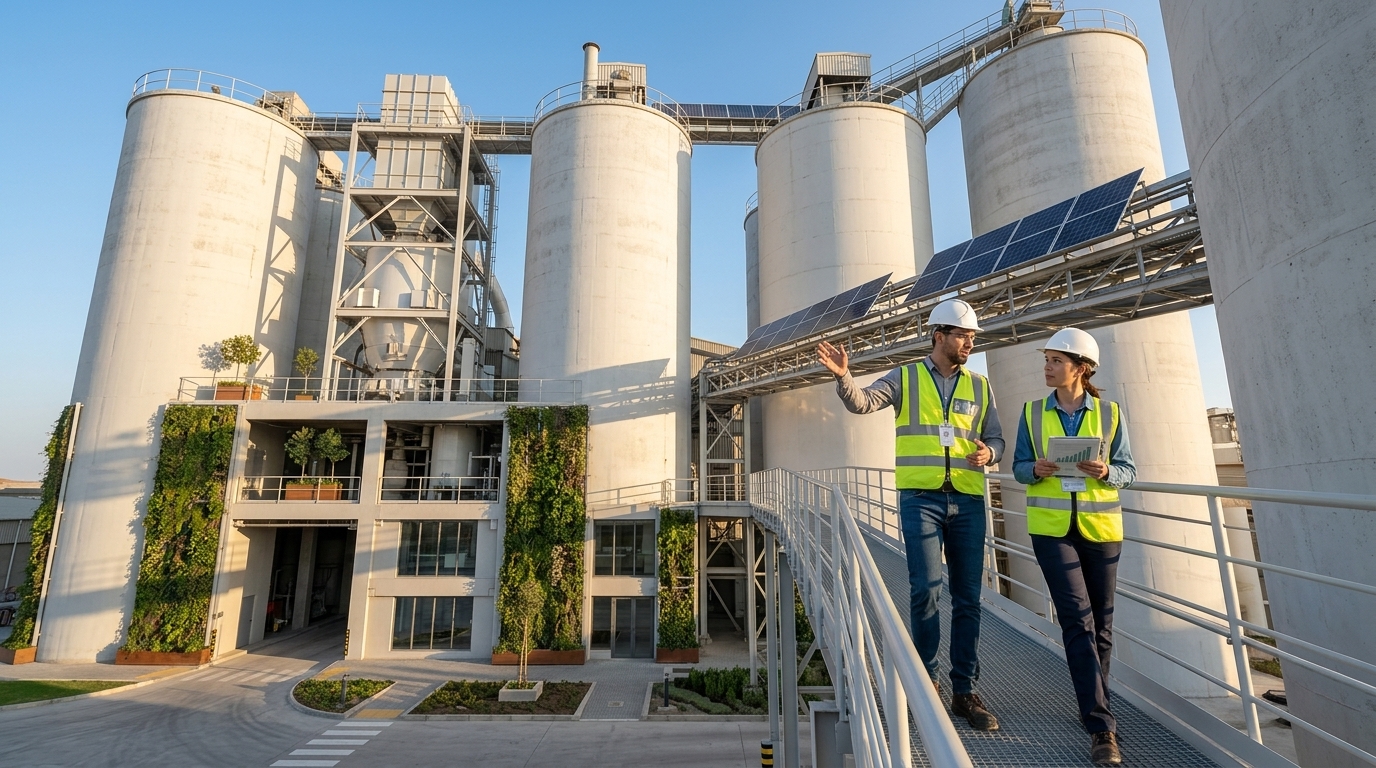
In an era where the climate crisis is no longer a distant threat but a daily reality, heavy industry finds itself at the epicenter of global scrutiny. However, TITAN Group, one of Greece’s most historic industrial giants with a formidable international presence, appears to be shifting the narrative. Its recent inclusion in TIME magazine’s list of the "World's Most Sustainable Companies" for 2024—marking its third consecutive year—is not merely an honorary title; it is the culmination of a radical restructuring of its business model.
The Methodology Behind the Recognition
TIME’s ranking, conducted in collaboration with data platform Statista, is not based on mere declarations of intent. It evaluates companies based on over 20 key performance indicators (KPIs) related to Environment, Social, and Governance (ESG) criteria. TITAN managed to stand out among thousands of global candidates, proving that cement production—one of the most energy-intensive sectors worldwide—can indeed align with the principles of sustainability.
This distinction reflects the Group’s progress in industrial transformation. TITAN has committed to achieving Net Zero carbon emissions by 2050, with intermediate targets including a 35% reduction in CO2 emissions by 2030 compared to 1990 levels. This is being achieved through significant investments in cutting-edge technologies, such as Carbon Capture, Utilization, and Storage (CCUS) and the increased use of alternative fuels.
Green Growth Strategy 2026
The core of the Group’s success lies in its "Green Growth Strategy 2026." This is a roadmap that fuses economic efficiency with environmental responsibility. TITAN is not limiting itself to reducing the footprint of its factories; it is expanding into the creation of low-carbon products. The "CemZero" product line is a prime example, offering solutions for construction with a reduced environmental impact, meeting the demands of the modern market for sustainable buildings.
- Investments exceeding €500 million in green technologies by 2030.
- Strengthening the circular economy through the recycling of construction materials.
- Digitalization of production using Artificial Intelligence (AI) to optimize energy consumption.
Notably, the implementation of AI across the Group’s plants has yielded spectacular results. Through advanced algorithms, production systems self-regulate in real-time, reducing heat loss and improving final product quality. This digital revolution allows TITAN to remain competitive in an environment where the cost of carbon emissions in Europe is steadily rising.
The IFESTOS Project and the Future
One of the Group’s most promising initiatives is the "IFESTOS" project in Greece. It is one of the largest carbon capture projects in Europe, aiming to capture nearly all CO2 emissions from the Kamari plant. This project, which has secured funding from the EU Innovation Fund, represents a milestone for Greek industry, paving the way for the decarbonization of heavy industry on both a national and European scale.
"Sustainability is no longer an option, but the only path for the long-term survival and prosperity of any industrial organization," Group executives state.
In conclusion, TITAN’s ranking among the world’s most sustainable companies by TIME serves as a validation of its strategic choice to invest in the future. In a rapidly changing world, the Greek group demonstrates that tradition and innovation can coexist, creating value not only for its shareholders but for society and the environment as a whole. The challenge now remains the scaling of these solutions globally while maintaining industrial competitiveness in an uncertain global economy.





