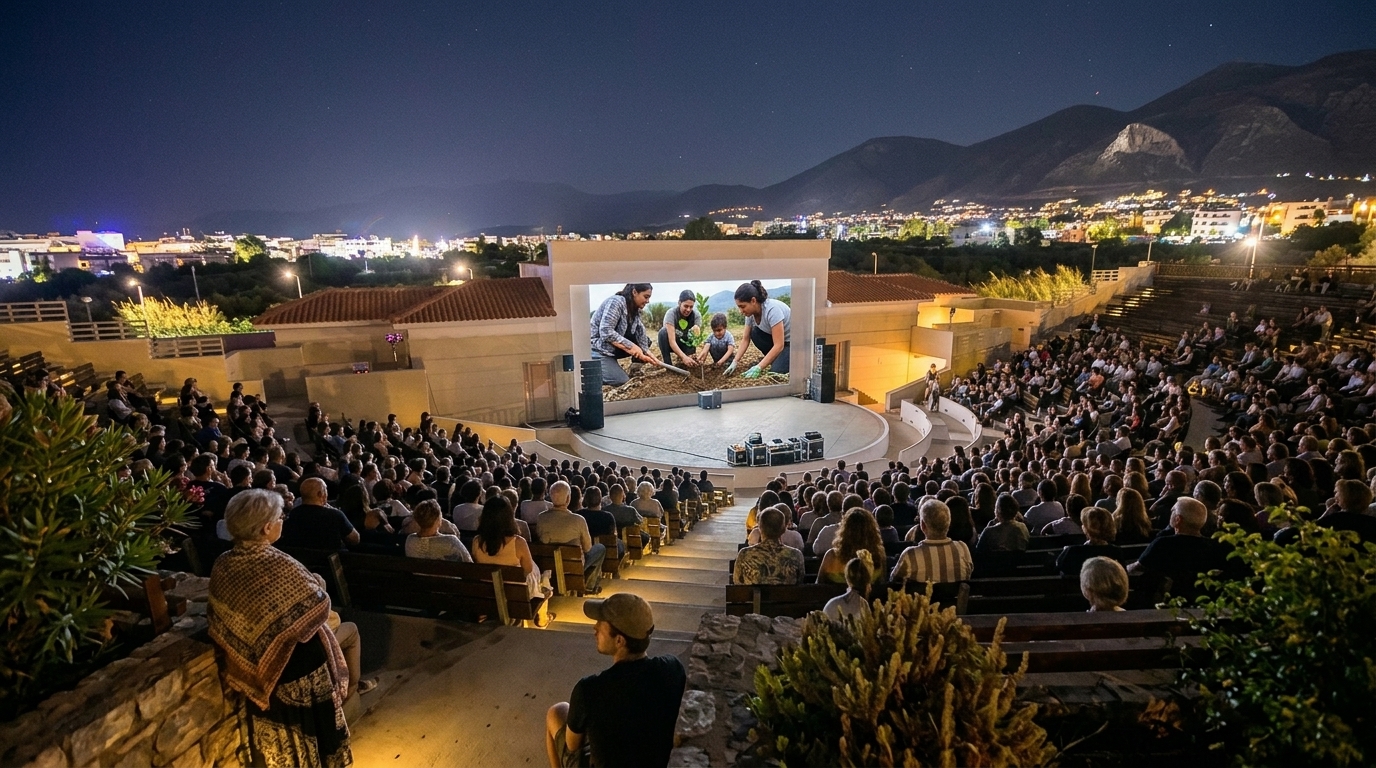
In an era where the public discourse on climate change is often dominated by atmospheric carbon emissions, a new cinematic endeavor arrives to remind us that the solution—as well as the danger—lies right beneath our feet. The documentary “2258: A Story for the Rebirth of Earth,” which held its official premiere in Crete, is not merely a documentation of environmental issues; it is a philosophical and technological proposal for the survival of our species.
The choice of Crete for the premiere was far from accidental. The island, with its ancient agricultural heritage and unique ecosystem, serves as the ideal backdrop to discuss soil degradation. According to the data presented in the film, soil is not just “dirt,” but a living organism that hosts a quarter of the planet's total biodiversity. The loss of its health automatically entails the loss of our ability to produce food, sequester carbon, and maintain the water table.
The Crisis Beneath Our Feet: The Invisible Threat
The documentary analyzes with scientific precision how intensive farming, chemical overuse, and deforestation have led 40% of the world's soils to a state of degradation. If this trend continues, the Food and Agriculture Organization (FAO) warns that we have fewer than 60 harvests left before the soil becomes incapable of feeding the population. “2258” uses this milestone as a springboard to envision a world two centuries from now, where humanity has either managed to regenerate the earth or has succumbed to desertification.
The filmmakers place significant emphasis on the concept of “Regenerative Agriculture.” Unlike sustainable agriculture, which aims to maintain the status quo, regenerative farming seeks to actively improve the ecosystem. This includes restoring organic matter to the soil, enhancing the microbiome, and using natural methods for pest control. The film showcases examples from the Greek countryside, where young farmers are returning to their roots, combining their grandfathers' wisdom with modern analytical tools.
Artificial Intelligence and Technology in Service of Nature
One of the most compelling aspects of the documentary is its highlight of high technology's role in environmental restoration. Although the crisis was partially caused by the misuse of technology during the Green Revolution of the 20th century, the solution appears to lie in “smart” management. Artificial Intelligence (AI) is cited as the catalyst that can accelerate soil regeneration.
Through IoT (Internet of Things) sensors and satellite data, AI can map soil composition at the square-centimeter level. This allows farmers to apply the exact amount of water or natural fertilizers needed, preventing waste and pollution. Furthermore, machine learning algorithms can predict the spread of desertification and suggest the optimal crops to halt it. “2258” projects a future where humans do not dominate nature but collaborate with it through technological mediation.
From Crete to the World: A Message of Hope
The screening in Crete was accompanied by discussions with experts, academics, and local government representatives. The central conclusion was that the climate crisis is not a distant scenario but a daily reality for Mediterranean producers. Drought and erosion directly threaten the region's economic stability. However, the documentary manages to avoid fatalism. Instead, it radiates dynamism, calling for global mobilization to protect the Earth's “living skin.”
“2258: A Story for the Rebirth of Earth” is expected to travel to international festivals, carrying the message that soil health is the foundation of our cultural continuity. As poignantly stated at the film's conclusion, “we did not inherit the earth from our ancestors, we borrowed it from our children.” The responsibility for the year 2258 begins with the decisions we make today—in the field, in the lab, and at the ballot box.