

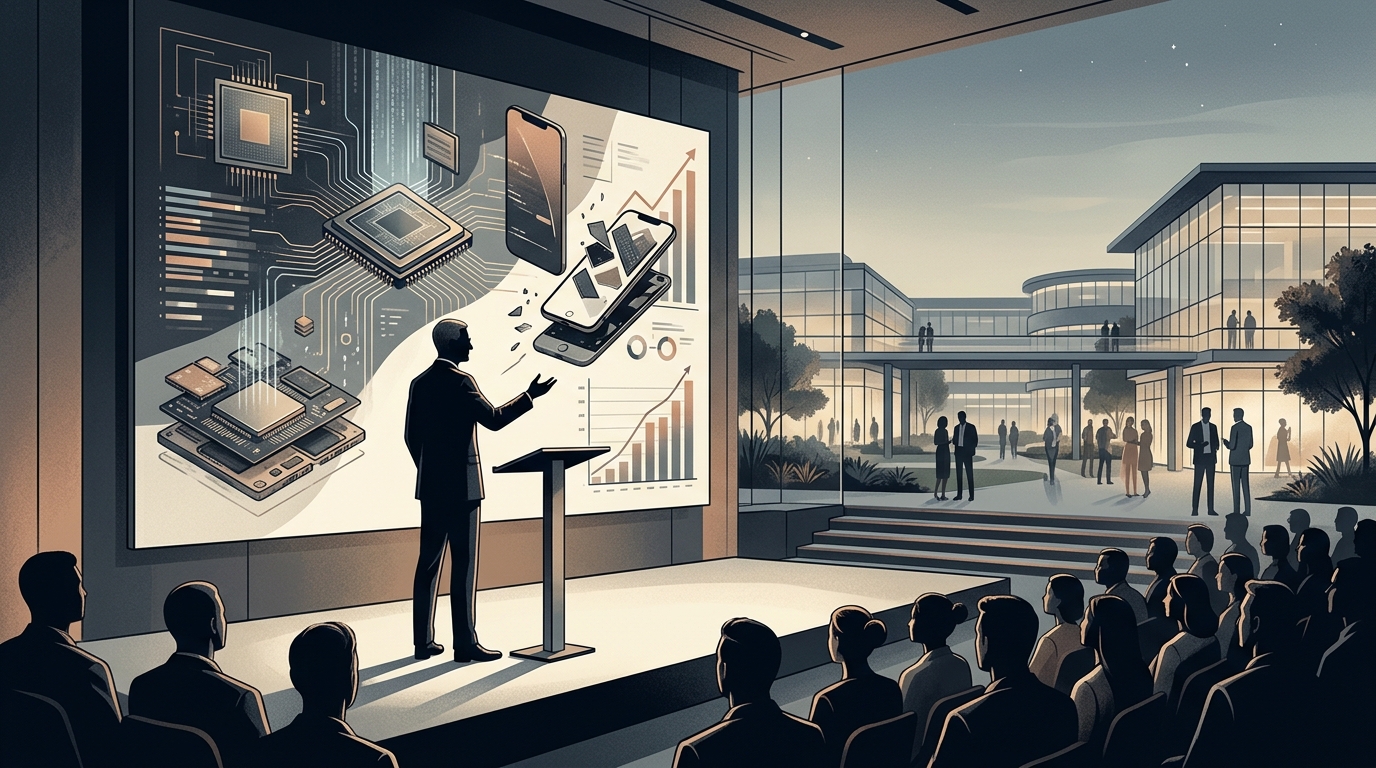
The era of relative price stability in the premium smartphone market appears to be drawing to a close. In a rare moment of stark transparency during a recent earnings call, Apple CEO Tim Cook sounded the alarm: the cost of manufacturing iPhones is rising at a pace that the company can no longer entirely absorb. The culprit? A dramatic spike in memory chip prices (NAND and DRAM), fueled by the tech industry's insatiable hunger for Artificial Intelligence infrastructure.
Artificial Intelligence as a Price Catalyst
Apple's strategic pivot toward "Apple Intelligence" comes with a hefty price tag. To enable next-generation devices, specifically the upcoming iPhone 18, to handle Large Language Models (LLMs) locally on the device, RAM requirements have effectively doubled. Where 8GB was once considered more than sufficient, new standards demand 12GB or even 16GB to ensure the fluid operation of AI features.
Simultaneously, semiconductor giants like Samsung and SK Hynix have shifted their production focus toward High Bandwidth Memory (HBM) for AI servers, tightening the supply for the consumer electronics market. This supply-demand imbalance has led to double-digit increases in component costs, which are now being passed down to the end consumer. Analysts estimate that the base price for the iPhone 18 Pro could climb past the psychological threshold of $1,200 in the US, with European prices likely seeing even steeper hikes due to import duties and currency fluctuations.
Apple's Strategy and Consumer Resilience
Apple has traditionally followed a "premiumization" strategy. Rather than competing on volume with cheaper devices, it focuses on increasing the Average Selling Price (ASP). Tim Cook has previously suggested that consumers are willing to "stretch" their budgets to obtain the best possible product, given that the smartphone has become the epicenter of their digital lives. However, the current economic climate, with inflation squeezing households globally, puts this hypothesis to the test.
- Rising Bill of Materials (BOM): Component costs for Pro models have increased by approximately 15% over the last two years.
- Geopolitical Tensions: Efforts to diversify manufacturing away from China (to India and Vietnam) involve higher initial operational expenditures.
- R&D Investments: Developing proprietary A-series chips and sophisticated neural engines requires billions in research and development.
The Global Market Impact
For global markets, Cook's warnings carry significant weight. We are seeing a lengthening of the device replacement cycle, with users now holding onto their phones for 4 or 5 years instead of the traditional 2-year cycle. If the iPhone 18 arrives with a significantly higher price tag, Apple risks pushing its customer base toward the refurbished market or mid-range competitors who are closing the gap in camera and battery performance.
"The iPhone is no longer just a phone; it is an investment in a service ecosystem. But every investment has a limit to its perceived value," note industry analysts.
In conclusion, Tim Cook's warning isn't just about Apple. It is a signal of how the AI revolution is reshaping the global supply chain, making high-end technology increasingly inaccessible to the middle class. Apple now faces a delicate balancing act: maintaining its industry-leading profit margins while avoiding the alienation of its loyal user base. As we approach the launch of the next generation, the question remains: how much is the average consumer willing to pay for a pocket-sized AI?





