

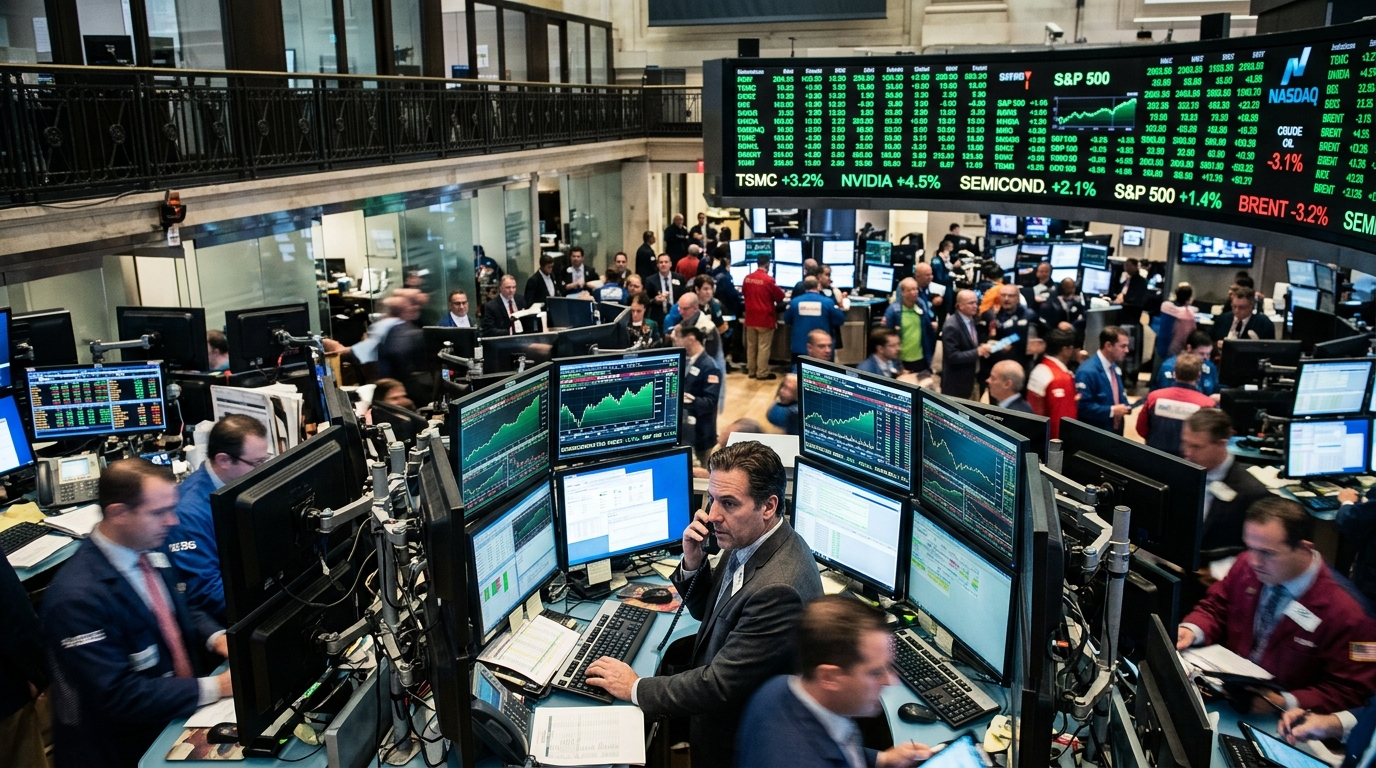
The New York Stock Exchange is witnessing one of its most compelling periods in 2026, as the convergence of technological dominance and energy decompression creates a fertile ground for investors. Major indexes, including the S&P 500 and the Nasdaq, recorded significant gains in the latest session, with the semiconductor sector acting as the primary engine of growth. This momentum is far from accidental; as artificial intelligence becomes deeply integrated into every facet of the global economy, chips have effectively become the 'new oil' of the digital era.
The Semiconductor Hegemony and the AI Mandate
At the heart of this rally are the titans of the semiconductor industry. Companies like Nvidia, AMD, and TSMC continue to see their valuations swell as the demand for raw computing power remains insatiable. In 2026, AI is no longer a speculative venture but a core operational necessity for enterprises worldwide. The ability of these firms to produce high-performance chips with optimized energy efficiency is the defining factor separating market leaders from laggards.
Analysts note that the surge in chip stocks is driven not only by hardware sales but also by the expansion of software ecosystems built upon them. Wall Street appears to be betting on the premise that the productivity gains delivered by AI will more than offset any lingering inflationary pressures in the broader economy. Furthermore, recent announcements of strategic partnerships between U.S. design firms and European manufacturing hubs have bolstered supply chain confidence, mitigating the geopolitical risks that haunted the sector in previous years.
Falling Oil Prices as a Disinflationary Anchor
In tandem with the tech explosion, the energy market is providing an unexpected tailwind for investors. Crude oil prices have trended downward, a shift attributed to increased production from non-OPEC+ nations and a faster-than-anticipated transition to alternative energy sources. Lower fuel costs have an immediate and positive impact on the operating expenses of transportation, logistics, and manufacturing firms, significantly enhancing corporate margins.
For the Federal Reserve, falling oil prices are a welcome signal. Inflation, which was the primary concern of the past two years, finally appears to be under control, allowing central bankers to maintain or even consider lowering interest rates with greater confidence. Wall Street is reacting positively to this 'soft landing' narrative, where the economy continues to grow without triggering a new cycle of price hikes. The reduction in energy overhead is essentially a tax cut for both corporations and consumers.
Market Psychology and the Road Ahead
The current upward trajectory also reflects a pivot in investor psychology. After a period of intense volatility and uncertainty, the market seems to have regained its footing. Institutional investors are rotating back into growth stocks, moving away from the defensive postures that defined the early part of the decade. However, experts caution that the extreme concentration of capital in a handful of tech giants carries inherent volatility risks.
- Big Tech dominance may invite stricter regulatory scrutiny in the near term.
- Geopolitical instability in key regions remains a wild card for future energy prices.
- The rate of AI adoption among small and medium-sized enterprises will determine the long-term sustainability of this rally.
In conclusion, Wall Street is balancing between euphoria over the digital future and relief from the normalization of the energy markets. The lingering question is whether this rally has enough fuel to persist through the second half of 2026 or if a correction is imminent as semiconductor valuations reach historic levels. The market is currently rewarding innovation, but it remains sensitive to any shifts in the macroeconomic landscape.
Investment Strategies in a Shifting Landscape
In this environment, prudence remains paramount. While the overarching trend is bullish, portfolio diversification is essential. Shifting focus toward sectors that benefit from lower energy costs—such as airlines and consumer staples—can provide a safety net should the technology sector show signs of exhaustion. The market of 2026 is one that prizes innovation but does not forgive the hubris of overexposure to a single thematic play. Investors must weigh the high-growth potential of AI against the traditional stability of diversified industrial sectors.





