

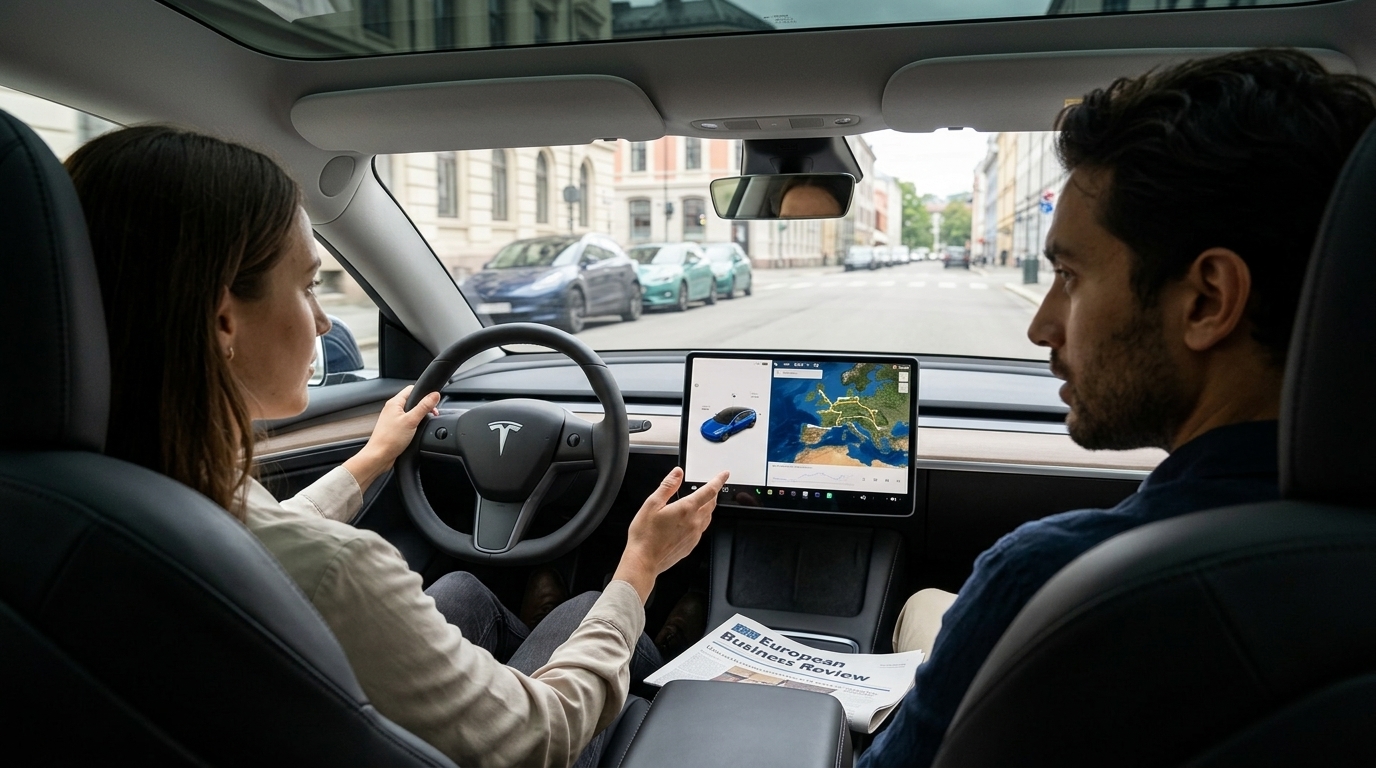
The European automotive landscape is undergoing a dramatic transformation, and at the heart of this vortex stands Tesla once again. After a period of uncertainty and fierce competition, the latest data from the European Automobile Manufacturers' Association (ACEA) reveals a stunning comeback. Elon Musk’s company saw its sales skyrocket by 57% in May, a performance that is not merely a statistical fluctuation but a strategic declaration of power in a continent desperately trying to balance the green transition with the protection of its domestic industry.
Pricing Strategy and the Giga Berlin Effect
This surge did not happen by chance. Tesla implemented an aggressive price-cutting policy throughout the previous year, squeezing the profit margins of its competitors. The Model Y, which has been repeatedly crowned the world's best-selling vehicle, continues to lead the race in Europe. However, the catalyst for recent success is the full operational maturity of the Giga Berlin factory in Brandenburg. Local production allows Tesla to bypass global supply chain issues and deliver vehicles faster and at lower logistics costs.
Furthermore, Tesla is benefiting from the deceleration of certain European manufacturers struggling to transition from internal combustion engines to electric powertrains. While Volkswagen and Stellantis face challenges with software and battery efficiency, Tesla offers a comprehensive ecosystem including the Supercharger network, which remains the gold standard for the charging experience in Europe.
The China Factor and European Tariffs
The timing of this surge is particularly intriguing given the European Commission's recent decision to impose additional tariffs on electric vehicles imported from China. While Chinese companies like BYD and MG see their costs rise, Tesla, despite importing some models (like the Model 3) from Shanghai, possesses the flexibility to shift production to Berlin to mitigate the impact. This geopolitical chessboard seems to favor the American company, which is now perceived as a 'semi-European' player due to its significant investment in Germany.
- 57% year-on-year increase in registrations.
- Dominance of Model Y in European consumer preferences.
- Strategic advantage due to domestic production in Berlin.
- Pressure on traditional manufacturers (VW, BMW, Renault).
Challenges on the Horizon: Interest Rates and Infrastructure
Despite the excitement, the road ahead is not without obstacles. High interest rates from the European Central Bank continue to affect car financing, making purchases more difficult for the average family. Additionally, the withdrawal of government subsidies in major markets like Germany has created a temporary 'dip' in demand, which Tesla is attempting to bridge with its own financing offers. The challenge for the second half of 2026 will be maintaining this growth momentum as consumers become more demanding regarding range and Full Self-Driving (FSD) technology, which still faces regulatory hurdles in Europe.
"Tesla is no longer just selling a car, but a promise of energy autonomy. Europe, despite its resistance, seems to be surrendering to this vision," market analysts note.
In conclusion, Tesla's high-speed return to Europe proves that the brand possesses a resilience that many had underestimated. With the expansion of Giga Berlin and the anticipated refresh of the Model Y (codenamed Juniper), the company appears ready to solidify its position as the undisputed leader of electromobility, forcing European giants to rethink their entire strategy.





