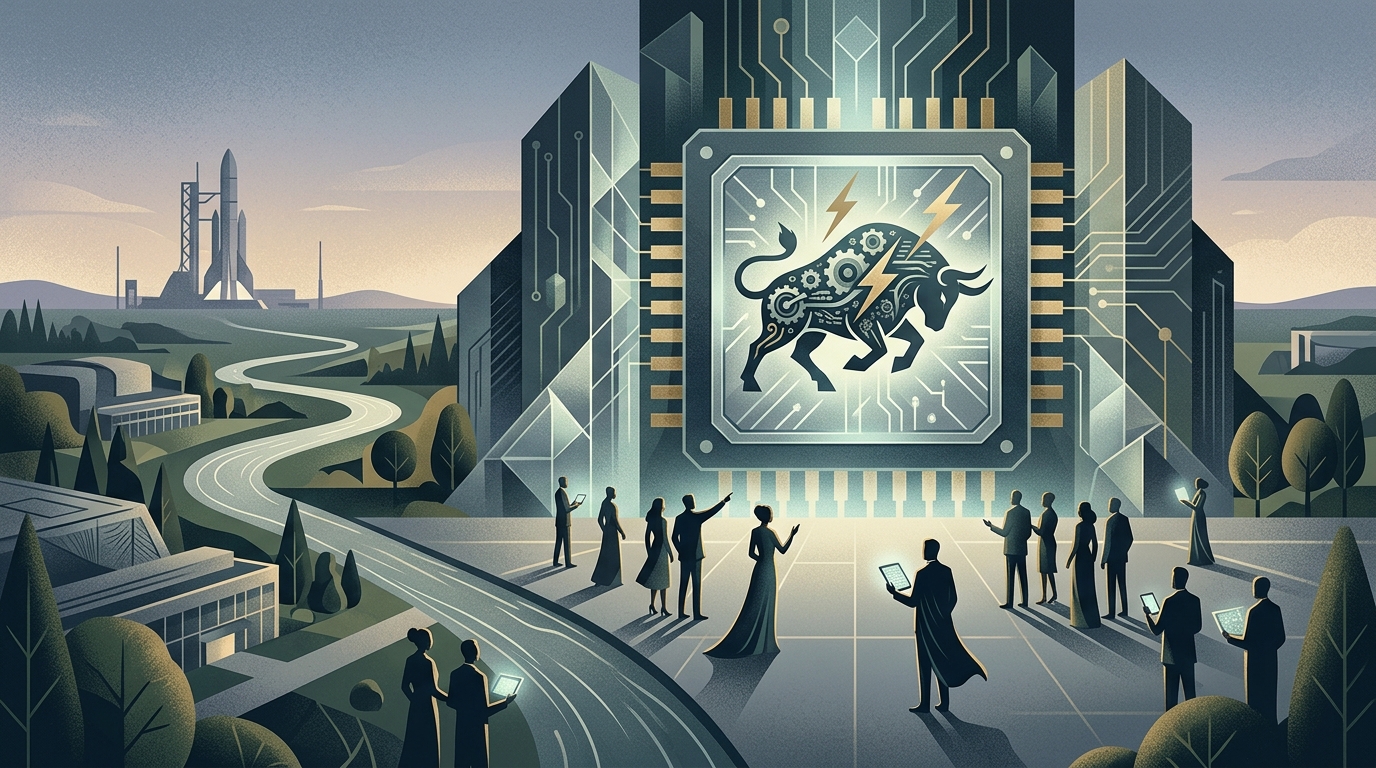
In the high-stakes world of semiconductor engineering, the term "tape-out" might sound like a mundane technical milestone, but for Elon Musk’s Tesla, it represents a clarion call for a new era. The recent news that Tesla’s AI5 chip has completed this critical design phase is not merely a hardware refresh; it is the definitive confirmation that Tesla no longer seeks to be measured against Toyota or Volkswagen, but against the likes of Nvidia and Apple. AI5 (formerly known as Hardware 5) promises to be the silicon brain powering not just the company’s vehicles, but its grand vision of a world populated by autonomous agents.
The Technological Leap of AI5
AI5 is not a simple iteration of the current AI4 (Hardware 4) suite. Preliminary data suggests the new chip will be up to 10 times more powerful than its predecessor, with significantly enhanced energy efficiency. Tesla appears to be targeting an architecture capable of processing massive data streams in real-time—a non-negotiable requirement for Level 4 and Level 5 Full Self-Driving (FSD). By utilizing cutting-edge manufacturing processes, likely at the 3nm or 4nm node from TSMC, Tesla is positioning itself at the absolute frontier of the global semiconductor industry.
The strategic brilliance of this move lies in vertical integration. By designing its own silicon, Tesla escapes the constraints of general-purpose chips. It can optimize hardware specifically for its neural network architectures, reducing latency and long-term production costs. This "marriage" of software and hardware is the same structural advantage that allowed Apple to dominate the smartphone market, and Tesla is now transposing that blueprint onto the roads and factory floors.
From Wheels to Humanoids: The Optimus Factor
While most analysts remain fixated on cars, AI5 is the linchpin for the Optimus humanoid robot. The challenge of moving a bipedal robot through an unstructured human environment requires computational density that current systems struggle to provide without massive battery drain. AI5 offers the necessary "intelligence-per-watt" to transform Optimus from a trade-show prototype into a viable commercial product. Musk has repeatedly asserted that the robotics market could eventually dwarf the automotive sector, and AI5 is the essential key to unlocking that multi-trillion-dollar valuation.
Economic Implications and Market Shift
For investors, AI5 fundamentally alters the valuation narrative. Traditional automakers are typically valued at low price-to-earnings multiples due to high capital expenditures and cyclical margins. AI and semiconductor firms, conversely, command premium valuations. With AI5, Tesla is pivoting toward a "Compute-as-a-Service" model. If Tesla successfully licenses its FSD software and proprietary hardware to other OEMs, its revenue streams will begin to mirror those of a high-margin software-as-a-service (SaaS) entity rather than a metal-bending manufacturer.
However, the path is fraught with challenges. Dependency on TSMC for fabrication introduces geopolitical risks, particularly given the tensions surrounding Taiwan. Furthermore, competition from Nvidia—which dominates the data center and is increasingly eyeing the automotive space—remains formidable. Tesla is no longer just competing with Ford; it is fighting a multi-front war against Silicon Valley giants for the AI supremacy that will define the next decade.
Conclusion: The Future at Stake
The tape-out of AI5 proves that Tesla is doubling down on the infrastructure required to make autonomy a reality. This isn't just about a faster processor; it’s about the core of an ecosystem that includes Dojo for training, FSD for navigation, and Optimus for labor. If AI5 delivers on its performance targets, Tesla will have completed its metamorphosis, shedding the "automaker" skin for something far more potent and, potentially, far more disruptive to the global economic order.