The history of Wall Street is, in many ways, a history of acronyms. From the era of BRICs (Brazil, Russia, India, China) that dominated the early 2000s, to the legendary FAANG (Facebook, Apple, Amazon, Netflix, Google) that defined the last decade, investors have always sought a catchy label to group the forces driving the market. Today, as we move through June 2026, the torch is being passed to 'MANGOS.' This new acronym includes Meta, Amazon, NVIDIA, Google (Alphabet), Oracle, and Salesforce—a selection of companies that doesn't just reflect technological power, but the very backbone of the Artificial Intelligence (AI) revolution.
The Market Metamorphosis: From the Magnificent Seven to MANGOS
For nearly two years, the 'Magnificent Seven' were the undisputed kings of the stock indices. However, the market began to show signs of fatigue from excessive concentration in Apple and Tesla, both of which faced growth hurdles and shifting consumer sentiment. US asset managers, recognizing the need for more surgical investment products, recently filed applications for the first ETFs (Exchange-Traded Funds) focusing exclusively on the MANGOS group.
This shift is more than just a marketing gimmick; it reflects a fundamental change in how Wall Street values AI. While the first phase was characterized by euphoria over Large Language Models (LLMs), the current phase focuses on infrastructure and practical application. The inclusion of Oracle and Salesforce in the group is telling. Oracle has transformed into a cloud infrastructure giant specifically optimized for AI, while Salesforce leads the integration of AI into enterprise workflows (B2B).
Why Oracle and Salesforce are Joining the Club
Many investors wondered why heavyweights like Apple were omitted from the new acronym. The answer lies in the 'purity' of AI exposure. Oracle, under the leadership of Larry Ellison, has successfully secured strategic partnerships with NVIDIA and Microsoft, making its data centers essential for model training. On the other hand, Salesforce, despite initial skepticism from analysts, has proven that AI can generate immediate revenue through its subscription services, offering tools that automate sales and customer service at scale.
The new ETFs being designed will allow retail investors to gain exposure to this elite club with a single transaction. This is particularly significant in a period where the volatility of individual stocks remains high. Asset managers, such as Roundhill Investments and other market participants, are betting that 'MANGOS' will become the new benchmark for institutional investors looking to balance their risk between hardware (NVIDIA) and software (Salesforce, Meta).
Concentration Risk and Investor Psychology
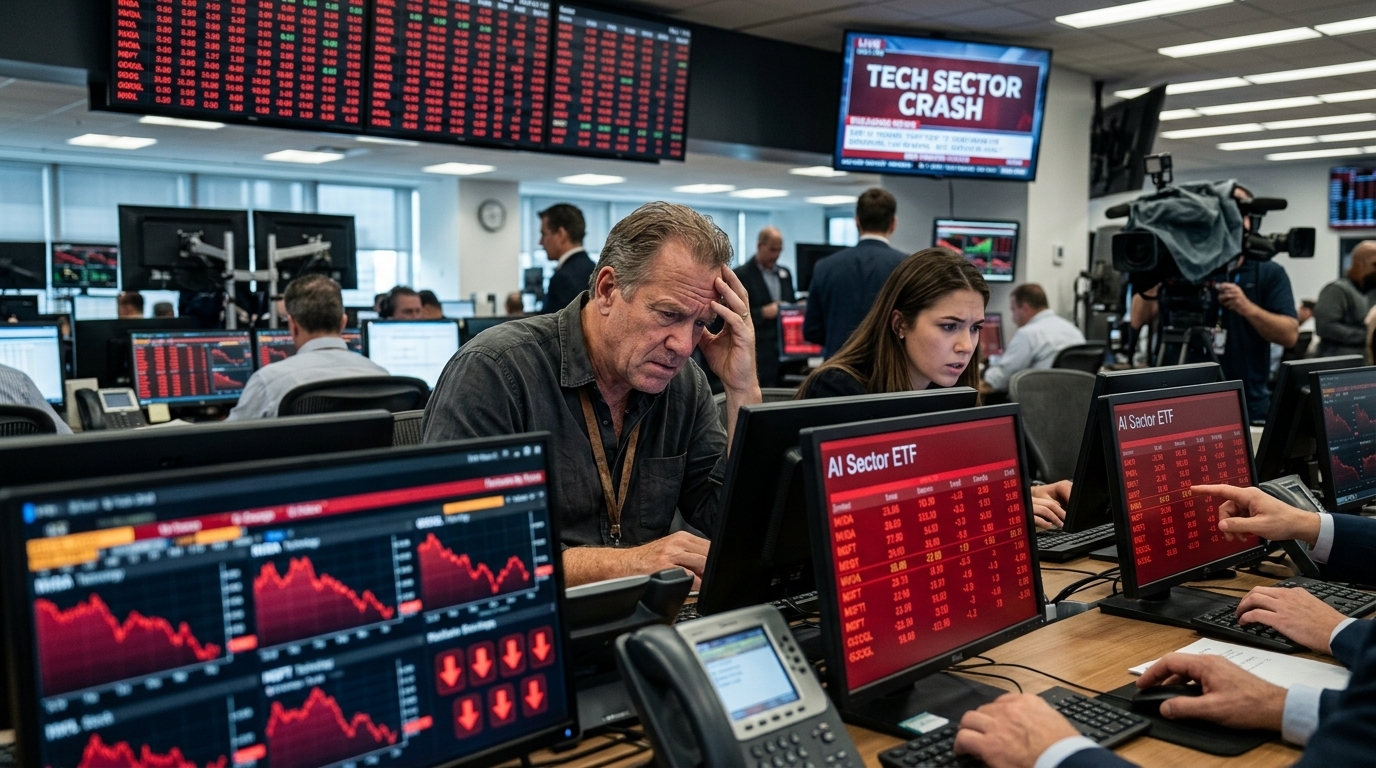
Despite the optimism, some voices warn of the inherent risks. Creating specialized ETFs based on such a narrow group of companies exacerbates the 'concentration' phenomenon. If one of these companies faces a setback—for instance, an antitrust investigation against Google or a cyclical downturn in NVIDIA’s chip demand—the impact on the ETF will be disproportionately large. Furthermore, MANGOS valuations are already at historic highs, reminding some of the excesses of the dot-com bubble.
"You aren't just buying tech stocks; you are buying the operating system of the global economy for the next twenty years," says a senior analyst at Goldman Sachs.
The strategy behind the MANGOS ETFs is to provide a 'safe' harbor for capital exiting more traditional sectors. With Fed interest rates remaining at relatively elevated levels, investors are seeking companies with robust cash flows and dominant market positions. The MANGOS fit this description perfectly, possessing massive cash reserves that allow them to acquire any potential competitor in the AI space.
The Geopolitical Dimension of Tech Dominance
Finally, we must not overlook the geopolitical significance of this shift. In a world increasingly bifurcated between the US and China, the MANGOS represent the West's 'digital shield.' The dominance of NVIDIA in chips and Amazon/Google in cloud computing is not just an economic issue but a matter of national security. The new ETFs essentially allow global capital to fund American supremacy in the AI arms race.
In conclusion, the emergence of MANGOS ETFs marks the maturation of the AI market. Investors are no longer chasing the 'next big thing' with blind hope; they are strategically positioning themselves around the companies that control the infrastructure, the data, and the distribution of intelligence. Whether MANGOS will prove to be a sweet fruit for portfolios or a bitter reminder of market excess remains to be seen in the coming quarterly earnings reports.