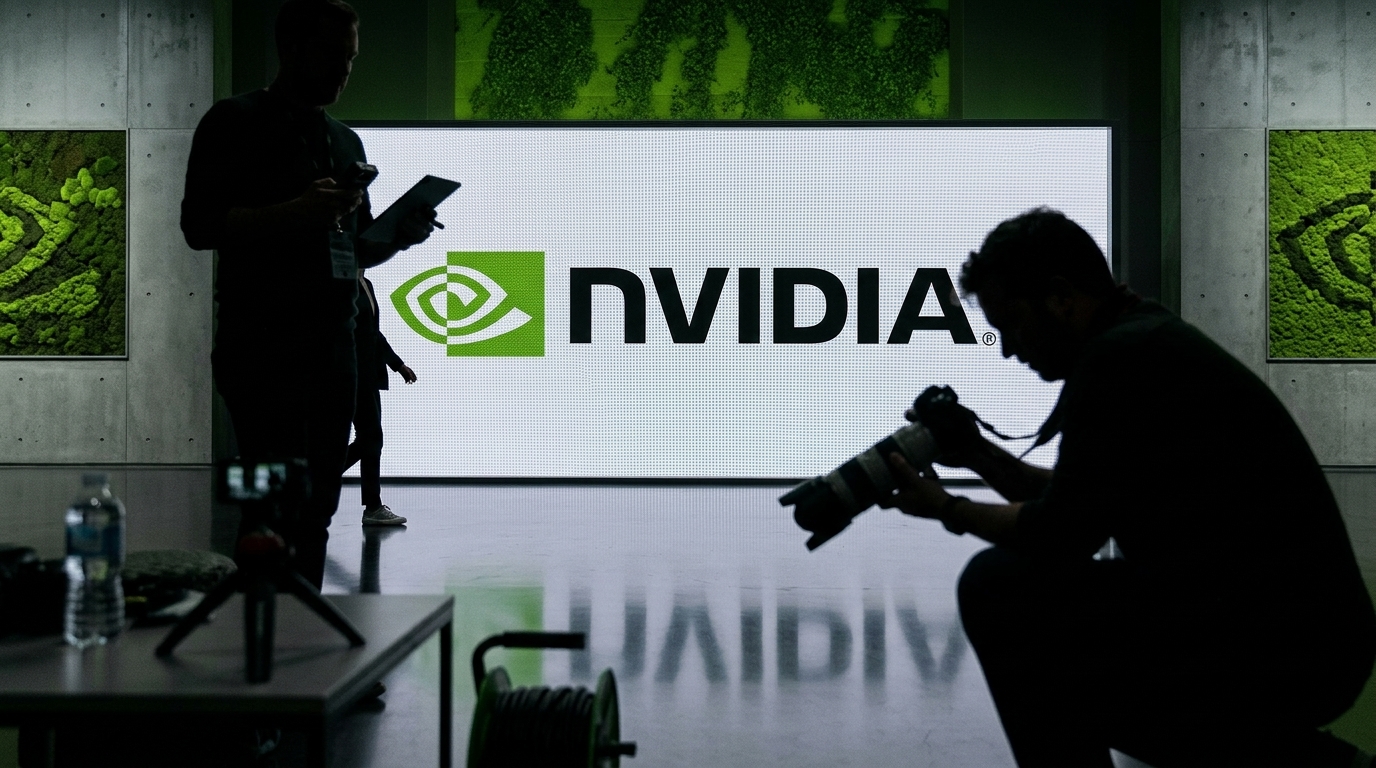
In today's technological landscape, where computing power has become the new "digital oil," Nvidia's dominance appears almost unassailable. However, the emergence of TensorDyne, a company born from the urgent need for more efficient and specialized AI solutions, is set to disrupt the status quo of Silicon Valley. With a valuation already reaching dizzying heights even before the wide commercial release of its products, TensorDyne doesn't just promise faster processors; it envisions a radical reset of how hardware perceives machine learning.
The Architecture of Disruption: Beyond CUDA's Walls
Nvidia's strongest fortress is not merely its GPUs, but the CUDA ecosystem. TensorDyne, recognizing this strategic advantage, has chosen a different path. Instead of attempting to mimic Nvidia's model, it introduced the "Neural-Flow" architecture, based on Dynamic Reconfigurable Fabrics. This allows the hardware to adapt in real-time to the specific requirements of any given neural network, drastically reducing energy consumption and latency.
According to market analysts, TensorDyne has managed to achieve a 40% improvement in performance-per-watt compared to Nvidia's latest Blackwell generation chips. This achievement is far from a mere technicality; for massive data centers that consume as much electricity as entire cities, these savings translate into billions of dollars annually. TensorDyne is targeting the heart of major cloud providers like Microsoft and Amazon, offering an alternative that promises a significantly lower Total Cost of Ownership (TCO).
The Software Bet and Open Access
The history of technology is littered with superior hardware that failed due to inadequate software support. TensorDyne seems to have learned from these past mistakes. Its platform, named "OmniKernel," is fully compatible with popular frameworks like PyTorch and TensorFlow, allowing developers to migrate their codebases with minimal friction. This "zero-friction migration" strategy is the key to gaining acceptance within the research community.
- Full support for next-generation Large Language Models (LLMs).
- Hardware-level encryption for the protection of sensitive training data.
- Open interconnect standards for seamless scaling across thousands of nodes.
Furthermore, the company has forged strategic alliances with European research centers, promoting a more "democratic" access to computing power, away from the closed ecosystems of American tech giants. This gives it a political edge in the EU, where digital sovereignty is now a top-tier priority.
Geopolitics and the Supply Chain
In the geopolitical environment of 2026, semiconductor manufacturing is a minefield. TensorDyne has adopted a diversified production strategy, utilizing fabrication plants in Taiwan (TSMC) as well as new facilities being developed in the United States and Germany. This move buffers the company against potential escalations in the Pacific region—a risk that weighs heavily on Nvidia due to its concentration in specific production lines.
"We are not just building a processor; we are building the backbone of 21st-century intelligence," TensorDyne's CEO recently stated in an interview with the Financial Times.
The challenge remains monumental. Nvidia possesses a multi-billion dollar war chest and an R&D team that never rests. However, TensorDyne possesses something Nvidia may have lost due to its sheer scale: the agility to experiment with radical architectures that could render current GPU technology obsolete for specific AI applications.
Conclusion: A New Era of Competition
Whether TensorDyne succeeds in dethroning Nvidia or is eventually acquired by another major player, the message is clear: the era of monopoly in AI infrastructure is nearing its end. Competition will drive faster innovation and, more importantly, lower costs for businesses and consumers alike. For the global market, the rise of such challengers offers an opportunity to redefine the technological map, investing in solutions that do not depend on a single center of power.