

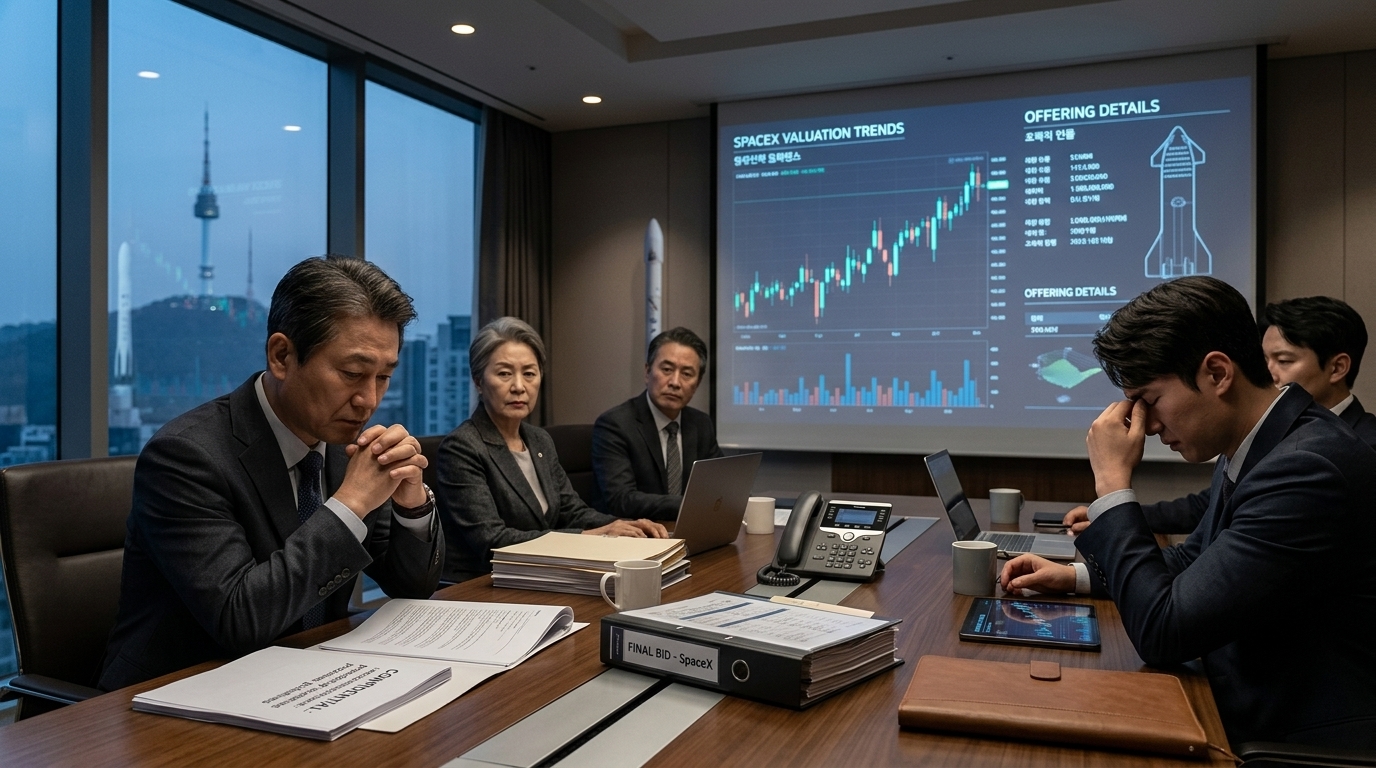
In the high-stakes world of global finance, where Elon Musk’s SpaceX reigns as the most valuable private company in the United States, precision is not just a virtue—it is a prerequisite. The recent news that Mirae Asset Securities, South Korea’s largest brokerage, was excluded from a significant secondary share sale of SpaceX due to a "procedural error" serves as a stark lesson in how bureaucratic inertia can lead to the loss of multi-billion dollar opportunities.
The Anatomy of a Missed Opportunity
SpaceX, now valued at approximately $210 billion, does not follow the traditional path of public filings and standard IPOs. Instead, it periodically allows employees and early investors to sell their shares to institutional players through secondary offerings. Mirae Asset, which has already invested heavily in Musk’s ventures—including the acquisition of Twitter (now X) and previous SpaceX funding rounds—was considered a certain participant.
However, according to reports from Seoul, the firm’s failure to complete internal approval processes and execute the capital transfer within the strict deadlines set by SpaceX led to its disqualification. In a market where demand for SpaceX equity vastly outstrips supply, Musk and his team show zero tolerance for delays. Mirae Asset’s allocation was reportedly snapped up immediately by other global investment giants waiting in the wings.
South Korea’s Obsession with Elon Musk
To understand the magnitude of this blow for Mirae Asset, one must look at the broader context of investment culture in South Korea. Korean investors, both institutional and retail, maintain a near-religious devotion to the Elon Musk ecosystem. Tesla is consistently one of the most held stocks by South Korean retail investors, who often refer to themselves as "Tesla-mi" (Tesla ants).
Mirae Asset had strategically positioned itself as the premier bridge between Korean capital and SpaceX’s ambitious plans for Mars colonization and the Starlink satellite constellation. Its exclusion is not just a financial loss in terms of future returns; it is a significant blow to its prestige. In the Asian financial markets, the "loss of face" in such a high-profile deal can shake the confidence of high-net-worth clients seeking access to exclusive Silicon Valley assets.
The SpaceX Strategy: An Exclusive Club
SpaceX operates more like an elite private club than a traditional corporation. Musk uses secondary sales to tightly control his cap table, hand-picking investors who are aligned with his long-term vision and who will not agitate for short-term profits or a premature IPO.
“SpaceX doesn’t need your money as much as you need SpaceX,”a Wall Street analyst recently noted. This power dynamic means that the terms are dictated entirely from Hawthorne (SpaceX HQ), and any deviation from the protocol is met with swift exclusion.
Implications for Mirae Asset and the Future
Despite this setback, Mirae Asset remains one of the largest holders of SpaceX stock outside the US. However, the incident highlights the challenges traditional financial institutions face when trying to keep pace with the frantic tempo of the "New Economy." The need for faster decision-making processes and more agile compliance systems is now more urgent than ever.
For the market, the message is clear: access to tech unicorns is a privilege that can be revoked in seconds. As rumors of a potential Starlink IPO intensify, the competition for a seat at Musk’s table will only become more cutthroat. Mirae Asset will now have to work twice as hard to repair its standing and ensure it isn't left on the launchpad when the next big opportunity takes flight.





