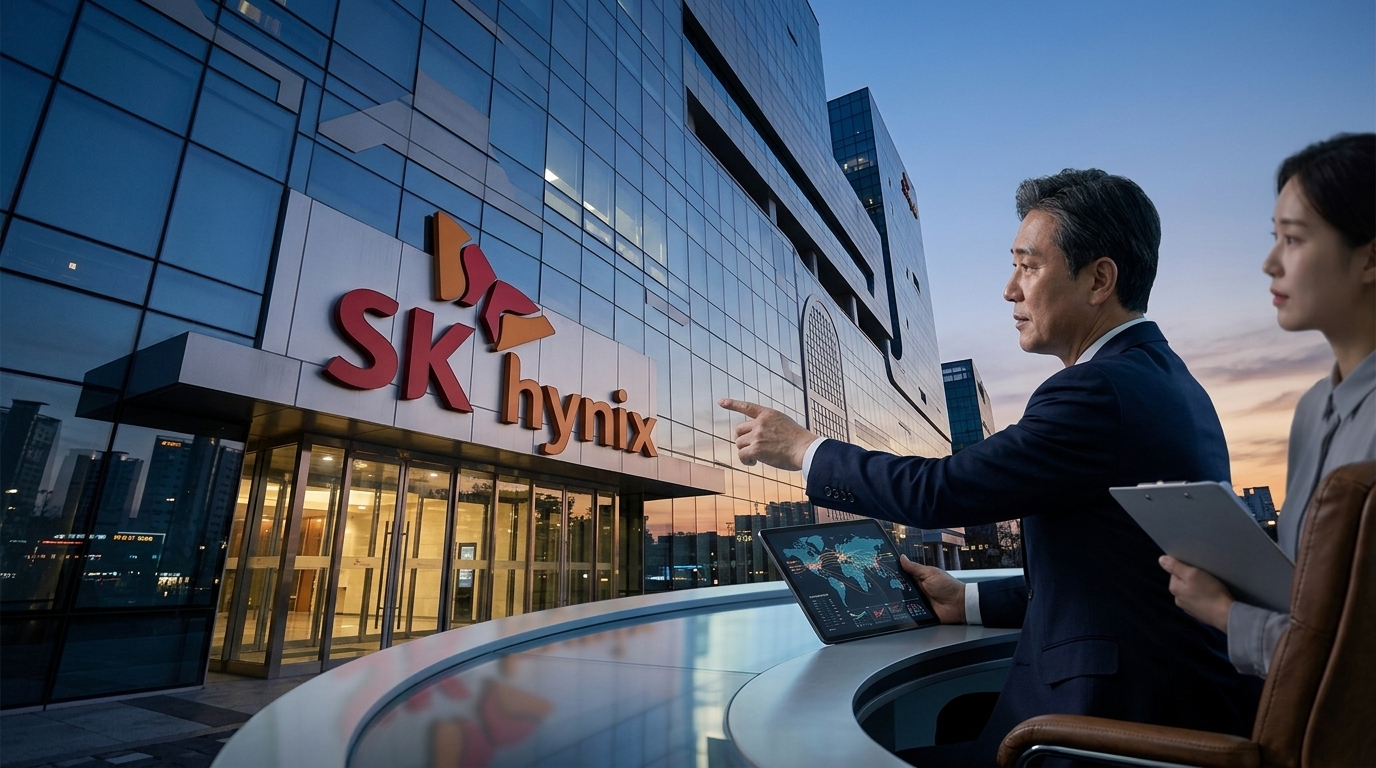
The global Artificial Intelligence (AI) economy is no longer just a matter for Silicon Valley developers or machine learning visionaries. It is, above all, a battle of hardware, infrastructure, and, crucially, massive capital. The recent news that South Korean SK Hynix, the world's second-largest memory chipmaker, is preparing a mammoth $28 billion issuance oriented towards Wall Street, is the loudest signal yet of a realignment in global financial balances.
This move is not merely an attempt to raise liquidity. It is a strategic statement of dominance in an industry that has become the backbone of modern technology. SK Hynix has managed to transform itself from a traditional DRAM market player into an indispensable partner for Nvidia, providing the critical High Bandwidth Memory (HBM) required for training large language models.
The Strategic Importance of HBM and the Nvidia Bond
To understand why SK Hynix needs $28 billion, one must understand the physics of AI. Nvidia's graphics cards (GPUs), such as the H100 and the newer Blackwell series, are useless without memory that can transfer data at lightning speeds. SK Hynix currently holds the lead in HBM3E technology and is paving the way for HBM4.
Producing these chips is extremely expensive and technically challenging. It requires advanced packaging methods and massive investments in new fabrication plants (fabs). By raising these funds, the company aims to expand its production capacity not only in Korea but also in the United States, aligning with the mandates of the CHIPS Act and the need for geographical diversification of the supply chain.
- Expansion of HBM3E and HBM4 production to meet demand from Nvidia and AMD.
- Construction of new production units in Indiana, USA, a $4 billion investment that is part of the broader plan.
- Strengthening research and development (R&D) for the next generation of semiconductors that will integrate logic and memory into a single chip.
Wall Street: Escaping the 'Korea Discount'
But why is SK Hynix turning to Wall Street instead of its home market in Seoul? The answer lies in the so-called "Korea Discount." Historically, South Korean companies trade at lower earnings multiples compared to their American counterparts due to the corporate governance of chaebols and geopolitical risks associated with North Korea.
By choosing Wall Street for an issuance of this magnitude, SK Hynix seeks to "unlock" value. American institutional investors have proven willing to pay a premium for anything related to AI infrastructure. This move is expected to pressure other Asian giants, such as Samsung, to rethink their stock market strategies as competition for investor dollars intensifies.
"AI is no longer a software business; it is a battle over who controls the silicon and who has the capital to build it at scale," say semiconductor market analysts.
Geopolitical Implications and the Chinese Factor
SK Hynix's move takes place in a highly charged geopolitical environment. The US is pressing its allies to restrict exports of advanced technology to China. At the same time, SK Hynix maintains significant production facilities in China (Wuxi), placing it in a delicate balance. Raising capital from the US and investing on American soil serves as an "insurance policy" against future sanctions or trade restrictions.
In conclusion, the $28 billion issuance marks the end of an era where semiconductor companies operated as mere component suppliers. Today, SK Hynix is a front-line geopolitical player whose financial health is inextricably linked to the national security and technological superiority of the West. The success of this issuance will determine not only the company's future but also the pace at which humanity adopts Artificial Intelligence in the coming years.